Jeong Dongyoung: "Inter-Korean Cooperation Fund to Be Used for Peace Economy Special Zone Infrastructure"
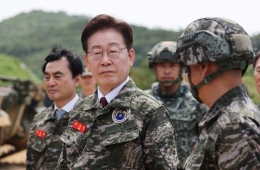
Jeong Dongyoung, Minister of Unification, announced plans to improve relevant systems to allow the Inter-Korean Cooperation Fund to be used for supporting infrastructure in the Peace Economy Special Zone.

Jeong Dongyoung, Minister of Unification, is speaking at the 2nd Joint Meeting on Peace and Safety in Border Areas held at the Government Seoul Office in Jongno-gu, Seoul on the 27th. Photo by Yonhap News
View original imageAt the 2nd Joint Meeting on Peace and Safety in Border Areas held at the Government Seoul Office on July 27, Minister Jeong stated, "We plan to report this to the President in the policy briefing and embark on revising the enforcement decree, so that the use of the fund is specified as supporting infrastructure in the Peace Economy Special Zone as a primary purpose."
He added, "Since February 10, 2016, when the Kaesong Industrial Complex was shut down, the Inter-Korean Cooperation Fund has become virtually meaningless over the past 10 years," and explained, "The execution rate is 2 percent. Although the fund is allocated, it is not actually used in practice."
In his opening remarks, Minister Jeong also said, "Special compensation for special sacrifice is a core principle of President Lee Jaemyung," and expressed hope that this gathering would serve as an opportunity to collaborate for peace and prosperity in the border regions, which have made special sacrifices for the past 73 years."
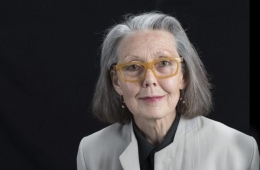
This was in response to Governor Choo Mi-ae of Gyeonggi Province, who requested that the creation of the Peace Economy Special Zone be recognized as an inter-Korean cooperation project. Governor Choo focused her proposals that day on establishing the Peace Economy Special Zone and utilizing idle military sites. Governor Choo said, "We would appreciate it if the establishment of the Peace Economy Special Zone could be approved as an inter-Korean cooperation project. This would create an alternative source of funding through the possibility of using the Inter-Korean Cooperation Fund, enable national government support for roads and infrastructure, and thus help reduce construction costs."
Regarding the use of idle military land, she suggested, "If, for example, the Ministry of National Defense, as the landowner, provides long-term leases of over 90 years, investments in facilities can proceed without bearing land costs," and further proposed, "Rather than uniformly selling idle sites, please also consider the option of long-term leases."
Park Chan-dae, Mayor of Incheon, also requested the designation of the Peace Economy Special Zone and the expansion of support for residents of border islands. Mayor Park stated, "If Incheon is designated as a Peace Economy Special Zone, it will become a strategic hub that goes beyond simple regional development to simultaneously revitalize the local economy and establish a foundation for inter-Korean cooperation."
Woo Sangho, Governor of Gangwon Special Self-Governing Province, stressed the importance of preparing follow-up development measures after the lifting of military restrictions. Governor Woo emphasized, "It's not enough to just relax regulations; what's more important is what we fill the area with." He highlighted the need to establish a "clean energy highway" utilizing solar power in areas north of the Civilian Control Line and to promote the DMZ Peace Trail, along with designating a Peace Economy Special Zone in the Gangwon region.
Other mayors and county governors from border areas such as Yeoncheon, Goseong, Ganghwa, and Ungjin who were present at the meeting suggested simplifying access procedures for observatories and establishing special provisions for the free transfer of unused military land to address on-site challenges.
Hot Picks Today
 "South Koreans Are All Buying It to Take Home"... This "Drug" Costs 350,000 Won in Korea but Just 80,000 Won in Japan
- "Buy While It's Cheap"... Retail Investors Snap Up KRW 30 Billion in Bank Gold Bars as Prices Fall, Flocking In at a Frenzy
- "I Won't Be Able to See My Own Funeral When I Die"... U.S. Grandmother Holds "Living Funeral" for Her 80th Birthday
- "After Calculating Our Bonuses, It's at Least 3 Billion Won; Feels Like We've Escaped the Working Class"... Samsung Electronics DS Couple's Post
- "Bride Lee Dogyeong, Groom Lee Dogyeong"... Couple Share the Same Name and Date of Birth: "This Must Be Fate"
Meanwhile, the joint meeting presided over by Minister Jeong was attended by Kim Namjoong, Vice Minister of Unification, Lee Duhee, Vice Minister of National Defense, Kim Kwangyong, Head of the Disaster and Safety Management Headquarters at the Ministry of the Interior and Safety, as well as the heads of metropolitan local governments with jurisdiction over border areas.
© The Asia Business Daily. All rights reserved. Unauthorized AI training and use prohibited.