Governor Chu Mi-ae Officially Proposes Designating Peace Economic Special Zone as Inter-Korean Cooperation Project
Governor Chu Mi-ae Attends 73rd Anniversary Armistice Agreement Meeting
Emphasizes Special Compensation and Advancing the Peace Economic Special Zone for Border Areas
"Extraordinary Sacrifices in Border Areas Must Be Repaid with Extraordinary Compensation"
Gyeonggi Province Governor Chu Mi-ae has made an official recommendation to the government that the Peace Economic Special Zone development project be designated as an inter-Korean cooperation project to facilitate tangible progress for the border areas of northern Gyeonggi, which have endured long-standing sacrifices for national security. She also proposed transitioning the border region into a "peace zone" and using regulatory easing as an opportunity to catalyze local development.

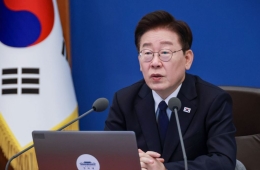
Gyeonggi Province Governor Chu Mi-ae is speaking at the "2nd Joint Meeting on Peace and Safety in the Border Area" held at the Government Seoul Office Building on the 27th. Provided by Gyeonggi Province
View original imageAt the "2nd Border Area Peace and Safety Joint Meeting" held at the Government Seoul Complex on the 27th, Governor Chu presented these suggestions to Jeong Dong-young, the Minister of Unification, related ministries, as well as the heads of Gyeonggi Province, Incheon City, Gangwon Province, and the 10 border cities and counties.
The day marked the 73rd anniversary of the signing of the Armistice Agreement. Governor Chu stated, "Today, South Korea's national stature is different from when the Armistice Agreement was signed," adding, "Now that we have the capacity to proactively dismantle the limitations imposed by national division, it is time for a paradigm shift—starting with renaming the border area as a peace zone."
She further emphasized, "The principle that 'extraordinary sacrifice must be met with extraordinary compensation,' which the President has stressed, must not remain just a slogan," and insisted, "Both the central and local governments should offer real development opportunities to the northern Gyeonggi residents, who have sacrificed so much for national security over a long period."
Governor Chu pointed to the June 22 regulatory easing measures—including the northward adjustment of the Civilian Control Line and the minimization of military facility protection zones—saying, "Now that the floodgates for regulatory relaxation have opened, it is the optimal time to re-evaluate the value of the peace zone," and requested, "Please review and expedite forward-looking plans for pending border area issues, such as the Peace Economic Special Zone."
The core proposal is for the Ministry of Unification to approve the Peace Economic Special Zone as an "inter-Korean cooperation project." Should the project receive this designation, it will be able to use the Inter-Korean Cooperation Fund, secure financial support such as guarantees and loans for resident and investing companies, and might also be exempted from the preliminary feasibility study requirement—providing strong momentum for project implementation.
Governor Chu said, "Simply designating a Peace Economic Special Zone is not enough," and stressed, "The real development of the peace zone depends on how many anchor companies we can attract, so we must be able to offer bold and differentiated incentives to investing businesses." She added, "I hope today's discussion leads to practical policies and projects that bring noticeable change for the residents of the border areas."

On the 27th, at the Government Complex Seoul, Jeong Dongyoung, Minister of Unification, along with related ministries, Gyeonggi Province, Incheon City, Gangwon Province, and the heads of 10 border area cities and counties held a commemorative photo session during the "2nd Inter-Korean Border Area Peace and Safety Joint Meeting." Provided by Gyeonggi Province
View original imageIn response, Minister of Unification Jeong Dong-young said, "The proposal to designate the Peace Economic Special Zone as an inter-Korean cooperation project is an excellent point," and expressed his intention to push for the use of the Inter-Korean Cooperation Fund as infrastructure support for the special zone.
Governor Chu also proposed that in order to lighten the financial burden of local governments with U.S. military return sites, such as Dongducheon City and Uijeongbu City, it would be necessary for the Ministry of National Defense to improve regulations so that such sites are used through inexpensive leases rather than outright sale.
Hot Picks Today
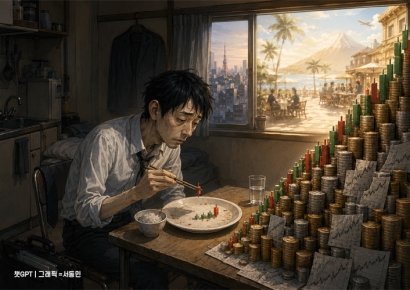 "Surviving on One Meal a Day to Invest 3.5 Million Won Monthly... 'FIRE' Craze Sparks 'NISA Poverty' in Japan"
- "Correction Over for Samsung and SK hynix" "670,000 for Samsung, 4.7 Million for SK hynix": Why Global IBs Remain Optimistic
- "Used for the Wedding" 300,000-Won Ring and Dress...Changing Wedding Trends
- Causing Trouble Without a Simple "Sorry"... The Reason Behind the 'Gen Z Stare' Revealed
- Nongshim Third-Generation Executive Sangyul Shin to Wed SKT Employee on the 13th
At the joint meeting, the central government and local governments exchanged various opinions on ways to establish sustainable peace in the border area and revitalize the local economy.
© The Asia Business Daily. All rights reserved. Unauthorized AI training and use prohibited.