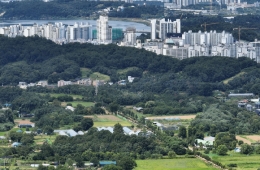
Jeju Faces 20 Consecutive Tropical Nights and Scorching Heat... No Rain Forecast Through the Weekend
Heatwave Warning Issued for the Western Region
Health Alert for Heat-Related Illnesses as UV Index Reaches Dangerous Levels
According to the weather forecast from the Jeju Regional Meteorological Administration, during the last week of July, all areas of Jeju are expected to lie on the periphery of the North Pacific High. This will result in scorching heat with daytime maximum apparent temperatures approaching 35 degrees Celsius, and the Jeju and Seogwipo regions experiencing a tropical night phenomenon for the 20th consecutive day. There is no rain forecast through the weekend, and the UV index is predicted to soar to the "danger" level. As a result, there is heightened alert on health management, including the prevention of heat-related illnesses.

According to weather authorities and comprehensive weather analysis on July 27, Jeju will continue to be affected by the North Pacific High, experiencing mostly clear and hot weather through the weekend, with no rain in the forecast.
Currently, a heatwave warning is in effect for the western part of Jeju City, while a heatwave advisory is active for the northern, eastern, and mid-mountain areas of Jeju City as well as Seogwipo City. With ongoing heatwave and tropical night alerts covering all parts of Jeju except for mountainous areas, the daytime maximum apparent temperature is soaring to 33 to 35 degrees Celsius, marking a peak of sweltering heat conditions.
Due to the continued inflow of hot and humid southerly winds overnight, temperatures are not dropping, with minimum nighttime temperatures recorded at 27.0 degrees Celsius in Jeju, 27.1 degrees Celsius in Seogwipo, and 25.8 degrees Celsius in Gosan, keeping both day and night exceptionally hot.
This year, as of now, the cumulative number of tropical nights recorded at measurement points within the province stands at 20 days in Jeju, 20 days in Seogwipo, and 16 days in Gosan. Throughout this week, the minimum morning temperature is expected to remain around 26 to 27 degrees Celsius, with the maximum daytime temperature hovering between 31 to 33 degrees Celsius, sustaining the period of extreme heat.
This prolonged heatwave and consecutive tropical nights at the end of July constitute a significant meteorological disaster, sharply increasing the risk of heat-related illnesses among vulnerable groups such as outdoor workers, those engaged in agriculture or fishing, and the elderly. It also heightens the risk of crop drought damage in arable fields.
With strong sunlight pushing the UV index to "very high" and "danger" levels, it is urgently necessary for individuals to follow personal hygiene guidelines—such as refraining from outdoor activities—and for Jeju Provincial Government and health authorities to activate on-site continuous monitoring and implement preemptive measures including emergency supplies of agricultural water.
Hot Picks Today
 "No Wonder It Soared Today... Morgan Stanley Eyes 3 Million Won Target—Which Stock Is It?"
- "Who Wants to Hire 40 Skilled Kimbap-Making Women?"... A 'Suspicious Ad' Appears Online
- "Why Waste Scorching Subway Heat? New York Launches 1.1 Billion Won 'Innovative Experiment'"
- "If You're So Sure, Try It Yourself": 44-Year-Old Father Admitted to Prestigious University After Daughter's Challenge
- "This Is Not Right, Chairman"...Flood of Criticism over SK hynix's Pursuit of 'Five-Layer Duplicate Listing'
An official at the Jeju Meteorological Administration stated, "There is a high likelihood that the heatwave alerts will be strengthened as the hot and humid southerly winds continue to flow in," and urged, "Please avoid outdoor activities as much as possible and stay well-hydrated to thoroughly prepare against the possible onset of heat-related illnesses."
© The Asia Business Daily. All rights reserved. Unauthorized AI training and use prohibited.