28 Trillion Spent, but 100GW Renewable Energy Goal Can't Be Met by 'Subsidy Bonanza' Alone
Report Highlights Policy Challenges for Expanding Renewable Energy Deployment
Grid Saturation and Long-Term Revenue Instability Undermine Progress
Calls for Reforms in Grid Infrastructure, Finance, and Subsidy Systems
In order to achieve the government's ongoing target of "100GW cumulative renewable energy deployment by 2030," a massive expansion of installations—four times greater than before—will be required every half year going forward. However, a leading national research institute has warned that if the current subsidy system (RPS) remains the exclusive support framework, limitations in grid capacity and capital procurement could significantly lower the efficiency of annual subsidies, which amount to several trillion won each year.
Achieving the Target Demands 6.8GW per Half Year...A 'Fourfold Acceleration' Compared to Past Performance

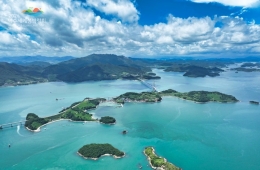
Haenam Solar City Solar Power Plant, the largest-scale solar power complex in Korea. The Asia Business Daily DB.
View original imageOn July 27, the Korea Development Institute (KDI) stated in its report "Policy Tasks for Effective Expansion of Renewable Energy Deployment (KDI FOCUS Vol.155)" that, "As of the first half of 2026, the cumulative installed capacity of domestic renewable energy stands at only 39.1GW." The report explained, "To reach the 2030 target (100GW), an average of at least 6.8GW of new installations must be added every half-year from the second half of 2026 onward." This pace is four times faster than the average achievements of the past 5.5 years (1.7GW per half-year); it requires solar deployment to accelerate by 3.6 times and wind by more than 10 times.
The problem is that expansion so far has depended heavily on massive subsidies funded by residents' electricity bills (climate environment charges). The value of settlement payments under the flagship subsidy system—the Renewable Portfolio Standard (RPS)—soared from 58.7 billion won in 2012 to an annual 4.5 trillion won in 2025, with total accumulated spending approaching 28 trillion won.
Marginal Cost-Benefit of RPS Subsidies...Less Than 1 Won per Won Without Learning Effect
According to KDI’s analysis (based on 2020 data), the social benefit per won of subsidies was calculated at 1.33 won for solar and 1.18 won for onshore wind, confirming a minimal level of economic feasibility. This is because environmental benefits, such as emissions reductions and air quality improvements, together with the technology learning effect (declining generation costs as installations scale), barely outweighed the fiscal outlays.
However, KDI pointed out that even these benefits remain "barely above water," and are significantly lower than U.S. counterparts, which achieve 3.50 won (solar) and 5.21 won (wind) in benefits for every won of subsidy. Jung Sunghoon, Head of the Industrial Market Policy Research Department at KDI, explained, "If the price of Renewable Energy Certificates (RECs) rises from the 2020 average of 66,000 won to nearly 100,000 won, fiscal externalities could drive the benefit per won of subsidy below 1 won." Furthermore, if the learning effect is excluded, the benefit per won of subsidy would fall to 0.89 won for solar and 0.80 won for wind.

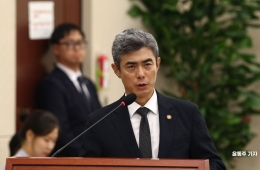
Jung Sunghoon, Head of Industrial Market Policy Research Division at KDI (left), and Heehyun Lim, Research Fellow. Korea Development Institute.
View original imageEven more critical are the structural bottlenecks—beyond the subsidy regime—related to "power grid capacity" and "capital procurement." While domestic power generation capacity increased by 154% over the past 20 years (2003–2023), grid expansion lagged at just 26%. As a result, regions with dense renewable energy installations, such as Honam and Jeju, frequently experience new connection constraints and output curtailment. In fact, land-based output curtailments (e.g., Haenam and Goheung in South Jeolla) reached 44 days in just the first half of 2025.
On the capital front, high volatility in both the System Marginal Price (SMP) and REC prices has made long-term revenue forecasting difficult, leading the financial sector to reduce its funding. The government's fixed-price contract auction rates do not match expected spot market returns, causing the capacity registered for solar competitive bidding to plunge from 8,586MW in 2021 to 52MW in 2025. Meanwhile, private power purchase agreements (PPAs) account for less than 1% of RE100 corporate procurement.
"Subsidy Efficiency Will Decline If Grid Saturation and Capital Bottlenecks Persist"
KDI observed, "When grid congestion leads to output restrictions, generation companies see actual sales volumes fall, while banks raise risk premiums, driving up the cost of capital procurement." The institute explained, "Ultimately, if businesses cannot respond to price signals, supply elasticity declines and the benefit per won of subsidy is eroded, resulting in a vicious cycle."
Hot Picks Today
 "Eat and Play All Day for Just 20,000 Won"... Rise of 'Chinese Gatherings' Spreading by Word of Mouth
- "I Washed Dishes Too"... The '22,000-Won Jensen Huang' Who Went Viral Makes a Sincere Request to NVIDIA
- Korean Student Among Alleged Perpetrators in Cornell University Gang Rape Case... US Actress Florence Pugh Calls Incident "Disgusting"
- "One in Three Unsuitable for Marriage": 72-Year-Old Professor's Diagnosis Sparks Fierce Debate Among Chinese Netizens
To simultaneously ensure both the pace and cost-effectiveness of deployment, KDI proposed the following: 1) expanding the transmission network and introducing system-based policies such as regional differentiated tariffs and flexibility markets (via ESS and demand response); 2) introducing Contracts for Difference (CfD) and easing PPA regulations to stabilize long-term revenues; 3) having policy finance institutions take on high-risk sections to encourage private capital inflows; and 4) mandating regular cost-benefit evaluations of the subsidy system.
© The Asia Business Daily. All rights reserved. Unauthorized AI training and use prohibited.

!["Failed Even With Net Assets of 400 Million Won?"... Six Criteria That Define 'The Real Middle Class' [Data Pick]](https://cwcontent.asiae.co.kr/asiaresize/307/2026092809144741876_1790554486.jpg)