Positive Factors Fail to Lift Market...KOSPI Weakens Despite 1,400 Trillion Won AI Investment Partnerships
$950 Billion Korea-US Big Tech Partnership
US Halts Airstrikes on Iran for Second Day
Market Declines on Large-Scale Foreign Investor Selling

On the 27th, the KOSPI index opened at 6806.27, up 115.65 points from the previous trading day, with the current domestic stock market status displayed on the electronic board in the dealing room of Hana Bank in Jung-gu, Seoul. 2026.7.27 Photo by Kang Jinhyung
View original imageDespite a range of positive factors, including eased tensions in the Middle East and large-scale artificial intelligence (AI) investment partnerships involving Samsung Electronics, SK hynix, and major US Big Tech firms, the KOSPI edged lower as foreign investors turned net sellers.
KOSPI Weakens on Foreign Investor Selling Despite Middle East Tension Easing and Major AI Investment Announcements
As of 10:15 a.m. on July 27, the KOSPI was trading at 6,611.29, down 1.19% from the previous trading day. The index had opened 1.73% higher at 6,806.27, but relinquished its early gains and turned lower after 10 a.m. Meanwhile, the KOSDAQ was trading up 1.71% at 761.01.
The halting of US airstrikes in Iran led to declines in both international crude oil prices and US Treasury yields, factors that initially supported the domestic stock market. The United States stopped airstrikes against Iran on the night of July 24, ending a 13-day campaign, while the Iranian military also ceased retaliatory attacks. With the US-Iran conflict coming to a pause, as of 8 a.m. on July 27, prices of major crude oil benchmarks such as West Texas Intermediate (WTI) and Brent crude had plummeted by nearly 5%, and US Treasury yields also decreased.
Over the previous weekend in San Francisco, it was announced that South Korean and US tech giants had agreed on an ultra-large-scale AI collaboration worth $950 billion (approximately 1,392 trillion won). Samsung Electronics plans to partner with Broadcom to supply advanced memory semiconductors and engage in foundry cooperation for AI chip production, totaling $200 billion (about 292 trillion won) over five years from 2026 to 2030. SK Group has agreed to build AI infrastructure worth $750 billion (about 1,100 trillion won) over the next five years with Nvidia, Microsoft, Anthropic, and Amazon Web Services (AWS). Notably, SK Group struck a comprehensive partnership with Nvidia covering everything from AI factory construction to next-generation AI memory supply, for a total of $500 billion.
Despite numerous positive developments, continued net selling by foreign investors has weighed on the local market. As of 10:22 a.m., foreign investors had net sold approximately 1.1 trillion won worth of KOSPI stocks. Institutions also posted a net sell of 30 billion won, while individual investors were net buyers of over 1.1 trillion won.
Major semiconductor stocks also reversed their early gains and turned negative. As of 10:23 a.m., shares of Samsung Electronics were down 0.80% at 247,000 won, while SK hynix dropped 1.99% to 1,724,000 won. Other notable losers included SK Square (-5.50%), Samsung Electro-Mechanics (-3.47%), Hyundai Motor Company (-1.25%), and Samsung Life Insurance (-3.30%).
However, Naver shares were strong on news that the company had secured a combined $10 billion (about 14.7 trillion won) in investment and infrastructure financing from Nvidia and global investment firm Brookfield. Naver disclosed that it signed a strategic investment agreement with Nvidia for a third-party allocation capital increase amounting to $1 billion. As of 10:25 a.m., Naver shares were trading at 225,000 won, up 7.95% from the previous session. Earlier in the session, the price soared by 21.7% to peak at 255,000 won.
Jae-min An, a researcher at NH Investment & Securities, stated, “At the San Francisco AI Summit, it was reaffirmed that memory semiconductors are a core resource in the AI era. The recent announcements indicate that drivers of AI investment are expanding from Big Tech to the national level, that long-term supply contracts now encompass product development beyond price and volume, and that attention to the foundry business is warranted.” An added, “This collaboration is expected to benefit the entire value chain, including the physical AI and AI data center industries."
Upcoming Big Tech Earnings Releases Expected to Spur Market Rebound
Market analysts expect upcoming earnings announcements from major tech companies such as SK hynix, Samsung Electronics, Microsoft, Amazon, and Meta this week to provide a catalyst for a rebound in the Korean stock market. SK hynix will announce its results on July 29, followed by Samsung Electronics on July 30. Should actual results and shareholder return policies exceed expectations, the market is expected to respond favorably.
Kyungmin Lee at Daishin Securities predicted, “The earnings releases and conference calls from major tech names, including SK hynix and Samsung Electronics, could help curb uncertainties in the AI and semiconductor sectors, and revive expectations for profit improvement. Fluctuations in the KOSPI around the 6,000-point level in the early part of this week should be seen as a chance to increase portfolio exposure, given that the upside potential outweighs the downside risks in the current environment.”
The US Federal Reserve’s Federal Open Market Committee (FOMC) regular meeting, set for July 28-29 (local time), is also drawing attention. The market widely expects the Fed to keep its benchmark interest rate unchanged at this meeting.
Hot Picks Today
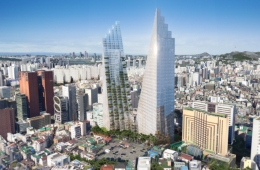
![[Exclusive] SK hynix to Establish Headquarters in the Heart of Seoul... Plans Office Building on Former Le Meridien Hotel Site in Gangnam](https://cwcontent.asiae.co.kr/asiaresize/93/2022123100091569866_1672412955.png) [Exclusive] SK hynix to Establish Headquarters in the Heart of Seoul... Plans Office Building on Former Le Meridien Hotel Site in Gangnam
[Exclusive] SK hynix to Establish Headquarters in the Heart of Seoul... Plans Office Building on Former Le Meridien Hotel Site in Gangnam
- "After Dominating 80% of the Global Market... China’s Solar Industry Hit with 3 Trillion Won Losses"
- KFA Hearing on the 30th... Speaker Jo Jungsik: "Public Concern, KFA Must Become a Transparent and Fair Organization"
- It Was a Sensation in Korea Too..."Can't Live Without It" - Japanese Elementary Students Also Obsessed With This
- "Prettier Than an Idol" "The Outfits Are a Problem"... Why the AI Female Weathercaster Is Causing a Stir
Ji-Young Han, a researcher at Kiwoom Securities, analyzed, “As the consensus calls for a rate freeze at the July FOMC, attention will be on Chair Kevin Warsh’s press conference for any change in inflation assessment or indications regarding a possible hike in September. As the market has already factored in one to two rate hikes for the remainder of the year, the degree to which hawkish bets subside after the July FOMC will impact the stock market’s recovery momentum.”
© The Asia Business Daily. All rights reserved. Unauthorized AI training and use prohibited.