"Israel Invests $1 Billion in U.S. Public Opinion Battle" - Quincy Institute

There is an analysis that the Israeli government has been injecting large-scale funds into public diplomacy and influence operations to prevent the deterioration of public opinion in the United States following the Hamas attack on October 7, 2023.
Israel, which in the past relied on unofficial lobbying centering on pro-Israel groups and wealthy donors in the U.S., is said to be shifting its strategy to directly utilizing public relations and lobbying firms registered under the Foreign Agents Registration Act (FARA), as well as influencers, religious organizations, and digital strategy companies.
According to a report by the Quincy Institute, a U.S. think tank, compiled based on FARA filings, Israeli government procurement documents, and interviews with stakeholders, the Israeli government is estimated to have spent at least $1 billion on public diplomacy efforts since October 7, 2023. The amounts spent by Israeli clients on influence activities in the U.S. under FARA have also exceeded $100 million since 2023. The report notes that Israel could become the single largest source of FARA-registered spending by 2026.
The Quincy Institute made the report public on its website on July 24 (local time) in an article titled “The Eighth Front: Inside Israel’s $1 Billion Influence Campaign.”
The term “Eighth Front” is drawn from a comment made by Israeli Prime Minister Benjamin Netanyahu in late 2025 during a meeting with evangelical leaders in Palm Beach, Florida: “As you know, we fought in seven fronts, and in many ways, we prevailed. But there is an eighth front. That is the battle to win people’s hearts and minds—especially the young people of the West, to me especially in America, and to me especially among the conservative base in America.”
The following is a brief summary of the main points.
The Israeli government has spent more than $1 billion directly on public diplomacy since the Hamas-led assault on October 7, 2023, reflecting a dramatic expansion of related expenditures. This signals Israel’s new reliance on influence operations within the United States. These activities are directly funded by the Israeli government and are subject to U.S. laws regarding foreign influence.
For most of the history of the U.S.-Israel relationship, Israel secured unmatched influence in American politics through unofficial lobbying involving organizations such as the American Israel Public Affairs Committee (AIPAC), Christians United for Israel (CUFI), and individual large-scale donors. Since these organizations are funded by Americans and are, at least nominally, independent from the Israeli government, they are not required to register under FARA. This system has allowed Israel to wield considerable influence without triggering public disclosure requirements for direct foreign lobbying.
As Israel’s military campaign after October 7, 2023, generated deep unpopularity among the American public, Israel reconsidered the scope and structure of its influence operations. Since then, the Israeli government has reinvented its communications strategy by hiring registered foreign agents directly, allowing it to control messaging, target specific demographics, and act with greater speed and precision. Since 2023, Israel has spent more than $100 million on influence activities within the U.S. under FARA.
Israel’s FARA spending is projected to triple from 2024 to 2026, and this year Israel is expected to be the single largest FARA-spending country. Much of this work is carried out through the French company Havas Media, which was once Israel’s most reliable base of support but is now outsourcing contracts to American firms specializing in reaching the very groups Israel is losing: evangelicals, conservatives, and young Americans. The strategies are not only larger in scale but also novel in type. Israel is paying influencers directly, funding large-scale text messaging campaigns, and—in the most innovative approach—employing companies like Clocktower X to build website networks designed to shape how artificial intelligence chatbots describe Israel.
This shift to FARA-registrable activities has created a new paper trail. However, significant gaps remain in compliance and transparency. Organizations engaged in clear lobbying activities have failed to register as lobbyists; some startups working for Israel have openly disregarded transparency requirements; and influencers who received money have not disclosed their financial relationship with the Israeli government.
Hot Picks Today
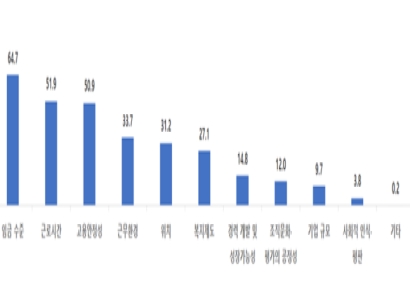 "Please Pay Me at Least 3 Million Won a Month": More Than Half of Young People Today Prioritize "Working Conditions" Over Company Size
- Selling Like Crazy Every Year... 30-Year-Old Hetbahn Takes on a New Challenge: Tastes Better Than "Mom's Home Cooking" [On-Site Report]
- He Left It in the Car and Forgot... "I Nearly Collapsed with Joy": Man Wins $1.48 Million Lottery
- Ran 18 km With 9-Year-Old Tied to Him at the Waist... "Man Banned From Competing for 3 Years"
- Beachgoer Finds 'Plastic' That Turns Out to Be Perfume Ingredient Worth More Than Twice as Much as Gold
Israel’s new tactics are transforming the landscape of U.S. influence operations. However, so far, these efforts have proven insufficient to counter the deep unpopularity generated by Israel’s controversial policies. Even so, Israel’s influence operations have a robust track record of shaping U.S. public opinion, and the infrastructure Israel is now building is unlike anything deployed before. This should not be underestimated.
© The Asia Business Daily. All rights reserved. Unauthorized AI training and use prohibited.