Redesigning LNG Supply Chain Strategies for the AI Era: Expanding Private Stockpiling and Boosting Storage Capacity to 8.87 Million Tons
Government Finalizes 16th Long-term Natural Gas Supply and Demand Plan
City Gas Demand Rising While Power Generation Demand Declines
AI-based Supply and Demand Management System Introduced; Supply Sources Diversified

An LNG carrier carrying volumes from the LNG Canada project in which Korea Gas Corporation participated docked at the Incheon LNG terminal in June to prepare for unloading operations. Korea Gas Corporation.
View original imageThe government will completely overhaul its natural gas stockpiling system and supply chain in response to the proliferation of artificial intelligence (AI) data centers and semiconductor clusters, as well as rising geopolitical risks in the Middle East. The plan includes expanding private sector participation in what was primarily a public-led stockpiling system, introducing an AI-based supply and demand management system, and strengthening energy security by increasing LNG storage capacity to a maximum of 8.87 million tons by 2038.
On July 27, the Ministry of Trade, Industry and Energy finalized and announced the "16th Long-Term Natural Gas Supply and Demand Plan (2026-2038)." This plan serves as a national mid- to long-term roadmap, outlining natural gas demand forecasts, resource security, procurement and supply management, and supply infrastructure expansion strategies for the next 13 years. The plan's core direction is to establish a stable gas supply system by operating a "supply and demand management requirement" to buffer market volatility, strengthening resource security, and expanding supply infrastructure.
The government assessed that volatility in the international LNG market continues to increase. Ongoing uncertainty from the protracted Russia-Ukraine war and instability in the Middle East—such as the possibility of a blockade of the Strait of Hormuz—has heightened uncertainty over the global LNG supply chain. With the establishment of AI data centers and semiconductor clusters, domestic electricity demand is also expected to rise. In addition, as direct imports increase and an individual pricing system is introduced, Korea's gas market is becoming more diversified, requiring more sophisticated supply and demand management than in the past.
In terms of demand outlook, baseline natural gas demand is forecast to decline by an average annual rate of 0.94%, from 45.91 million tons in 2026 to 41 million tons in 2038. On the other hand, city gas demand is expected to increase by an average annual rate of 1.5%, from 23.56 million tons to 28.16 million tons over the same period. This growth is mainly driven by industrial use of city gas, which is projected to rise by an average of 2.37% per year. In contrast, demand for power generation is expected to decrease by an average of 4.51% annually, from 22.35 million tons to 12.84 million tons, reflecting the energy mix outlined in the 11th Basic Plan for Electricity Supply and Demand.
The government has decided to operate a separate "supply and demand management requirement" to address fluctuations in electricity demand. Taking this into account, total demand will essentially remain at current levels, increasing slightly from 47.62 million tons in 2026 to 47.67 million tons in 2038. This forecast reflects uncertainties such as delays in building the transmission grid, the timing of new power plant completions, and expansion of hydrogen power generation, and will serve as a benchmark for future long-term LNG import contracts and infrastructure expansion. Changes in gas demand arising from three major mega-projects—semiconductors, physical AI, and AI data centers—will be considered after the finalization of the 12th Basic Plan for Electricity Supply and Demand.

Strengthening resource security is also a key focus of this plan. The government will expand private sector participation—such as self-consumption direct importers—in the previously public-centered natural gas stockpiling system, leveraging the Special Act on National Resource Security. To reduce the burden of constructing new storage facilities, options are being considered to utilize existing public infrastructure such as Korea Gas Corporation’s Samcheok terminal as national stockpiles.
Furthermore, an integrated system for natural gas supply and demand management will be established to consolidate real-time import and inventory status across the public and private sectors. This will enable real-time monitoring of nationwide natural gas operations and advance supply and demand management by developing optimal response scenarios through AI-based crisis prediction and simulation.
The import strategy will also change. The government will continue to diversify supply sources to mitigate risks from Middle East geopolitical instability and shifts in exporting countries’ policies, and will seek to secure additional LNG linked to overseas resource development. To reduce shocks from spikes in international spot market prices, the share of mid- and long-term contracts will be increased, and a portfolio of various price indices—including crude oil and U.S. natural gas prices (Henry Hub)—will be established.
LNG trading functions will also be strengthened. The government plans to secure buffer supplies, introduce a trading management system, jointly utilize import terminals with nearby Asian countries such as Japan, establish LNG swaps, and set up emergency alternative supply systems in order to boost supply chain resilience.
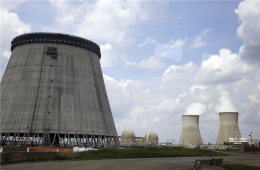
Supply infrastructure will also be expanded. Korea's LNG storage capacity is 6.71 million tons as of 2025, and will be increased to a maximum of 8.87 million tons by 2038 through expansions at Korea Gas Corporation’s Dangjin Terminal 5 and additional private storage tanks. Expansion of storage tanks is also planned for private terminals in Gwangyang, Ulsan, and Yeosu, and securing more storage facilities in response to national energy security needs will be considered.
The pipeline network will also be expanded. By 2038, the government plans to increase the length of main natural gas pipelines by 564 km, from 5,346 km to 5,910 km. Expansion will cover ring-shaped networks, reinforcement segments, exclusive pipelines for power plants and direct importers, and linkages between the private supply pipeline and the Yongsan semiconductor cluster’s ring network to ensure stable LNG supply. Additionally, regasification and delivery facilities, as well as unloading berths, will be expanded in stages to meet winter peak demand and accommodate more large LNG carriers.
Hot Picks Today
 "There's a Drink Like This?"... Chinese Beverage With "Korean" in Its Name Rakes in 85 Million Won in Monthly Sales
- "Samsung Electronics at 70,000 won, SK hynix at 200,000 won"... Why the gloomy outlook despite 'record-breaking earnings'?
- Woman Found Collapsed Barefoot on Street, Leaving 3-Year-Old Child Unattended... Turns Out She's Part of a "Wealthy Royal Family"
- "I Put in 10 Million Won, but Only 2 Million Won Is Left" ... 77% Plunge Leaves Retail Investors in Samsung Electronics and SK hynix Leveraged ETFs Crying Out
- "The leggings are all see-through. It's so embarrassing to look at," complaints prompt Lululemon to fire development staff.
An official from the Ministry of Trade, Industry and Energy stated, "Going forward, managing supply chain risks is becoming more important than simply forecasting demand. Through a stockpiling system that includes both the public and private sectors and an AI-based supply and demand management system, we aim to further strengthen the stability and resilience of the national natural gas supply chain."
© The Asia Business Daily. All rights reserved. Unauthorized AI training and use prohibited.