Jinju Chokseokru Passes 'First Hurdle' Toward National Cultural Heritage (Treasure) Designation
Passed Review by South Gyeongsang Province
Application for Designation to Be Submitted to the National Heritage Administration
Design and Government Approval Documents Presented
Addressing Controversy Over Granite Pillar Replacement
Jinju City in South Gyeongsang Province announced on July 27 that the proposal to designate Jinju Chokseokru as a national cultural heritage (treasure) passed at the open Gyeongsangnam-do Architectural Cultural Heritage Subcommittee meeting.
As a result of this review, South Gyeongsang Province will submit an application for national cultural heritage designation to the National Heritage Administration in the name of the governor. The final designation will be decided after deliberation and approval by the National Heritage Administration, followed by an administrative notice period.
During this review, explanations were provided regarding the replacement of the granite pillars (nu haju, supporting columns beneath the pavilion), which had been cited as a reason for rejection in the 2014 application for designation as a national cultural heritage.
![[Photo provided by Jinju City] Jinju City passed the agenda for the application of Chokseokru in Jinju as a National Cultural Heritage (Treasure) at the open Gyeongsangnam-do Architectural Cultural Heritage Subcommittee meeting. Panoramic view of Chokseokru in Jinju](http://www.asiae.co.kr/news/img_view.htm?img=2026072708514758745_1785109906.jpg)
[Photo provided by Jinju City] Jinju City passed the agenda for the application of Chokseokru in Jinju as a National Cultural Heritage (Treasure) at the open Gyeongsangnam-do Architectural Cultural Heritage Subcommittee meeting. Panoramic view of Chokseokru in Jinju
View original imageThe city explained that the replacement of the granite pillars beneath Chokseokru during its reconstruction in 1960 was carried out under the approval of the then Ministry of Education and in accordance with the design and supervision of master restoration expert Im Cheon. Additionally, they submitted the original design drawings from the period, proving that Chokseokru, which had been destroyed during the Korean War, was restored as closely as possible to its original state.
Im Cheon (1908–1965) was affiliated with the National Museum and is known as an architectural expert who participated in the restoration and maintenance work of major cultural heritage sites, including Sungnyemun, the Main Hall of Bulguksa, Paldalmun in Suwon, Gyeongbokgung, and Namhansanseong Fortress.
Jinju City cited the high level of structural and decorative completion of Chokseokru as a traditional building and the relatively well-preserved original form, except for part of the lower structure, as reasons for pursuing treasure designation.
The city also emphasized that Chokseokru is located within Jinju Fortress, a designated national historic site, was used as a military command post during the Imjin War, and is a historic pavilion that has been passed down since the early 13th century—making it a valuable cultural heritage that showcases Korean traditional architecture.
Jinju City Mayor Cho Kyuil stated, “Chokseokru is Jinju’s representative cultural heritage, with more than a thousand years of history and significant academic and documentary value. We hope that, considering the historical context of its reconstruction and the criteria for evaluating cultural heritage value at the time, Chokseokru will be recognized for its intrinsic value as a cultural heritage and designated as a national treasure.”
Meanwhile, Jinju City and Jinju Culture Center have been conducting a citizen petition for the elevation of Chokseokru to national cultural heritage (treasure) status since 2022. To date, about 70,000 signatures have been collected, and the city plans to submit the signature list—reflecting citizens’ wishes—to the National Heritage Administration.
Chokseokru was designated a national treasure in 1948, but this designation was revoked after it was destroyed during the Korean War. Restoration efforts led by the Jinju Ancient Site Preservation Society began in 1956, culminating in completion in 1960. Later, it was designated as Gyeongsangnam-do Cultural Material No. 8 in 1983, and as a Gyeongsangnam-do Tangible Cultural Heritage in 2020.
Such a treasure designation is more than just a change in terminology. It is a process through which the state re-evaluates Chokseokru’s historical and architectural value and the lasting significance of this cultural heritage across generations.
Hot Picks Today
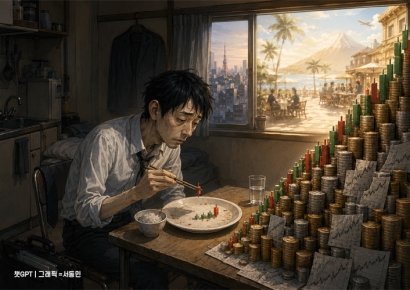 "Surviving on One Meal a Day to Invest 3.5 Million Won Monthly... 'FIRE' Craze Sparks 'NISA Poverty' in Japan"
- "Correction Over for Samsung and SK hynix" "670,000 for Samsung, 4.7 Million for SK hynix": Why Global IBs Remain Optimistic
- "Used for the Wedding" 300,000-Won Ring and Dress...Changing Wedding Trends
- Causing Trouble Without a Simple "Sorry"... The Reason Behind the 'Gen Z Stare' Revealed
- Nongshim Third-Generation Executive Sangyul Shin to Wed SKT Employee on the 13th
The previously controversial reconstruction process is also being objectively verified based on historical facts and documentation. There is hope that Chokseokru—a pavilion carrying the weight of a thousand years—will be fully recognized as a proud legacy, not only for Jinju but also as a national cultural heritage of Korea.
© The Asia Business Daily. All rights reserved. Unauthorized AI training and use prohibited.