Small Business Owners Earn Less Than Part-Timers, File Objection to Minimum Wage Hike: "Annual Costs Rise by Over 10 Million Won"
Official Objection Submitted to Ministry of Employment and Labor on July 27
KFME Urges "Review Needed to Protect Survival Rights of Small Business Owners"
"Due to next year's minimum wage increase, businesses employing four people will face more than 10 million won in additional costs. This decision completely ignores the desperate situation of small business owners standing at the edge of a cliff."
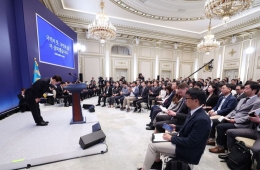
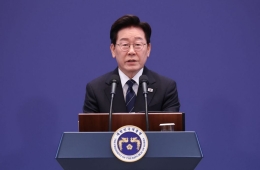
On July 27, the Korea Federation of Micro Enterprises officially submitted an objection letter to the Ministry of Employment and Labor regarding the 'proposed minimum wage for 2027.' Prior to this, Chairman Song Chi-young held a press conference at the Sejong Government Complex, urging, "A reconsideration of the minimum wage proposal is absolutely necessary to protect the right to livelihood of small business owners and to prevent a jobs crisis arising from the small business sector."

This is the first time in four years since 2022 that the Korea Federation of Micro Enterprises has filed an official objection to the minimum wage. The Minimum Wage Commission has set next year's minimum wage at 10,700 won, a 3.7% increase from this year. This represents the largest increase in four years. Including the paid weekly holiday allowance, the hourly rate becomes 12,840 won. As a result of next year’s minimum wage increase, the monthly wage will rise by about 79,000 won and the annual wage will go up by about 950,000 won. For businesses employing four people, the additional annual burden, including the four major social insurances, will exceed 10 million won. Chairman Song criticized, "Amid a double burden of declining income and a sluggish economy, this increase will accelerate job cuts among small business owners, adding insult to injury."
With domestic demand sluggish and sales decreasing, the number of business owners earning less than their part-time employees has noticeably increased. According to the Korea Federation of Micro Enterprises' "2026 New Year Business Survey," four out of ten respondents reported an average monthly operating profit of less than 2 million won, which does not even reach the monthly equivalent of the minimum wage.
The Federation asserts that the minimum wage now completely exceeds the payment capacity of small businesses and therefore requires reconsideration. Article 4 of the Minimum Wage Act specifies both "the cost of living for workers" and "the payment capacity of employers" as factors for determining the minimum wage. Chairman Song emphasized, "This decision has thoroughly ignored the limits of small business owners who are responsible for payment," adding, "In a situation where many are relying on loans, there is no capacity to bear further labor cost increases."
In fact, with high interest rates, high prices, and a strong exchange rate—the so-called "three highs"—the overdue debt that self-employed individuals have failed to repay on time has increased by more than 12%. According to Korea Credit Data's report on "Trends of Small Business Owners in Q1 2026," the total loan balance of domestic sole proprietors in the first quarter of this year stood at 732.2 trillion won. This is an increase of about 3 trillion won (0.4%) from the fourth quarter of last year. Among this, the amount overdue due to failure to repay interest and principal amounts to 14.6 trillion won in total, up approximately 1.6 trillion won (12.6%) from the previous quarter.
Hot Picks Today
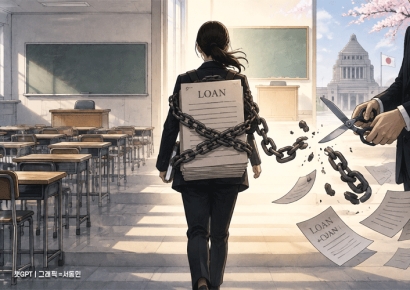 "If You Become a Teacher, You Don't Have to Repay Student Loans"... Japan Pulls Out 'Repayment Exemption' After 30 Years
- "How Little Do Koreans Read? Who Will Acquire Munhakdongne Now on the Market [Weekend Money]"
- "I'll Pay Cash for This Home"... Cash Purchases Rise and Loan Share Falls as Sub-1 Billion Won Listings Increase in China
- "If You Go Late, There Are No Seats; Crowds Gather Before Sunset"... The 'Yajang' Hotspots Drawing 20-Somethings These Days
- "Raised a Stray Kitten, but..." Scientific Community Stunned: First New Wild Cat Species Discovered in 100 Years
In addition, the Federation requested reconsideration of the minimum wage based on several grounds, including: the uniform application that ignores differences in payment capacity by industry; deterioration in employment quality with a surge in ultra-short-hour jobs; and growing polarization of minimum wage compliance rates among different industries. The Federation also criticized the current minimum wage decision structure. Chairman Song stated, "The current decision-making structure, which determines matters crucial to the survival of small business owners without regard to their opinions, must also be fundamentally reformed."
© The Asia Business Daily. All rights reserved. Unauthorized AI training and use prohibited.