[Defense Brief] DMZ Standoff: A Time for Patience
![[Defense Brief] DMZ Standoff: A Time for Patience](http://www.asiae.co.kr/news/img_view.htm?img=2024122608584665844_1735171127.jpg)
The Military Demarcation Line (MDL) was established between North and South Korea as part of the Korean Armistice Agreement in 1953. On both sides of this line, a 2 km wide area was designated as the Demilitarized Zone (DMZ). This area, which forms the "waist" of the Korean Peninsula, measures 4 km in width and stretches for a total length of 248 km. The DMZ possesses two contrasting faces. On one hand, after the devastation of war, human activity ceased for 70 years, which led to the forced preservation of nature. Forests and wetlands sprung up, and about 20% of the Korean Peninsula’s biological species—4,873 in total—now inhabit the zone. Rare species such as cranes, mountain goats, and leopard cats can also be found here. On the other hand, the area is also a heavily fortified zone, lined with barbed wire fences, guard posts (GPs), and minefields from Paju in Gyeonggi Province to Goseong in Gangwon Province, a stark reminder that the war has not truly ended.
The spotlight has recently returned to this region under the current administration. Tensions have risen between the Ministry of National Defense and the United Nations Command (UNC) over jurisdictional issues. For instance, Cardinal Lazarus You Heung-sik’s planned visit to the DMZ was canceled last year due to lack of approval from the UNC. Visits to excavation sites for war remains also faced obstacles. Minister of Unification Jeong Dong-yeong stated that "It is unacceptable to utilize South Korean territory for non-military purposes with the permission of the UNC." This led to the push for what has become known as the "DMZ Law." In response, the UNC issued a warning about violations of the armistice agreement, expressing resistance. This is effectively a clash between national sovereignty and the armistice regime.
A new conflict has also emerged amid North Korea’s move to harden its border. In December 2023, North Korean leader Kim Jong Un declared South and North Korea to be two hostile states. Since April 2024, North Korea has been strengthening its border by constructing barren zones and installing barbed wire fences near the MDL. It has been reported that barbed wire fences have been installed within 80 to 90 meters of the MDL, and border fortification measures are taking place in stretches where the gap between the barbed wire and the MDL is less than 100 meters. North Korea’s efforts to turn areas into wastelands, such as for laying mines, have reportedly continued up to just 5 to 10 meters in front of the MDL.
The Ministry of National Defense has taken a firm stance. The government declared North Korea’s border fortification activities to be a "clear violation of the armistice agreement." This is the first time that South Korea has officially described North Korea’s efforts to fortify the border as an armistice violation. By contrast, the United Nations Command—which manages the DMZ and supervises the armistice agreement—has been more cautious. It described North Korea’s border activities near the MDL as "defensive measures," and stated, "This does not automatically constitute a violation of the armistice agreement." This position is the direct opposite of that of the Ministry of National Defense.
Hot Picks Today
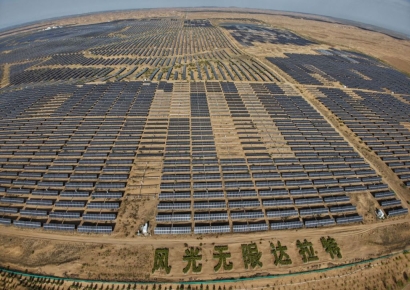 "After Dominating 80% of the Global Market... China’s Solar Industry Hit with 3 Trillion Won Losses"
- Closing Gap with Samsung and SK hynix: "Shares Surge Fivefold on Debut" as China's DRAM Giant CXMT Sweeps Up 14 Trillion Won
- "I Endure by Performing Acupuncture on My Own Bad Leg"...The Reality of the Uncounted at Seoul Station Underground Passage
- The Moment You Take Out Your Phone, They Glance: "Just the Default? Lacking Individuality" — How Gen Z in the US Judge Character
- "One Sip Has Koreans Lining Up for Four Hours... The Remarkable Turnaround of the 1993-Born Chairman [Interview]"
It is difficult to judge which of these views is correct. However, there are reasonable concerns about both the speed and method of these discussions. If South Korea and the United States continue to push only their own claims without consistent dialogue, it is only a matter of time before cracks start to appear in the alliance. Whether the DMZ foreshadows a future of peace or remains a legacy of war depends on dialogue that seeks mutual understanding.
© The Asia Business Daily. All rights reserved. Unauthorized AI training and use prohibited.