"Continuous Monitoring Despite Lack of Enforcement Power"... How UNESCO Protects World Heritage
Director Asomo: "Development Near Jongmyo Must Follow Impact Assessments and Procedures"
On Sado Mine: "Monitoring Implementation of Committee Consensus" ... "Deliberate Destruction of Heritage Is a War Crime"
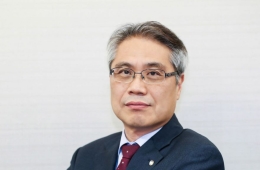
Lazar Elundu Ashomo, Director of the UNESCO World Heritage Centre, acknowledged the limitation that the World Heritage Committee lacks the means to compel specific countries to act. Instead, he pointed to the commitments that each country voluntarily accepts when submitting an application for inscription, the committee's consensus and regular monitoring, World Heritage Impact Assessments, and community participation as mechanisms to safeguard heritage. Whether the issue was the interpretation of history at Japan's Sado Mine, development around Seoul's Jongmyo Shrine, or the restoration of Timbuktu destroyed by war, the consistent answer across these distinct cases was "procedure and cooperation."

Lazar Elundo Asoomo, Director of the UNESCO World Heritage Center, is explaining the importance of world heritage preservation and international cooperation during a roundtable interview with domestic media held at BEXCO in Busan on the 24th. National Heritage Administration
View original imageThe roundtable interview with domestic media held at BEXCO in Busan on the afternoon of the 24th began later than scheduled. As the World Heritage Committee's meeting ran long, Director Ashomo first apologized when appearing before the press. During the hour-long question and answer session, he referred successively to Sado Mine, Jongmyo, and heritage in disputed areas, emphasizing that the same principles guide the World Heritage system as a whole.
He said, "Many world heritage sites located in cities are facing the same development pressures as Jongmyo. It is essential to have the proper regulations and systems in place to protect heritage, and to carry out procedures that assess how surrounding development impacts the site's Outstanding Universal Value."
He also raised the need for consultation among stakeholders such as the Seoul Metropolitan Government, the National Heritage Administration, experts, and the public. However, he stressed, "Dialogue is important, but what is even more important is that there are already established procedures and guidelines. Once a decision is made, it must be followed."
Director Ashomo described Jongmyo as "Korea itself, its culture, and the history of the Korean people." He added, "We do not want future generations, ten or twenty years from now, to hear, 'There used to be a shrine called Jongmyo, but it disappeared due to development.' Preserving Jongmyo is the responsibility of us all."

On the 8th, residents from the Sewoon District, including representatives from the Sewoon District 4 Residents' Association, held a press conference at Dasi Sewoon Square in Jongno-gu, Seoul regarding the National Heritage Agency's refusal to permit simulation demonstration filming. 2026.1.8 Photo by Kang Jinhyung
View original imageHe also commented on the National Heritage Administration, calling it "an organization where experts with expertise and experience in each field are gathered," and said, "We must follow the advice and judgments made by the National Heritage Administration." The World Heritage Centre plans to continue consulting with the National Heritage Administration regarding the preservation of Jongmyo and related development issues.
With respect to the criticism that Japan's Sado Mine has not sufficiently addressed the history of forced mobilization of Koreans during Japanese colonial rule, he stated that they would continuously review whether the decision of the World Heritage Committee is being implemented.
Director Ashomo emphasized, "The World Heritage Committee is an organization that works through dialogue and cooperation; therefore, it has no means to enforce decisions upon any particular country." He clarified, "When a country submits an application for World Heritage inscription, it is a voluntary demonstration of willingness to abide by decisions made by the 21 committee member states."
Management is conducted in a system where, after the country concerned submits a preservation status report, the World Heritage Centre and its advisory bodies review compliance with the decision and the status of the heritage, followed by the World Heritage Committee making a final judgment.

Inside the Doyugame Mine of Sado Kinzan (Sado Island Gold Mine, hereafter referred to as 'Sado Mine') located in Sado City, Niigata Prefecture, Japan, on August 19, 2021. Photo by Yonhap News
View original imageRegarding the Japanese government's interpretation that the committee's decision on Sado Mine acknowledges Japan's efforts, he remarked, "Although there is room for interpretation in the decision, the important point is that it was adopted by consensus of all committee members." He added, "Both Korea and Japan are important partners. UNESCO and the World Heritage Centre will continue to promote dialogue and cooperation between both countries."
He took a firmer stance on cultural heritage being destroyed by war and conflict. Ashomo, who has been involved in leading the restoration of cultural heritage in Timbuktu, Mali, stated, "Intentional destruction of a community's cultural heritage should be defined as a war crime."
He explained, "A heritage built over centuries can be destroyed in just one or two seconds, but it may take decades or even centuries to restore. The destruction of heritage is not simply the collapse of a building; it means the history and identity of the people and community who have cared for it for generations is also irreparably damaged."
He asserted that, to protect cultural heritage, prevention and preparedness before a conflict are more important than post-conflict restoration. He emphasized the need to investigate and document the location and condition of heritage beforehand, and to train conservation and restoration experts who can be deployed immediately during crises.

Lazar Elundu Ashomo, Director of the UNESCO World Heritage Centre, explained the importance of world heritage preservation and international cooperation during a roundtable interview with domestic media held at BEXCO in Busan on the 24th. National Heritage Agency
View original imageHe stressed that the local community should be at the center of the restoration process. "In Timbuktu, restoration was not done by bringing in outside contractors, but by having the community that had preserved the heritage undertake the work themselves," he said, "and we applied the same principle in Mosul, Iraq." He added, "Restoration should not end with rebuilding structures—it must be a process in which communities wounded by war progress toward reconciliation."
Regarding the 'Busan Declaration on World Heritage' adopted at this session, he assessed it as a starting point for the international community to jointly address the crises facing world heritage.
Director Ashomo said, "The Busan Declaration is a message from this World Heritage Committee meeting to the world," and explained, "It recognizes such crises as climate change, development, and conflict that threaten world heritage, and reflects on how world heritage can contribute to solving these problems, supporting communities, and education."
Hot Picks Today
!["Beyond Semiconductors, Components Are Now Pre-Booked for 5 Years... Samsung Electro-Mechanics Hits 1.5 Trillion Won LTA Jackpot [Chiptalk]"](https://cwcontent.asiae.co.kr/asiaresize/93/2026072411415357399_1784860913.png) "Beyond Semiconductors, Components Are Now Pre-Booked for 5 Years... Samsung Electro-Mechanics Hits 1.5 Trillion Won LTA Jackpot [Chiptalk]"
"Beyond Semiconductors, Components Are Now Pre-Booked for 5 Years... Samsung Electro-Mechanics Hits 1.5 Trillion Won LTA Jackpot [Chiptalk]"
- "After Dominating 80% of the Global Market... China’s Solar Industry Hit with 3 Trillion Won Losses"
- "They Called It an Expensive Hobby... But Even Watching Golf Burns 1,000 Calories: The Longevity Sport"
- "I Spent 1 Million Won in One Night" Deep Regrets... The Heavy Burden of Today’s Housewarming Parties
- "One Sip Has Koreans Lining Up for Four Hours... The Remarkable Turnaround of the 1993-Born Chairman [Interview]"
He alluded to the World Heritage logo, shaped like two hands joined together, and said, "The emphasis on cooperation in the Busan Declaration is the same as what is conveyed by the World Heritage logo." He further noted the addition of 'Collaboration' as the sixth strategic objective of the World Heritage Committee—alongside credibility, conservation, capacity building, communication, and communities—and emphasized, "Dialogue, consensus, and cooperation will play a vital role in preserving world heritage and passing it on to future generations."
© The Asia Business Daily. All rights reserved. Unauthorized AI training and use prohibited.