Kim Yongbeom: "President Lee Forges 'Alliance' with Silicon Valley Kingmakers... Aiming to Nurture the Next Samsung and SK"
President Lee Discusses Investment Cooperation with Six Leading VCs Who Backed Apple, NVIDIA, and Google
National Pension Service Signs MOU…Vision to Foster Next-Generation Big Tech Firms via Venture Investment
Building Long-Term Partnerships wi
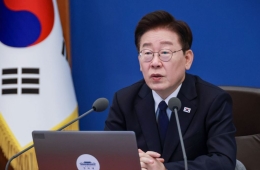
Kim Yongbeom, the Blue House policy chief, described the meeting between President Jae-myung Lee and leading Silicon Valley venture capital (VC) firms as "a moment of resolve to nurture the next champions of Korea's big tech, following in the footsteps of Samsung and SK." He emphasized, "This encounter will not simply end with a single meeting or a photo opportunity." This statement signals a move away from past methods of fostering large corporations through government-led economic development plans, toward a vision of directly connecting Korean startups with global capital and markets to help them grow into the next generation of major companies.

Sungjoo Kim, Chairman of the National Pension Service, and Martin Casado, General Partner at Andreessen Horowitz, are posing for a commemorative photo after signing an MOU at a Silicon Valley venture investment meetup held on the 25th (local time) at a hotel in San Francisco, USA, attended by President Jae-myung Lee. 7.26.2026 Yonhap News Agency
View original imageHaving returned from accompanying President Lee on his visit to San Francisco, Kim wrote in a Facebook post titled "Alliance of Kingmaker VCs" on the 25th (local time), "On the 24th, we met with big tech (Nvidia, OpenAI, Anthropic, Broadcom), and on the 25th, we met with the kingmakers who built big tech."
On the 25th (local time) at San Francisco's Fairmont Hotel, President Lee held a venture investment roundtable with representatives from six major Silicon Valley VCs: Andreessen Horowitz, General Catalyst, Sequoia Capital, Lightspeed Venture Partners, New Enterprise Associates (NEA), and Khosla Ventures. The National Pension Service also attended and signed memorandums of understanding for investment cooperation with these VCs. The agreements set forth the establishment of long-term partnerships to expand Korea’s innovation ecosystem, pursue strategic collaboration, and jointly explore promising innovative companies and global investment opportunities.
The participating VC firms have been deeply involved in the growth of today's global big tech leaders. Sequoia Capital made early investments in Apple, Nvidia, and Google. Andreessen Horowitz invested in Meta, Instagram, and US defense startup Anduril, while Khosla Ventures was an early investor in OpenAI in 2019. Andreessen Horowitz has also recently expanded into the Korean market by opening a Seoul office.
Kim noted, "These VCs’ judgment has been at the starting point of most of the world-moving big tech companies, and now that keen insight is turning toward Korea." He highlighted that these VCs have already had successful investment experiences in Korean companies such as Musinsa. According to the Blue House, the six VCs manage assets totaling $313 billion (approximately 450 trillion won).
Furthermore, Kim explained the distinctive nature of venture investment, stating, "Venture investment differs fundamentally from big tech infrastructure investment, which involves hundreds of billions or even trillions of won. In venture capital, even a deal as small as 50 billion won is considered 'mega.'" The point, he stressed, is that the perspective and networks of investors who can discover early-stage companies and help them grow into global enterprises are more important than the absolute size of capital.
Earlier at the event, President Lee stated, "The Republic of Korea is an irreplaceable hub of innovation offering new growth opportunities for global investors." He announced plans to improve visa policies and the investment environment, and to provide comprehensive support for investment, financing, and entry into overseas markets. He also proposed expanding the South Korea–US relationship beyond a security alliance to a broader alliance encompassing technology, innovation, and startups.
Participating VCs pointed to the need for a culture that allows for renewed attempts after failure and appropriate follow-on funding as essential factors for the Korean startup ecosystem. In response, President Lee vowed to transform Korea into a society that broadly provides entrepreneurship opportunities for the youth and the public at large. He instructed Kim and First Vice Minister of SMEs and Startups Roh Yongsuk to consider practical ways to connect universities and investment firms.
Kim stated, "The next generation of Korea’s major corporations cannot grow in the same way as Samsung and SK, relying on government-led economic development plans." He noted, "Leading companies in advanced economies began as startups, secured investment from venture capital, and then rose to global markets." Instead of the previous industrial policy, where the government selected specific companies and concentrated resources and financing, the plan is to shift growth policy so private investors select promising firms while the government supports regulatory, visa, finance, and overseas expansion conditions.
Hot Picks Today
 "Surviving on One Meal a Day to Invest 3.5 Million Won Monthly... 'FIRE' Craze Sparks 'NISA Poverty' in Japan"
- "Correction Over for Samsung and SK hynix" "670,000 for Samsung, 4.7 Million for SK hynix": Why Global IBs Remain Optimistic
- "Used for the Wedding" 300,000-Won Ring and Dress...Changing Wedding Trends
- Causing Trouble Without a Simple "Sorry"... The Reason Behind the 'Gen Z Stare' Revealed
- Nongshim Third-Generation Executive Sangyul Shin to Wed SKT Employee on the 13th
"The world’s leading venture capitalists know best how growth happens and at what pace," Kim concluded. "Connecting them with Korean startups is precisely the role of the state. I believe that this meeting will sow the seeds of cooperation, which will grow into a great forest of startups in the future."
© The Asia Business Daily. All rights reserved. Unauthorized AI training and use prohibited.