Kwanghyun Lim: "Selling One Gangnam Home Earns 20 Billion Won in Special Deductions... The Ultimate in Regressivity"
Lim Shares Post on Special Deduction Reform on X...
99 of Top 100 Special Deduction Cases in 2024 Were in Seoul
78.6% Concentrated in Gangnam, Seocho, and Yongsan; Over 20 Billion Won Deducted on a Single Gangnam Property
87 of Top 100 Cases in Gangnam and Seocho...
Average Deduction: 4.1 Billion Won in Gangnam, 3.3 Billion Won in Seocho

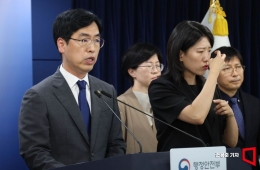
Kwanghyun Lim, Commissioner of the National Tax Service, pointed out that the special long-term holding deduction (commonly referred to as "special deduction") for single-home owners is a "regressive structure" that concentrates benefits on owners of ultra-high-priced homes. He stressed the need for reform in this area.
On July 26, Commissioner Lim wrote on X (formerly known as Twitter), "The special deduction for single-home owners applies only to homes with actual transaction prices exceeding 1.2 billion won." He added, "For homes valued at 1.2 billion won or less, if the requirements for single-home owner capital gains tax exemption are met, the entire capital gains tax is exempted. Therefore, for the vast majority of single-home owners, whether or not the special deduction is reformed makes no difference." He continued, "The current special deduction is excessively regressive," explaining, "If you have held and lived in a property for ten years, up to 80% of the taxable capital gains can be deducted without limit, resulting in a structure where the more expensive the home and the larger the capital gain, the greater the deduction received."

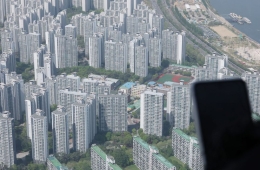
Commissioner Lim released the results of an analysis of capital gains tax filings for homes sold in 2024. According to Commissioner Lim, 24,816 single-home properties nationwide received a total of 5.03 trillion won in special deductions. Of this, 4.5 trillion won—or 90% of the total deduction benefit—was concentrated in Seoul. Within Seoul’s 4.5 trillion won total, the districts of Gangnam, Seocho, and Yongsan accounted for 3.5 trillion won, representing 78.6%. In contrast, districts such as Dobong, Geumcheon, Jungnang, Nowon, Dongdaemun, Gwanak, Eunpyeong, and Guro barely received any benefit from the special deduction.

He also explained the distribution of the top 100 properties nationwide that received the largest special deductions. According to the data, of these 100 properties, 99 were located in Seoul, with 87 concentrated in Gangnam District (68 cases) and Seocho District (19 cases). The average deduction in Gangnam District reached 4.1 billion won, and in Seocho District, it was 3.3 billion won. The sum of deductions in these two districts accounted for 88.3%. In some cases, over 20 billion won was deducted from capital gains after selling a single property in Gangnam District using the special deduction. Commissioner Lim remarked, "This could be described as the ultimate form of regressivity."
Hot Picks Today
 "Thanks to Consumers Turning Away, Twosome Place Enjoys a Boost as Customers Flock Away from Starbucks"
- "Money Matters More Than Studying": 2.7 Million Won Camps Fully Booked as Chinese Parents Raise 'Little Buffetts'
- "Three Years' Worth of Public Pensions Lost: NPS Faces 180 Trillion Won Shock After Missing Peak Selloff [In-Depth Analysis of Funds and Mutual Aid Associations]"
- "Get a Tattoo for an Interview": US Startup Draws Job Seekers' Anger After 7 Get Permanent Ink
- "Lifetime Democratic Supporters Turn Away Amid Stock Crash... Foreign Media: 'Political Burden for President Lee'"
He further emphasized, "Tax systems must be fair, and the basic principle is that those with more income should bear a greater tax burden through progressivity." However, "under the current special deduction, up to 80% of capital gains can be deducted without limit, so as capital gains grow, the tax burden decreases dramatically." He said, "The capital gains resulting from rising real estate prices are predominantly enjoyed by owners of high-priced homes, and the special deduction effectively guarantees this unearned income. In short, the system encourages holding onto a single, strategically chosen home."

He continued, "It has been 17 years since the special deduction rate for single-home owners was raised to a maximum of 80% without limitation in 2009." He added, "While it’s generally good for the tax system to maintain consistency, if changes to the tax law bring about unexpected side effects, it is the government's duty to make necessary adjustments." He concluded by asking, "Tax benefits should be normalized so that everyone accepts them as fair; while protection for the middle class is important, what do you think about granting unlimited special deductions for ultra-high-priced homes?"
© The Asia Business Daily. All rights reserved. Unauthorized AI training and use prohibited.