Trump Warns EU Will "Pay a Heavy Price" for Google Fine
Retaliatory Tariffs Threatened Over EU Fine on Google
Trump: "The United States is Not Europe’s 'Piggy Bank'"
The European Union (EU) imposed a hefty fine on Google, and in response, U.S. President Donald Trump announced that he would consider tariff retaliation through a Section 301 investigation under U.S. trade law.
On the 24th (local time), President Trump posted on the social media platform Truth Social, saying, "I learned that Google, an exceptionally innovative and remarkable company, was hit with an additional $1 billion fine by the EU without any explanation." He added, "The United States is not Europe’s 'piggy bank,' and we will not allow it to become one."

He further stated, "We will immediately launch a Section 301 investigation into the practice of 'plundering' American companies and taxpayers," warning, "The EU will pay a very heavy price for this illegal and highly unethical act." He went on to assert, "All fines will be returned, and we expect substantial tariffs to be imposed as soon as possible."
President Trump pointed out, "The EU imposed fines of $15 billion on Apple, $3 billion on Meta, and $2.5 billion on Amazon for no apparent reason," adding, "The total amount of fines imposed on Google has exceeded $18 billion." He argued that such fines were "an illegal and extremely discriminatory practice," and insisted that "This practice, which began under the Biden administration, will not continue under a Trump administration."
On the previous day, the EU imposed an additional fine of 890 million euros (approximately 1.5 trillion won) on Google for violating the Digital Markets Act (DMA).
The U.S. Section 301 of trade law grants the authority to take actions such as imposing tariffs in response to unfair or discriminatory foreign government policies.
With President Trump having publicly expressed his intention for the "swift imposition of significant tariffs," it is anticipated that a Section 301 investigation at the level of the U.S. Trade Representative (USTR) will soon be launched, likely leading to the imposition of tariffs. Some also suggest that the U.S. could impose tariffs on other countries as well, citing discrimination against American companies as the basis.
Hot Picks Today
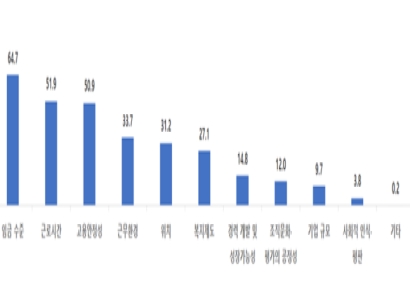 "Please Pay Me at Least 3 Million Won a Month": More Than Half of Young People Today Prioritize "Working Conditions" Over Company Size
- Selling Like Crazy Every Year... 30-Year-Old Hetbahn Takes on a New Challenge: Tastes Better Than "Mom's Home Cooking" [On-Site Report]
- Ran 18 km With 9-Year-Old Tied to Him at the Waist... "Man Banned From Competing for 3 Years"
- "Hey, Lady, Teach Your Kids to Behave!" ... 300,000 Won in Cash and a Bodily Injury Claim Demanded Over Child's Door Ding
- Beachgoer Finds 'Plastic' That Turns Out to Be Perfume Ingredient Worth More Than Twice as Much as Gold
President Trump previously imposed reciprocal tariffs on various countries based on the International Emergency Economic Powers Act (IEEPA). After the U.S. Supreme Court ruled the practice unlawful in February, he shifted to imposing tariffs under Section 301 of the trade law.
© The Asia Business Daily. All rights reserved. Unauthorized AI training and use prohibited.




![[Market ING] KOSPI Seeks Rebound in Superweek Packed with Corporate Earnings and FOMC](https://cwcontent.asiae.co.kr/asiaresize/307/2026102514484873155_1792907327.jpg)