Samsung and SK hynix Poised for 'AI Big Deal' with US Tech Giants During Lee's Visit: "Very Large Numbers Expected"
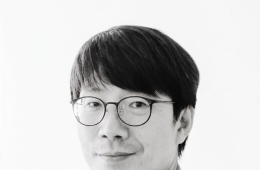
Kim Yongbeom, Policy Chief, Interview with Foreign Press
President Lee Embarks on 11-Day Tour of San Francisco and South America Starting July 24
President Lee Announces 'San Francisco AI Declaration': Stable Memory Supply and Korea’s Role a
Samsung Electronics and SK hynix are expected to sign large-scale long-term memory semiconductor supply contracts with global big tech companies, while overseas corporations are also set to participate as both customers and investors in domestic Artificial Intelligence Data Center (AIDC) construction projects. This move is anticipated to concretize the government's 4,700 trillion won "three mega projects," announced in time for President Lee Jaemyung’s visit to San Francisco, by turning plans into actual contracts and investments.

On the 24th, Kim Yongbeom, chief policy advisor at the Blue House, said during a press briefing with major foreign media including Reuters, Bloomberg, AP, Financial Times (FT), and The New York Times ahead of President Lee's trip to San Francisco and South America: "Samsung, SK hynix, NAVER, and others will be announcing at once both long-term contracts that have been under discussion and new contracts and memorandums of understanding (MOUs). Very large and meaningful numbers will be revealed."
Kim further explained, "The most significant is a new long-term contract for memory chips. Samsung and SK hynix will each commit to supplying specific semiconductors in set amounts over the long term." However, the contracting companies, supply volumes, and contract amounts were not disclosed.
Regarding domestic AIDC construction projects, specific investment and customer agreements with global big tech firms will also be revealed. Kim said, "Previously, the plan to build AIDCs in Korea by 2035 was announced, but this time, final agreements with firms either demanding AIDC services or wishing to invest will be disclosed." He added, "For large-scale AIDC construction, we will announce which major global companies are confirmed as customers. With the customers secured, the AIDC drive can be fully realized within a few months—now all that remains is to secure the land."
The government plans to first build 8.4GW worth of AIDCs in the first phase, then expand up to 18.4GW in the second phase. According to the Blue House, the level of investment for AIDCs alone is expected to be comparable to building a semiconductor fabrication facility. Kim particularly emphasized that these contracts will demonstrate the feasibility of the government's 4,700 trillion won three mega projects. "When the figure of 4,700 trillion won was first mentioned, people thought it was too big, but it could be even larger in reality," he said. "When you see the numbers announced by the companies this time, you will understand that these are real, and see the context behind such figures."
He also highlighted that Korea’s expansion of semiconductor production facilities is not a substitute for investment in the United States but rather a response to the explosive AI demand from American big tech firms. Kim said, "Eighty to ninety percent of orders come from the United States. The expansion of fabs in Korea is closely linked to the explosive demand from American firms and is designed to meet these orders." Regarding whether the Trump administration or U.S. Department of Commerce pressured Korean firms for additional investment in the U.S. after the Gwangju-Jeonnam semiconductor cluster announcement, Kim clarified, "Neither President Trump nor the U.S. Department of Commerce has made an official request to our counterparts."
On July 24 (local time), President Lee is scheduled to announce the 'San Francisco AI Declaration' at the AI Summit held in San Francisco. In a speech lasting about seven minutes, the president will outline Korea’s AI policy vision and the nation’s role in the global AI ecosystem. The declaration will include Korea’s plan to ensure a seamless supply of memory semiconductors essential for the AI revolution and to boost supply security by establishing a second semiconductor cluster in the Honam region, following the metropolitan cluster.
Plans also include making Korea a stable customer and testbed for global AI companies. Through the government's 'AI for All' initiative, Korea aims not only to develop proprietary foundation models but also to create an AI platform for all citizens, integrating agent AI functionalities. Korea will promote the everyday use of AI in the medical and public sectors and will share its technological experience with countries aiming to build their own AI solutions by offering official development assistance (ODA) and other forms of support.
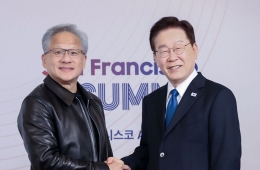
The AI Summit will be attended by Dario Amodei, CEO of Anthropic; Sam Altman, CEO of OpenAI; Jensen Huang, CEO of NVIDIA; Hock Tan, CEO of Broadcom; and top executives from Samsung Electronics, SK, Hyundai Motor Company, and NAVER. President Lee and business leaders from both countries will discuss the future of the AI industry and cooperation strategies for about an hour.
Kim also identified the negative effects of rapid AI industry growth on youth employment and asset markets as new policy challenges. "What we are seeing now is not a lowercase k but an uppercase K-shaped growth," he observed. "In particular, young people are losing entry pathways to start their careers." He continued, "AI does not merely restrict job growth—it replaces human intelligence, making it qualitatively different from previous periods of 'jobless growth.' We are seeking new ways to provide a first step for young people entering society."
Additional tax revenue generated by the rising profits of AI and semiconductor companies will be allocated to a Future Response Fund, with a focus on youth, the future, regional, and educational sectors. Regarding the size of the fund, Kim predicted, "It will naturally exceed several trillion won. Including not only corporate tax but also income taxes from performance bonuses, this could secure substantial resources."
Meanwhile, the government will announce a separate energy vision in August to address rising power demand from the AIDC and semiconductor industries. The plan is to focus state finances and R&D capabilities on technologies—including offshore wind, solar, pumped hydro, energy storage systems (ESS), carbon capture, utilization and storage (CCUS), and small modular reactors (SMR)—that can be commercialized within the next five years.
Hot Picks Today
 “Wanted to Show Off $684,000 Bonus...” The Consequences Faced by a Chinese Employee After Posting Pay Statement on SNS
- "President Picked Stocks?" Wall Street Questions $150,000-a-Month 'Signal Room' Service
- President Lee Meets with CEO of Anthropic in the US: "Significant Expansion of AI Investment"
- "Why Should Childless Households Pay Playground Maintenance Fees?" Online Debate Heats Up Among Single and Childless Residents
- 'Former Chungjuman' Kim Sun-tae: "Sold My House to Go All-In... Held Over 1,000 Samsung Shares at 58,000 Won"
Kim stated, "We will, of course, meet our obligations under the Framework Act on Carbon Neutrality and the Nationally Determined Contribution (NDC) for greenhouse gas reductions. We will mobilize national R&D support to ensure Korea is the first country in the world to commercialize new energy technologies." To a question about future fiscal management, Kim replied, "We have the fiscal capacity. Sometimes, however, there is a lack of creativity regarding where and how to spend it. While our budget is in surplus, our imagination may be in deficit."
© The Asia Business Daily. All rights reserved. Unauthorized AI training and use prohibited.