Japan Hit with Same 12.5% as Korea... "Regret" over U.S. Forced Labor Tariffs
Chief Cabinet Secretary Minoru Kihara Holds Press Conference
The administration of former U.S. President Donald Trump has introduced a "forced labor tariff," prompting the Japanese government to express regret. Like Korea, Japan is closely watching whether the final tariff rate—including the additional findings on overproduction in the future—will exceed the upper limit of 15% previously agreed upon in the trade agreement with the United States.

Minoru Kihara, Japanese Chief Cabinet Secretary, held a press conference in Tokyo, Japan on the 14th. Photo by Reuters Yonhap News
View original imageAccording to Kyodo News, Minoru Kihara, Chief Cabinet Secretary of Japan, stated at a press conference on the 24th, "It is regrettable that tariffs have been imposed on the grounds that Japan does not have a system prohibiting the import of forced labor products, even though Japanese industry and trade operate in accordance with international norms." He added, "Both Japan and the United States share the understanding that the tariff agreement reached last year will continue to be implemented, and we have confirmed with the U.S. side that no additional tariffs exceeding last year's agreement will be imposed."
Earlier, the Trump administration finalized and announced forced labor tariffs of 10% to 12.5% on 60 countries, including Korea and Japan, based on Section 301 of the Trade Act. For Japan, as with Korea and Switzerland, if the existing Most-Favored-Nation (MFN) tariff is lower than 12.5%, the Section 301 tariff will be added so that the total tariff rate reaches 12.5%. If the MFN tariff is 12.5% or higher, no additional tariff is imposed. The new tariffs will replace the previous global tariff of 10%, which expired on the 24th.
Hot Picks Today
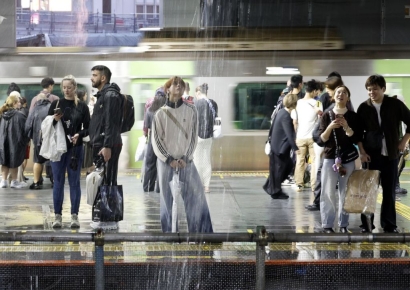 "Such chaos for the first time in 140 years"... Even illnesses surge, Tokyo stunned by 'unbelievable' event
- Furious After Elbow Was Touched While Sleeping, Passenger Threatens to Kick and Forces Flight Attendant to Kneel
- "With the Push of a Remote Button, Cash Pours Out"... U.S. Cartel Steals 55.2 Billion Won by Hacking ATMs
- "After 'Cannot Be Dismissed as a Conspiracy Theory' Remark: Lee Dongjin Says 'No Retraction or Apology'"
- "Nothing Left to Buy, Feeling Indifferent"... 'Rich Daughter' Vibe in Department Stores with 'Hyunbaek Core'
However, if the overproduction tariffs announced by the United States last March are imposed as well, the final tariff rate could exceed 15%. The U.S. Trade Representative (USTR) began investigating 16 trading partners in March—including Korea, China, Japan, and the European Union (EU). The results have not yet been announced. As such, Japan is also watching closely to see whether the U.S.-Japan tariff agreement will remain intact. The core of last year's agreement was to set mutual tariffs and auto tariffs on Japanese products at 15%, with Japan agreeing to make $550 billion in investment in the United States in return.
© The Asia Business Daily. All rights reserved. Unauthorized AI training and use prohibited.