Oh Se-hoon Meets Planning and Budget Minister, Emphasizes Need for Financial Support for Aging Infrastructure
Requested National-Level Support at Meeting with Minister Paek Hongkeun
Gap in Central Funding Rates for Universal Welfare Programs
Insufficient Support for Delegated Local Government Tasks… "Burden Borne by City Alone"
Seoul Mayor Oh Se-hoon has requested a national reinvestment and government funding support from Minister of Planning and Budget Paek Hongkeun for the improvement of aging infrastructure.
According to Seoul city officials on the 24th, Mayor Oh met with Minister Paek at the Korea Fiscal Information Service that morning, explained the current state of deterioration in Seoul's infrastructure, and conveyed the need for financial assistance.

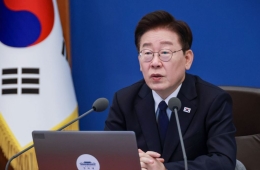
Seoul Mayor Oh Se-hoon proposed to Minister of Strategy and Finance Hongkeun Park (left) at the Korea Fiscal Information Service on the 24th to provide national funding support for the promotion of aging infrastructure improvement projects. Seoul City
View original imageCurrently, infrastructure in Seoul, including roads and bridges, was predominantly constructed in the 1970s and 1980s, and about 58% of these facilities are now over 30 years old. In the case of electrical facilities on Seoul Subway Lines 5 to 8, 71.7% have received a D rating due to aging, while approximately 58% of the total 10,884 kilometers of sewer lines have exceeded 30 years since installation. This indicates that the overall aging of infrastructure is ongoing.
However, while the central government provides 70% to 80% of funding support to other provinces and cities for nationwide and universal welfare projects, it only provides 60% to Seoul, thereby increasing the city’s own financial burden. In the field of social welfare, Seoul is subject to a lower national subsidy rate than other local governments and as a result, bears an additional 345.23 billion won per year. When considering all projects, this additional financial burden rises to 357.38 billion won.
In particular, for the child allowance, which is a universal welfare program for all citizens, Seoul receives a national subsidy rate of only 60%. This is lower than the 70% to 80% rates applied to other regions, which leads Seoul to shoulder an additional burden of 120.3 billion won in 2026 alone. Moreover, if the national subsidy rate were to be reduced by 15 percentage points in 2027 based on the current government proposal, it is estimated that Seoul's additional financial burden would increase to 236.8 billion won.
There are also repeated cases in which, after the central government designs policy projects, the work and responsibilities are delegated to Seoul City, but sufficient budget and manpower required to implement these projects are not provided. For example, in the case of labor inspector duties that were recently delegated to local governments, other cities and provinces will receive personnel costs through general grants. However, as Seoul is not eligible for such grants, it must cover all relevant personnel expenses with its own resources. When this system is fully implemented in 2031, it is anticipated to generate an additional fiscal burden of about 25.7 billion won per year. In addition, for the Delinquency Management Task Force, fair wage and adequate salary programs, the central government makes the policy decisions, but Seoul City must bear the entire cost of policy implementation on its own.
Hot Picks Today
 "Surviving on One Meal a Day to Invest 3.5 Million Won Monthly... 'FIRE' Craze Sparks 'NISA Poverty' in Japan"
- "Correction Over for Samsung and SK hynix" "670,000 for Samsung, 4.7 Million for SK hynix": Why Global IBs Remain Optimistic
- "What About the Parents' Retirement?"...Income and Occupation Alone Aren’t Enough as Young People's Marriage Criteria Change
- Causing Trouble Without a Simple "Sorry"... The Reason Behind the 'Gen Z Stare' Revealed
- Nongshim Third-Generation Executive Sangyul Shin to Wed SKT Employee on the 13th
Mayor Oh stated, "Seoul's infrastructure is core to supporting the national economy and the daily life of the people," emphasizing, "Aging infrastructure must be reinvested in at the right time before risks materialize. In order to ensure the safety of citizens and the city's competitiveness, decisive and proactive financial support from the central government is absolutely necessary." He further added, "For nationwide and universal welfare projects, as well as tasks that the state has delegated to local governments, it is a fundamental principle that the state takes responsibility. We must prevent the unfair shifting of costs onto Seoul and reinforce the central government’s fiscal responsibility."
© The Asia Business Daily. All rights reserved. Unauthorized AI training and use prohibited.


![Listings Pile Up in Gangnam, While Gangbuk Has None Left to Sell... As Seoul Transactions Dwindle, Buying Sentiment Diverges [Real Estate A to Z]](https://cwcontent.asiae.co.kr/asiaresize/307/2026090415531016688_1788504791.jpg)