Namhae Daejanggunji, Symbol of Sambyeolcho’s Anti-Mongol Struggle, Set to Be Designated as Gyeongsangnam-do Monument
A Key Goryeo-Era Heritage Site Confirmed by Both Historical Records and Excavations
Anticipation for Systematic Preservation and Utilization as a Historical and Cultural Resource
Namhae County in South Gyeongsang Province announced on July 24 that the 'Namhae Daejanggunji,' known as a stronghold for the Sambyeolcho's anti-Mongol activities during the Goryeo Dynasty, has been announced for designation as a Gyeongsangnam-do monument.
Located in Seho-ri, Seomyeon, Namhae County, Namhae Daejanggunji is a site where Sambyeolcho General Yu Jonhyeok, as recorded in the Goryeosa (The History of Goryeo), used Namhaehyeon as a base for anti-Mongol activities in the late Goryeo period. It is considered one of the major maritime bases for the Sambyeolcho’s resistance against the Mongols, which spanned from Jindo to Jeju.
According to the excavation survey commissioned by the county to the Gyeongnam Research Institute, it has been confirmed that the site features a terraced area approximately 141 meters in length, covering an area of 6,400 square meters, and a large retaining wall about 5 meters high, making it the largest known Goryeo-period building site in the Namhae region. The site was first established in the mid-Goryeo period and saw large-scale expansion and operation in the 13th century.
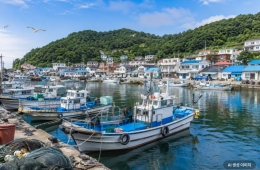
![[Photo provided by Namhae County] Namhae County's "Namhae Daejanggunji," known as a base for the Sambyeolcho's anti-Mongol activities during the Goryeo Dynasty, is announced to be designated as a Gyeongsangnam-do cultural monument. A panoramic view of Seosanghang (Jowoon Road) and Daejanggunji](http://www.asiae.co.kr/news/img_view.htm?img=2026072413070857435_1784866028.jpg)
[Photo provided by Namhae County] Namhae County's "Namhae Daejanggunji," known as a base for the Sambyeolcho's anti-Mongol activities during the Goryeo Dynasty, is announced to be designated as a Gyeongsangnam-do cultural monument. A panoramic view of Seosanghang (Jowoon Road) and Daejanggunji
View original imageIn particular, the spatial structure of the site and the method of constructing its large retaining wall are structurally similar to Yongsangseong Fortress in Jindo, built in 1270, indicating a correspondence between historical records and academic research findings.
The announcement of the designation as a Gyeongsangnam-do monument will be followed by a 30-day public notice period to collect opinions from various sectors, after which the final decision will be made through deliberation by the Gyeongsangnam-do Cultural Heritage Committee.
Namhae County Mayor Ryu Kyungwan stated, "Namhae Daejanggunji is an important site both as a maritime base for the Sambyeolcho and as an example of late Goryeo period architectural and civil engineering techniques. With its designation as a Gyeongsangnam-do monument, we will work to ensure systematic preservation and management, and utilize it as a key historical and cultural resource in our region."
Cultural heritage is a valuable asset that reflects not only traces of the past but also represents the identity of a region. Now that the historical significance of Namhae Daejanggunji has been re-highlighted, we look forward to its full transmission to future generations through systematic preservation and research.
Hot Picks Today
 "Surviving on One Meal a Day to Invest 3.5 Million Won Monthly... 'FIRE' Craze Sparks 'NISA Poverty' in Japan"
- "Spend 200,000 Won, Get 100,000 Won Back?"... Government's Bold Move Unveiled [Essential Tips for Benefits]
- Nationwide Gas Station Fuel Prices Drop for 16 Straight Weeks... International Oil Prices Rise
- "Is Extended Fasting Risky Beyond This Age?... The Twist in 'Intermittent Fasting' [Experiment Note]"
- "I'm Getting Married, But Please Don't Come"... Gen Z's Changing Wedding Trends [World is Z-gold]
© The Asia Business Daily. All rights reserved. Unauthorized AI training and use prohibited.



![Listings Pile Up in Gangnam, While Gangbuk Has None Left to Sell... As Seoul Transactions Dwindle, Buying Sentiment Diverges [Real Estate A to Z]](https://cwcontent.asiae.co.kr/asiaresize/307/2026090415531016688_1788504791.jpg)
![[Report] "From AI Homes to Premium Lineups"... Chinese Electronics Dominate IFA 2026](https://cwcontent.asiae.co.kr/asiaresize/307/2026090505514216935_1788555102.jpg)
![[New York Stock Exchange] Interest Rate Hike Concerns Rise on Strong Employment Data... Dow Down 0.51%](https://cwcontent.asiae.co.kr/asiaresize/307/2026090223194913207_1788358790.jpg)