"Unlocking 5,935 Trillion Won"… Japan to Lower Investment Barriers for Elderly with AI Assessment
Ministry of Health, Labour and Welfare Collaborates with Financial and Consumer Affairs Agencies on Development
Investment Competence to Be Certified by AI-Verified Judgment
Shift from Blanket Age Restrictions to Individualized Assessments
The Japanese government plans to develop an artificial intelligence (AI) assessment tool that will be used by financial institutions to evaluate the investment decision-making capabilities of elderly individuals, with the aim of encouraging older people to invest their assets.

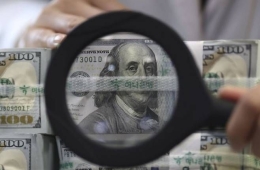
Image of Japanese banknotes to aid article understanding. Photo by Reuters and Yonhap News
View original imageAccording to the Nikkei newspaper on the 23rd, Japan's Ministry of Health, Labour and Welfare, together with the Financial Services Agency and the Consumer Affairs Agency, has decided to develop an AI tool that assists in evaluating the cognitive capabilities of elderly investors. The development will be handled by researchers from Keio University and institutes specializing in geriatric medicine.
This tool will be used directly by elderly investors who visit bank investment desks. Its purpose is to determine whether they can independently understand the features and fees of financial products, and whether they are able to choose products suited to their own financial circumstances. If an individual is assessed as having sufficient judgment, a certificate attesting to their investment competence will be issued, which they can present to other financial institutions as needed.
This measure aligns with broader policy efforts to channel elderly assets into investments. The Japanese government has set a strategy to raise the share of household financial assets held in stocks, investment trusts, and bonds to 40% by 2040, in order to maximize private-sector investment in key growth sectors. Separately, the Financial Services Agency has been considering the introduction of a special tax-exempt small investment system (NISA) for the elderly. One proposed plan, dubbed "Platinum NISA," would include investment trusts that pay monthly dividends exclusively for older investors.
Until now, Japan's financial sector has imposed blanket restrictions on elderly investors based on age. The Japan Securities Dealers Association requires that those aged 75 and over be approached with extra caution regarding investments, and banks and securities companies have either stopped selling new products to people above a certain age or required that family members be present during investment decisions. The new AI assessment tool is intended to replace these age-based standards with individualized evaluations of decision-making ability.
As of now, Japanese individuals aged 75 or older hold a total of 660 trillion yen (approximately 5,935 trillion won) in financial assets. The Ministry of Health, Labour and Welfare estimated that implementation of this tool in the field could boost investment among elderly asset holders by 32 billion yen (about 2.9 trillion won).
AI technology for assessing cognitive capabilities is already in the commercialization stage in the private sector. Companies such as Shionogi & Co., Ltd. and FRONTEO have developed apps that use AI conversational analysis to evaluate cognitive function, supplying them to insurance providers including Nippon Life Insurance. Masaru Mimura, emeritus professor at Keio University, supervised the development of these apps, which ties in with the university's involvement in the current government tool development. The government tool will also be developed using similar technology.
Hot Picks Today
 What Threatens Baby's Health More Than Alcohol or Cigarettes During Pregnancy?..."Parents' Wallet"
- "I Was Shocked by the Daycare Meal Plan"... 'Ten-Pocket' Meals Crafted by Major Corporations Pull Out All the Stops
- "Already Listed Before Release?" Store Owners Hoard and Resell First... Japanese Convenience Stores in Uproar
- "Price Soars Past 40 Million KRW"...This Company Hits 152 Billion KRW Jackpot Amid New Drug Development Surge
- "Offering Up to 90% Off"... Why Today's 20s and 30s Flock Here: The Emerging Beauty Powerhouse to Add 100 Stores [Why&Next]
In Korea, measures to protect elderly investors have also been established. The Korea Financial Investment Association introduced new standards to protect elderly investors in its standard investment solicitation rules in 2015, and in 2019, following the problematic sale of overseas interest rate-linked derivative funds (DLFs), financial authorities lowered the elderly investor criterion from age 70 to 65. Currently, if sales are made of unsuitable products to investors aged 65 and older, the sales process must be recorded, and a minimum of a two-business-day cooling-off period must be provided. However, there is no system in place to test decision-making capability and issue a corresponding certificate.
© The Asia Business Daily. All rights reserved. Unauthorized AI training and use prohibited.