Stronger Taxation on Non-Owner-Occupied and Ultra-High-Value Homes: Limited Effect on Price Stabilization as Listings Dry Up
Experts Share Their Takeaways from the National Real Estate Policy Debate
Differentiated Taxation for Non-resident Single-home Owners
Could Lead to Shortage of Listings in the Rental Market
One-time Capital Gains Tax Exemption May Dampen Transactions
Experts who observed the National Real Estate Policy Public Debate held on the 23rd expressed mixed reactions: while some responded positively, saying that differentiated taxation on non-resident single-home owners could help suppress speculation, others expressed concerns that it could further strengthen the shortage of listings (so-called 'lock-in' effect) in the rental market. In particular, regarding the suggestion—strongly welcomed by President Lee Jae-myung—of granting a capital gains tax exemption only once in a lifetime, some pointed out that "this could instead intensify the so-called preference for owning one prime property."
President Lee, at the National Real Estate Policy Public Debate held at the KBS Annex in Yeouido on the previous day, introduced the framework for differentiated taxation, stating, "We will set a basic holding tax burden for single-home owners, then grant reductions for those using the property for self-occupancy or for low- and middle-income households, and take regional factors into account as well."

President Lee Jae-myung is asking participants for their opinions at the National Real Estate Policy Debate held on the 23rd at the KBS Annex in Yeouido, Seoul. Photo by Yonhap News
View original imageNon-resident Single-home Owners and Ultra-high-priced Homes to Face Increased Property Taxes... "Potential Polarization and Limited Impact on Price Stabilization"
Experts pointed out that while distinguishing between owner-occupancy and possession for taxation could have some impact in deterring speculation, it may also increase preferences for prime single properties, potentially accelerating polarization in the real estate market. Ham Youngjin, Head of Real Estate Research Lab at Woori Bank's Wealth Management Business Strategy Department, said, "Given the government's core policy goal of protecting end-users and curbing speculation, differentiating tax burdens based on the purpose—self-occupancy versus investment—may enhance fairness in policy." However, he also noted, "If self-occupancy is emphasized too much, resolving polarization—which is caused by shortages in the rental housing market or a heightened preference for prime properties—may not be easy."
Woo Byungtak, Senior Advisor at Shinhan Bank Premier Pathfinder, also commented, "Raising the tax burden on non-resident single-home owners could induce more listings in the short term," but added, "Over time, it could bring about adverse effects, such as fewer listings and increased asking prices."

President Lee Jae-myung is speaking at the National Real Estate Policy Public Debate held at the KBS Annex in Yeouido, Seoul on the 23rd. Photo by Yonhap News
View original imageSome experts expressed skepticism about increasing the property tax burden on ultra-high-priced homes to curb the preference for a single prime property, viewing it as having limited effect on suppressing overall market price increases. During the debate, as opinions were voiced that the current comprehensive real estate tax (Jongbuse) standards are already differentiated by housing price, new calls emerged to impose even heavier taxes only on ultra-high-priced homes.
Kim Hyoseon, Senior Real Estate Researcher at NH Nonghyup Bank, stated, "If taxes on ultra-high-priced homes are further increased, there could be a greater demand from elderly homeowners looking to downsize to lower-priced properties. In other words, it may induce more supply of listings." However, she emphasized, "Given the scarcity of high-priced homes and demographic considerations, there are limits to what tax policy alone can do to curb prices."
In particular, there was significant concern regarding proposals to designate homes valued at 1 billion won or more as ultra-high-priced and apply a progressive property tax with an effective rate of around 1%. Many voiced worries about tax resistance and market shocks. Director Ham remarked, "If the policy goal is to suppress speculation, then setting the 'ultra-high-priced' threshold at around 5 billion won in market value or 3.5 billion won in official appraised value would better clarify the target of the policy."
Advisor Woo likewise explained, "According to this year’s official appraised values, there are 271,692 homes priced between 1.5 billion and 3 billion won, accounting for 1.7% of the total. Even if we classify homes of 1.5 billion won or more as ultra-high-priced, their share among all households is still very high."
Limiting the Capital Gains Tax Exemption to One Lifetime Use..."Fears of Sluggish Transactions and Strengthened One-property Preference"
There was also concern that the proposal—which drew the greatest attention during the debate—of limiting the capital gains tax exemption to just once in a lifetime could exacerbate both sluggish transactions in the market and the preference for a single prime property.
Hot Picks Today
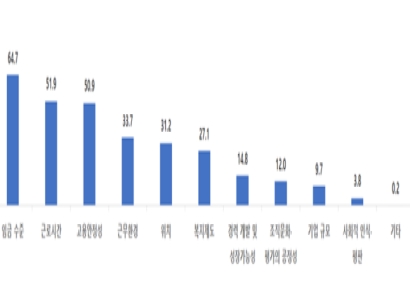 "Please Pay Me at Least 3 Million Won a Month": More Than Half of Young People Today Prioritize "Working Conditions" Over Company Size
- Selling Like Crazy Every Year... 30-Year-Old Hetbahn Takes on a New Challenge: Tastes Better Than "Mom's Home Cooking" [On-Site Report]
- He Left It in the Car and Forgot... "I Nearly Collapsed with Joy": Man Wins $1.48 Million Lottery
- Ran 18 km With 9-Year-Old Tied to Him at the Waist... "Man Banned From Competing for 3 Years"
- Beachgoer Finds 'Plastic' That Turns Out to Be Perfume Ingredient Worth More Than Twice as Much as Gold
Kwon Youngsun, Team Leader at Shinhan Bank's Real Estate Investment Advisory Center, stated, "If homeowners are required to pay capital gains tax from their second home switch onward, even for homes valued at 500 million or 1 billion won, transaction activity will inevitably decline. People may abstain from buying or selling until they can afford one prime property, or it will take much longer on average to upgrade, which could have a dampening effect on market transactions."

On the 23rd, a national public debate on real estate policy was held at the KBS Annex in Yeouido, Seoul, presided over by President Lee Jae-myung. Photo by Yonhap News
View original imageAdvisor Kim also commented, "If the capital gains tax exemption is shortened to just one lifetime use, it could shrink market liquidity and seems inconsistent with the policy intent of not heavily taxing owner-occupied homes." Advisor Woo also noted, "If the usage of the single-home tax exemption becomes restricted, everyone may end up focusing their resources on purchasing the most expensive home they can afford, possibly driving further demand to areas like Gangnam."
© The Asia Business Daily. All rights reserved. Unauthorized AI training and use prohibited.