Koo Yoonchul: "Full Effort for 2% Inflation... Extending Fuel Tax Cut and Maintaining Price Cap" (Comprehensive)
“Task Force on Special Management of Livelihood Prices” convened on July 24
Amid rising uncertainty due to the worsening situation in the Middle East, the government is launching comprehensive measures to bring the consumer price inflation rate, which has exceeded 3% for two consecutive months, back down to the 2% range. The cap on oil prices will be maintained, and the fuel tax cut, which was initially set to end at the end of this month, will be extended until September. The ban on hoarding urea and urea solution will also be extended. Additionally, the government will diversify import sources and strengthen domestic supply chains for food items such as eggs and mackerel in order to stabilize prices.

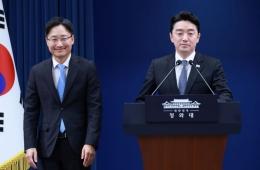
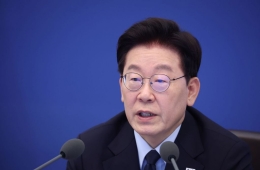
Koo Yoon-chul, Deputy Prime Minister and Minister of Economy and Finance, attended the Task Force Meeting on Special Management of Living Expenses Prices held at the Government Complex Seoul in Jongno-gu, Seoul on the 24th, and spoke on the designation of the 8th highest oil price and current issues such as the Middle East war. 2026.7.24 Photo by Jo Yongjun
View original imageOn July 24, at the Government Seoul Office, Deputy Prime Minister and Minister of Economy and Finance Koo Yoon-chul convened the “Task Force on Special Management of Livelihood Prices” and stated, “While the real GDP growth rate for the second quarter increased by 0.6% quarter-on-quarter, continuing the strong momentum seen in the first quarter (1.8%), tensions arising from the ongoing Middle East conflict have recently escalated, pushing up international oil prices and increasing volatility.” He further emphasized, “Since there may be difficulties in terms of prices and supply chains, we will remain vigilant and take comprehensive actions to address these challenges.”
The government has decided to extend the oil price ceiling, which had been under consideration for phased abolition. Taking into account market conditions such as international oil prices and the burden on household finances, the government will designate the eighth round of the price cap, to be implemented from midnight on July 25. To compensate refiners for losses resulting from the price cap, a Price Settlement Committee will also be activated. A government official commented, “Based on import costs, the committee will conduct a review to determine compensation at a reasonable level.”
To help ease the burden of fuel costs for the public, the current fuel tax cut will also be extended by two months until September 30. In March, the government expanded both the duration and scope of fuel tax cuts, increasing the gasoline tax reduction from 7% to 15% and the diesel tax reduction from 10% to 25%. As a result, gasoline prices will continue to see a reduction of 122 won per liter and diesel 145 won per liter. Fuel tax is a levy paid by refiners to the state when oil products leave the factory; a reduction helps curb increases in consumer prices.

Koo Yoon-chul, Deputy Prime Minister and Minister of Economy and Finance, attended the Special Management Task Force meeting on Living Costs at the Government Seoul Building in Jongno-gu, Seoul on July 24th, where he spoke about the designation of the 8th highest oil price and current issues such as the Middle East war. 2026.7.24 Photo by Cho Yongjun
View original imageThe notice banning the hoarding of urea and urea solution, which was initially set to expire on July 31, will be extended for one month until August 31. The domestic supply situation for these products remains stable, with total reserves — combining public and private stocks — at normal levels. In addition, China’s allocation of 1.5 million tons for export at the end of May is expected to further improve import conditions. A government official stated, “We will monitor the Middle East situation and the supply-demand balance for urea and urea solution, and consider further extensions if necessary.”
However, the restrictions on the hoarding of syringes and needles, where the supply-demand balance has improved, will be eased. Previously, storage was limited to 150% of the previous year’s sales volume; this cap will now be increased to 200%, and sales volume restrictions will be removed entirely. This is intended to prevent contraction in manufacturing due to rising inventory levels. The measure is effective until August 31. Regarding syringes, a government official explained, “With declining speculative demand and an increase in replacements by imported products, the supply situation is now stable.”
The government believes that penalties and enforcement mechanisms for violating price stabilization measures, such as the ban on hoarding, are currently insufficient. As such, it plans to amend the Price Stabilization Act in the second half of the year to improve the system. The proposed amendments will introduce enforceable penalties for non-compliance with administrative orders, and provide legal grounds for the sale of confiscated goods when emergency supply is needed.
For eggs and mackerel, which have sharply driven up food prices, the government will continue its efforts to increase supply and apply discount policies. By August 10, the government plans to import 49.37 million eggs under contracts, supplying about 20 million eggs per week through early August. Import sources for eggs will be diversified from the United States to countries such as New Zealand and Poland, while financial support will be provided to ensure stable domestic production. Planned measures include 370 billion won in aid for facility upgrades and expansions by farms, and a pilot program providing 20 billion won in private reserves and operational funding to stockpile processed egg products in times of oversupply. For mackerel, an additional 1,200 tons will be directly imported from the UK and Norway, and the import base will be broadened through official discussions with the Chilean government. In September, the government also plans to announce the “Chuseok Livelihood Stabilization Measures,” which will include further measures for price stability.
Deputy Prime Minister Koo noted that since the outbreak of the Middle East war, the government has operated an emergency response system that has improved the supply-demand conditions for major raw materials such as naphtha and urea, resulting in lower inflation rates compared to other major countries. He pledged, “We will do our utmost to lower the consumer price inflation rate, which has exceeded 3% for two consecutive months, to the 2% range in July. Although there are risks related to heatwaves and torrential rains this summer that may impact prices, we will remain fully alert and focus on minimizing the public’s burden.”
Deputy Prime Minister Koo also referenced the Bank of Korea’s announcement the previous day of a 0.6% real GDP growth rate in the second quarter, stating, “The likelihood of achieving an annual growth rate of 3% and per capita national income (GNI) of $40,000 this year has increased significantly.” He added, “We will make every effort to realize the 3-4-5 Vision: 3% growth, ranking among the top four exporters, and achieving $50,000 in per capita national income.”
Hot Picks Today
 'Big Investor' NPS Has Already Cut Its Losses... Sold Department Store Stocks in Q3 Despite Strong Earnings Outlook
- "Female Teachers Must Wear Skirts in Class"... Outrage Erupts Over Principal's Demand: What's Happening in North Korea?
- "I've Never Seen So Few Customers"... Wave of "Donjjul" Support for Restaurant District That Stood Up to Knife-Wielding Suspect
- "I Put in 10 Million Won, but Only 2 Million Won Is Left" ... 77% Plunge Leaves Retail Investors in Samsung Electronics and SK hynix Leveraged ETFs Crying Out
- "The leggings are all see-through. It's so embarrassing to look at," complaints prompt Lululemon to fire development staff.
© The Asia Business Daily. All rights reserved. Unauthorized AI training and use prohibited.