"Robot Sergeant Assigned as Ship Crew Member" [Yang Nakgyu's Defence Club]
PIBOT Deployed as Helmsman Crew Member for the First Time
Missions to Be Diversified Using Data Throughout the Year

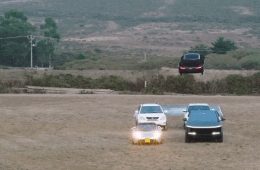
On the 23rd, the humanoid robot 'PIBOT' performed target designation tasks following the commander's ship formation orders at the Naval Education and Training Command's ship formation training ground. Photo by the Navy
View original image
On the 23rd, at the Naval Education Command's ship assembly training ground, the humanoid robot 'PIBOT' is carrying out torpedo duties according to the commander's ship assembly orders. Photo by the Navy
View original image
On the 23rd, the humanoid robot "PIBOT" is performing torpedo tasks according to the commander's assembly orders at the Navy Education Command's ship assembly training ground. Photo by the Navy
View original image
On the 23rd, the humanoid robot 'PIBOT' is performing target counting tasks under the commander's ship assembly orders at the Navy Education Command's ship assembly training ground. Photo by the Navy
View original image"Sergeant PIBOT, assigned as ship helmsman crew member."
The Navy has deployed a robot crew member for the first time in a warship combat experiment. This is significant as it marks the Navy's initial step toward establishing the Navy Sea GHOST, a complex manned-unmanned maritime combat system. A combat experiment refers to a type of training in which operations and technology are learned and practiced repeatedly in a virtual environment to build operational competency.
The robot deployed on the 23rd at the Naval Education and Training Command's ship assembly training ground in Changwon, Gyeongsangnam-do, was "PIBOT." It was developed by the research team led by Professor Hyuncheol Shim at KAIST. The mission given to PIBOT that day was to serve as a helmsman crew member. A helmsman crew member is responsible for steering the vessel, similar to maneuvering a car's steering wheel, based on orders from the ship's captain on the direction of the ship.
The experiment conducted that day was the first of four stages, utilizing an onshore ship formation simulation. The 20-minute training session tested whether PIBOT could understand the commander’s orders and respond appropriately. When the captain ordered PIBOT, "Five degrees left, head 330," PIBOT repeated the order and operated the helm. It then reported to the commander that the course change was complete. PIBOT used an artificial intelligence technology, a large language model (LLM), for this training, which was successful. The Navy plans to proceed through the remaining stages within this year: the second stage (dockside vessel testing), the third stage (actual sea navigation during the day), and the fourth stage (long-duration navigation testing both day and night).
The Navy expects that, when a robot crew member is assigned as a helmsman, it will be able to handle the workload of three sailors who would otherwise take turns in eight-hour shifts. The Navy and the KAIST research team plan to diversify the roles of robot crew members using data collected from these combat experiments. Based on the results, they will determine whether the robots should perform missions together with human sailors or on their own.
Hot Picks Today
 "The Transfer Failed, but 'Ding Dong' Money Came In"... 32.5 Billion Won Financial Incident at Toss Bank
- "They Wouldn't Give It a Second Look When Offered to Ancestors"... MZ Goes Wild for 80-Year-Old Ceremonial Liquor as a Household Must-Have
- "Those with Money Have Already Moved Their Gold"... Holdings Surge 16-Fold as Wealthy Investors Flock to 'This Country'
- Alleged Suppression of Probe Into Han Donghoon's Daughter Assigned to Seoul Metropolitan Police Agency's Metropolitan Crime Investigation Division; Complainants to Be Questioned on 27th
- The 'Hangover Legend' That Had You Waking Up the Day After Tomorrow Returns After 11 Years... Lee Sunmin's Captain Q Sells Out
Brigadier General Kim Hyungjun, head of the Navy’s Power Analysis Test and Evaluation Unit, said, "This combat experiment is the first step in evaluating whether a robot can perform the mission without error. We expect it will help reduce the work of ship crew members and address issues such as a sharp decline in military manpower resources."
© The Asia Business Daily. All rights reserved. Unauthorized AI training and use prohibited.