Expanding Supply of Staple Foods 'Eggs and Mackerel'… "Continued Discount Support and Diversification of Import Sources"
At the "Task Force for Special Management of Livelihood Prices" Meeting
Ministries Discuss Supply Trends and Response Measures for Eggs and Mackerel
Trial Imports of Fresh Eggs Underway from New Zealand, Poland, and Other Countries
The government has decided to continue providing discounts and diversify import sources to ensure stable supplies of eggs and mackerel, both of which are staple foods for ordinary people.
On July 24, the government announced that it held a meeting of the "Task Force for Special Management of Livelihood Prices," presided over by Deputy Prime Minister and Minister of Economy and Finance Koo Yooncheol, where relevant ministries jointly discussed the “Eggs and Mackerel Supply Trends and Response Measures.”

Fresh Brazilian eggs sorting process. Korea Agro-Fisheries & Food Trade Corporation
View original imageAccording to the Ministry of Agriculture, Food and Rural Affairs, the number of laying hens in July increased by 2.7% compared to the previous year. However, due to a shortage of hens over six months old—which are highly productive—egg production actually fell by 0.3%. As a result, in mid-July, the wholesale price of fresh eggs (30 eggs per carton) was 6,818 won, which is 29.2% higher than the average year and 16.8% higher compared to last year. The retail price rose to 7,418 won, up 8.2% from the average year and 6.7% higher than last year.
However, following the announcement of the "Measures to Stabilize Livelihood Prices and Reduce Burdens for Ordinary Citizens" on June 26—which set a 20% discount on all types of eggs—consumer prices dropped by 2.9%, from 7,556 won (June 22) to 7,339 won (July 22). Since June 11, the government expanded the discount support from standard eggs (XL size) to all egg products, and on June 24, increased the reduction in delivery price from 2,000 won to 3,000 won per 30 eggs.
The government is also moving quickly to secure imports. There are plans to import 230 million fresh eggs, and contracts have already been signed with the United States, Thailand, and Brazil for 101.61 million eggs. So far, 52.24 million eggs have been imported, with 36.89 million supplied to the domestic market. The Ministry of Agriculture, Food and Rural Affairs plans to import the remaining 49.37 million eggs by August 10 and supply an average of 20 million eggs per week through early August.
Additionally, the government is beginning trial imports of fresh eggs from countries like New Zealand and Poland to diversify import sources. To minimize the impact of avian influenza (AI) outbreaks in the United States, it is in talks with the U.S. to reduce the regional scale of allowed import areas from state-level to county-level.

Seafood sales counter at a large supermarket in Seoul. Photo by Yonhap News Agency
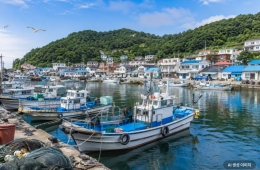
View original imageFor mackerel, increased domestic production led to a 16.7% drop in the retail price for domestic salted mackerel (medium size), now at 2,733 won compared to July last year. However, due to a reduction in Norway’s fishing quota and a rise in import prices, the price of imported mackerel (large size) in July rose to 5,470 won, an increase of 28% compared to the same period last year.
In response, the Ministry of Oceans and Fisheries released 330 metric tons of government-reserved mackerel between May and July, and through the allocation of tariff-rate import quotas for mackerel (9,800 tons from January to July), increased supply to the market. In addition, all seafood items are being offered at a 20–50% discount, with mackerel in particular getting a 30–60% discount.
To secure imports, a special delegation was sent to Norway from July 6 to 17, securing 2,000 tons—about 6.7% of total imports for the first half of the year. To improve Korea’s import structure, which is highly dependent on certain countries, the government is meeting with local suppliers in the Faroe Islands and the United Kingdom to discuss supply volumes, specifications, and possibilities for expanded access to the Korean market.
Hot Picks Today
 "Surviving on One Meal a Day to Invest 3.5 Million Won Monthly... 'FIRE' Craze Sparks 'NISA Poverty' in Japan"
- "Correction Over for Samsung and SK hynix" "670,000 for Samsung, 4.7 Million for SK hynix": Why Global IBs Remain Optimistic
- "What About the Parents' Retirement?"...Income and Occupation Alone Aren’t Enough as Young People's Marriage Criteria Change
- Causing Trouble Without a Simple "Sorry"... The Reason Behind the 'Gen Z Stare' Revealed
- Nongshim Third-Generation Executive Sangyul Shin to Wed SKT Employee on the 13th
Furthermore, the Ministry of Oceans and Fisheries plans to undertake additional imports based on a comprehensive review of domestic mackerel production, trends in medium and large-size mackerel, export status, import conditions, and price levels. An official stated, "We are working to directly import an additional 1,200 tons from the United Kingdom and Norway," and added, "Next month, South Korea and Chile will hold a government-to-government meeting to expand mackerel import channels."
© The Asia Business Daily. All rights reserved. Unauthorized AI training and use prohibited.


![Listings Pile Up in Gangnam, While Gangbuk Has None Left to Sell... As Seoul Transactions Dwindle, Buying Sentiment Diverges [Real Estate A to Z]](https://cwcontent.asiae.co.kr/asiaresize/307/2026090415531016688_1788504791.jpg)