[Hong Seokcheol's Economic Diagnosis] A Stock Market Trapped by Leverage: Time to Reconsider Productive Finance
Chaos in a Market Where the Tail Wags the Dog
Speculative Capital Flows Deplete Economic Momentum
Surplus Liquidity Must Support Innovative Companies

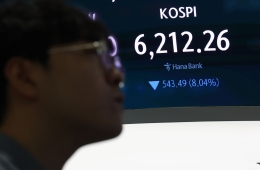
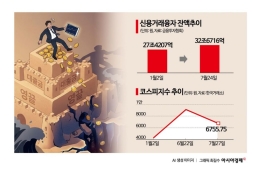
Recently, the domestic stock market has been caught in an unprecedented whirlwind of sharp fluctuations. Since the beginning of this year, there have been 40 sidecar activations—both buy and sell—for the KOSPI, underscoring just how unstable the foundation of the market currently is. One of the drivers behind these wild swings is the single-stock leveraged ETFs, which use major blue-chip stocks such as Samsung Electronics and SK hynix as their underlying assets. Every day, these single-stock leveraged ETFs see more than 10 trillion won in massive funds change hands within the web of derivatives—an amount comparable to the spot market trading volume of the primary stocks themselves. At each closing call auction, mechanical rebalancing orders flood in, amplifying the volatility of the underlying stock prices. This bizarre scenario, where 'the tail wags the dog,' starkly illustrates the structural portrait facing our capital market.
Theoretically, a rise in stock prices does not in itself create new real added value. Whether it is the stock market or the real estate market, fluctuations in asset prices are either a revaluation of existing exchange value or a zero-sum transfer of wealth. The sole legitimate reason for the stock market to contribute to the national economy is its ability to allocate capital—the 'lifeblood' of the real economy—to its most productive use. Real value is created only when companies raise venture capital through stock issuance and, based on this, engage in research and development and capital investment to create new goods and services.
However, the recent leverage craze we are witnessing has strayed far from the true function of the stock market. With little regard for companies’ fundamental strength or long-term growth potential, investors are borrowing to make bets that simply chase short-term price swings and capital gains—an archetype of rent-seeking and unproductive speculation. Excessive leverage was the very fuse that plunged markets into disaster during the Great Depression in 1929 and the global financial crisis of 2008. Leverage may offer the illusion of sweet returns in a bull market, but in bear or sideways markets, the 'negative compounding effect,' which is the inverse of the magic of compounding, eats away at investors’ principal and can ultimately spill over into a full-blown liquidity crisis throughout the market. This is the cruel nature of leverage.
The government’s decision to relax regulations on market leverage and allow such activity was a short-sighted strategy to prevent global capital outflows and support the domestic stock market. In the United States, the companies that underpin leveraged ETFs have extremely large market capitalizations, so leveraged trading accounts for only a tiny fraction of the total spot market volume. In contrast, in Korea—where company capitalization and market liquidity are relatively small—the negative side effects were entirely foreseeable. As a result, the introduction of these systems without careful consideration of market supply and demand has left individual investors exposed to huge losses and has further drained the vitality of the market. Due to these policy failures, Korea’s stock market is being transformed from a cradle of innovation into a vast casino.
What is even more concerning is that speculative capital flows are now depleting the long-term investment engines necessary for the future of the national economy. The more short-term capital chasing immediate gains comes to dominate the market, the more the physical fundamentals of the real economy are weakened and left defenseless against unexpected external shocks. Rather than focusing on myopic measures that create side effects for the sake of boosting prices, the government should fundamentally reflect on the underlying structure of the capital market. It is time to prevent the stock market from degenerating into a playground for speculative bets and to guide the abundance of liquidity back onto the path of 'productive finance'—one which genuinely creates added value and supports the growth of innovative companies. The only way to calm the chaos of the tail wagging the dog is to restore the profound value and mission of venture capital to the capital market’s core purpose.
Hot Picks Today
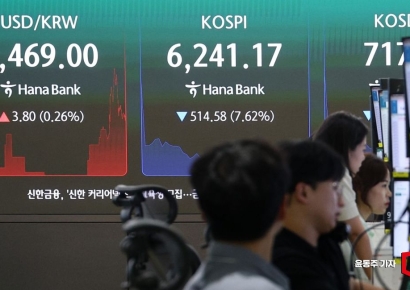 "KOSPI Plunges 8% as Samsung and SK hynix Reel from 'Unexpected' Chinese Memory Onslaught"
- Is the Stock Market Decline Just Beginning? "An Even Bigger Crisis Is Coming," Warns Rich Dad Author
- Naver’s Aggressive Push vs. Coupang’s Hold: Platform Giants Clash for Dominance
- "I Am Really Lucky": U.S. Nurse Walks Over 16km With Trekking Pole Pierced in Back for 6 Hours
- "Prettier Than Idols?" "Tight Outfits Stir Debate"... Why the Virtual Female Weathercaster Is Causing a Stir
Seokcheol Hong, Professor of Economics at Seoul National University
© The Asia Business Daily. All rights reserved. Unauthorized AI training and use prohibited.