Government Extends Fuel Tax Cut for Additional Two Months Until End of September
15% Cut for Gasoline
25% Reduction for Diesel and Butane
The government will extend its fuel tax reduction measure, introduced to mitigate the shock from the Middle East war, for an additional two months. The scale of the reduction will remain at the current level.
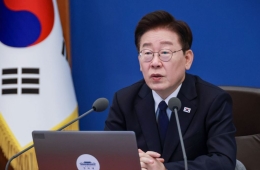
On July 24, Deputy Prime Minister for Economic Affairs and Minister of Economy and Finance Koo Yooncheol presided over a special task force meeting on the management of living costs at the Government Complex Seoul and released the 'Fuel Tax Adjustment Plan after August.'

As the government announced the second highest price for petroleum products, a gas station in Seoul was selling gasoline for 2,170 won per liter and diesel for 2,180 won per liter on the 27th, with gasoline and diesel prices raised by 210 won per liter. March 27, 2026. Photo by Jinhyung Kang
View original imageSince the outbreak of the Middle East war, the government has maintained the reduction rate since March in order to ease the public's fuel cost burden.
The existing fuel tax cut was scheduled to expire at the end of this month, but it has now been extended for another two months, until the end of September. The reduction rates will remain at 15% for gasoline and 25% for diesel and butane, the same as before.
Compared to the pre-reduction tax rates, this results in a price decrease per liter of 122 won for gasoline, 145 won for diesel, and 51 won for butane.
The fuel tax is a tax that refiners pay to the government when petroleum products leave the factory. Reducing this tax helps to curb increases in consumer prices.
An official from the Ministry of Economy and Finance explained, "With instability in the Middle East still unresolved, it is necessary to maintain room for further fuel tax adjustments in order to respond to potential increases in oil price volatility."
In particular, the official said a relatively higher reduction rate has been maintained for diesel and butane, which are essential for industry, logistics, and as an affordable fuel for small trucks and ordinary people.
Hot Picks Today
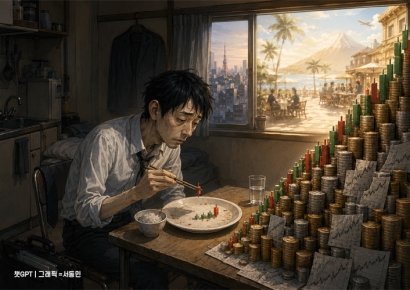 "Surviving on One Meal a Day to Invest 3.5 Million Won Monthly... 'FIRE' Craze Sparks 'NISA Poverty' in Japan"
- "Correction Over for Samsung and SK hynix" "670,000 for Samsung, 4.7 Million for SK hynix": Why Global IBs Remain Optimistic
- "What About the Parents' Retirement?"...Income and Occupation Alone Aren’t Enough as Young People's Marriage Criteria Change
- Causing Trouble Without a Simple "Sorry"... The Reason Behind the 'Gen Z Stare' Revealed
- "I'm Getting Married, But Please Don't Come"... Gen Z's Changing Wedding Trends [World is Z-gold]
The Ministry of Economy and Finance plans to submit amendments to the Enforcement Decree of the Transportation, Energy and Environment Tax Act and the Enforcement Decree of the Individual Consumption Tax Act, reflecting these changes, to a future Cabinet meeting.
© The Asia Business Daily. All rights reserved. Unauthorized AI training and use prohibited.

![Listings Pile Up in Gangnam, While Gangbuk Has None Left to Sell... As Seoul Transactions Dwindle, Buying Sentiment Diverges [Real Estate A to Z]](https://cwcontent.asiae.co.kr/asiaresize/307/2026090415531016688_1788504791.jpg)