"Hyper-Risk Society Expands the Insurance Protection Gap... What Is the Solution for Korean-Style Inclusive Insurance?"
Korea Insurance Research Institute Hosts Seminar on "Safety Nets for a Hyper-Risk Society, Korean-Style Inclusive Insurance Challenges"
"Inclusive Insurance Must Become Sustainable, Beyond One-Time Support"
"Collaboration Needed Among Government, Insurers, and Local Communities"
As the elderly population rapidly increases and atypical forms of labor spread, the protection gap for vulnerable groups is widening, leading to recommendations that inclusive insurance should be nurtured as a sustainable market rather than as a one-time support measure.

Kim Heonsu, President of the Korea Insurance Research Institute, delivers a welcome speech at the seminar "New Safety Net for a Hyper-Risk Society: Introduction Plan and Challenges of Korean-Style Inclusive Insurance" held on the 23rd. Photo by Lee Seunghyung
View original imageOn July 23, the Korea Insurance Research Institute held a seminar at its Yeouido conference center in Seoul, titled "New Safety Net for a Hyper-Risk Society: Introduction Plan and Tasks of Korean-Style Inclusive Insurance."
Inclusive insurance refers to insurance products that help marginalized groups who are excluded from conventional insurance markets gain access to necessary coverage. Participants at the seminar noted that the emergence of new risks such as climate disasters, demographic changes, labor market shifts, and the digital divide has created protection gaps that the existing insurance market alone cannot fill. They especially pointed out that these risks may disproportionately impact vulnerable groups who lack the capacity to prepare for risks or recover from losses.
During his opening remarks, Kim Heonsu, President of the Korea Insurance Research Institute, said, "The key task is to grow inclusive insurance into a sustainable safety net, not just a one-off support measure." He stressed, "Rapidly increasing risks can no longer be contained through public efforts alone." He added that the role of the insurance industry in addressing the blind spots in the social safety net is essential, stating, "We will present persuasive solutions through in-depth research."
Jaeyeon Lee, a research fellow at the Korea Insurance Research Institute who delivered the first presentation, explained that inclusive insurance not only protects vulnerable groups but also serves as a way to broaden the foundation of the insurance industry itself. If the risk-sharing community participating in insurance contracts shrinks, the foundation of the insurance industry weakens as well, so protecting vulnerable groups and ensuring the industry's sustainability cannot be considered as separate tasks.
Lee remarked that existing responses have focused too much on social contribution activities such as donations and volunteer work by insurance companies, or on government support for insurance premiums. While such methods may reduce the burden on policyholders, Lee pointed out the limitation that coverage could be discontinued if the related funding dries up.
He emphasized, "For inclusive insurance to be sustainable, it must evolve into a self-sustaining market ecosystem that does not rely on direct subsidies." He continued, "Barriers at each stage must be addressed—including the lack of claims statistics and low profitability at the supply stage, insufficient incentives for distribution channels at the delivery stage, and low insurance literacy at the utilization stage—so that a solid foundation for market operation can be created." He also emphasized, "The risks in a hyper-risk society cannot be managed by a single entity. Government, insurance companies, and local communities must share roles within a public–private partnership structure." He concluded, "Inclusive insurance should be a structure where the public and private sectors work together, rather than substituting for each other."

Sungdong Sohn, Deputy Director of the RMI Insurance Management Research Institute, is making a presentation at the seminar titled 'New Safety Net for a Super-Risk Society: Introduction and Challenges of Korean-Style Inclusive Insurance' held on the 23rd. Photo by Seunghyung Lee
View original imageFor the second presentation, Sungdong Son, Deputy Director of RMI Insurance Management Research Institute, emphasized that inclusive insurance should serve not only as a 'safety net' to prevent vulnerable groups from falling but also as a 'trampoline' to help them return to their daily lives.
Son identified two key success factors from global inclusive insurance examples: reducing costs through digital technology and building trust based on local personnel. Applying these concepts to Korea, he proposed combining microinsurance with big tech and platform services for youth and freelancers, while connecting insurance and care services for seniors and vulnerable groups through post offices and insurance planners in the field.
Son explained, "Incentives could be given to existing insurance companies through a designation and certification scheme for inclusive insurance, such as a preferential risk factor under the K-Insurance Capital Standard (K-ICS), reduced interest rates for contributions to affordable financing, and bonus points for mutual growth financing. For micro, short-term insurance companies, measures such as easing capital requirements or granting exceptions from the new insurance accounting standard (IFRS17) could be considered."
He also proposed establishing an 'Inclusive Insurance Foundation' to serve as the control tower for public-private cooperation. This foundation would manage a national reinsurance fund and provide a shared IT infrastructure for microinsurance providers, as well as connect government welfare networks with data from private insurance companies.
Hot Picks Today
 "The Transfer Failed, but 'Ding-Dong,' Money Came In"... KRW 32.5 Billion Financial Incident at Toss Bank
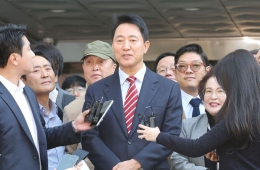
- Oh Se-hoon: "Justice has been served, the truth has finally prevailed... I'll repay your trust with results"
- "Made 12 Billion Won Cleaning Up Other People's Dog Poop With Just a Rake"... 'Poop Scoop Millionaire' Is All the Rage in the U.S.
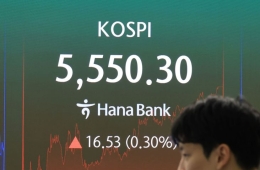
- KOSPI Reclaims 5,500; SK hynix Rises on 'Solidigm IPO Withdrawal'
- 'Hangover Legend' Returns After 11 Years... Lee Sunmin Hyung's 'Captain Q' Sells Out
Son concluded, "Korean-style inclusive insurance is a new social contract that will reduce coverage gaps for vulnerable groups, lower future financial burdens, and provide a foundation for sustainable growth for the insurance industry."
© The Asia Business Daily. All rights reserved. Unauthorized AI training and use prohibited.