Lee: "Broad Agreement on Strengthening Property Holding Tax"... Tax and Financial System Overhaul Expected (Comprehensive)
National Real Estate Debate Runs Far Beyond Scheduled Time
Specific Figures Discussed on Comprehensive Property and Capital Gains Taxes
Lee: "Reforming Despite Criticism and Conflict"
Considering Heavier Taxation and Exit Plans for 'Owner-Occupied Single-Home' Properties
Amid ongoing uncertainty in the real estate market, a National Real Estate Policy Public Debate was held on July 23 to gather the public's concerns and concrete policy ideas. Originally scheduled for 100 minutes, the debate was extended by more than an hour due to the enthusiasm of the participants and lasted nearly three hours.
During the debate, which took place at the KBS Annex in Yeouido, Seoul, presided over by President Lee Jae-myung, discussions went beyond general principles and included specific figures, such as the taxable amount threshold for the comprehensive real estate holding tax. First-hand accounts from both real demand buyers and real estate agents in the market were also shared.

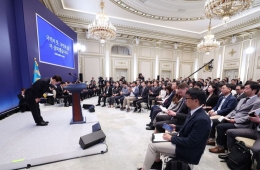
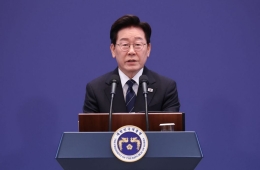
President Lee Jae-myung is asking participants for their opinions at the National Real Estate Policy Public Debate held at the KBS Annex in Yeouido, Seoul, on July 23, 2026. Photo by Yonhap News
View original imageLee: "Broad consensus on strengthening property holding tax... Differentiation needs to be determined"
The debate saw a heated exchange over the specific standards and figures for property holding tax and capital gains tax.
Experts and panelists proposed a range of values for what constitutes a luxury home subject to a stronger holding tax, such as "market price of 1 billion won or higher," "officially assessed value between 2 billion and 3 billion won," and "5 billion won or more." They also suggested increasing the effective tax rate by 1%. Professor Jeong Se-eun of the Department of Economics at Chungnam National University stated, "A single valuable home should be subject to the comprehensive real estate holding tax. If we aim to protect actual residents, a market price of 1 billion won—twice the national average of 500 million won—should be considered 'luxury,' with the excess taxed at a progressive effective rate of about 1%."
President Lee remarked, "In provincial areas, a market price of 3 billion won qualifies as a luxury home, but in Seoul, applying a heavy tax rate to a 1.5 billion won assessed value (which corresponds to a 3 billion won market price) could provoke tax resistance." He noted the difficulty in defining a luxury home due to the price gap between the Seoul metropolitan area and other regions.
Another proposal suggested limiting the capital gains tax exemption for single-homeowners to just one time in a lifetime or setting a total amount ceiling.
President Lee commented, "That makes sense," and ordered officials to review possible changes. Currently, the capital gains tax can be exempted regardless of the number of times, if conditions—such as holding and living in the property for at least two years—are met. President Lee added, "I'm not sure if limiting the tax exemption to once in a lifetime is ideal, but offering unlimited exemptions seems problematic. It may be better to make the benefits larger for the first time and smaller for subsequent ones—something worth considering."
He also reaffirmed the approach of strengthening the property holding tax. Nam Ki-yeop, Director of the Land+Liberty Institute, said, "Currently, up to 80% of the comprehensive real estate holding tax is deducted for single-homeowners, but if this benefit only goes to actual residents, the 'single valuable home' phenomenon cannot be prevented. The comprehensive real estate holding tax should be universally strengthened, regardless of whether the residence is occupied." He also argued that tax benefits for single-homeowners should be directed toward capital gains tax cuts rather than further reductions in the holding tax.
President Lee said, "It's generally agreed that the holding tax needs to be strengthened. The key is determining the extent and scope, as well as how differentiation should be structured." As a direction for reform, he suggested setting a basic tax burden based on single-homeownership but mitigating taxes for actual residents, for low-income/middle-class or provincial homes, while raising taxes step-by-step for luxury, multi-home, and speculative properties. President Lee further explained, "We need clear categories such as owner-occupied single-home, non-owner-occupied single-home, multi-homeowner, luxury single-home, luxury multi-home, etc. After establishing a basic holding tax for a single home, we can reduce the burden for owner-occupied or low-/middle-income properties and for non-metropolitan areas."
However, he rejected proposals to increase the holding tax uniformly to levels seen in advanced countries. President Lee said, "To match our property holding tax to advanced country standards, we would have to triple it, which would risk an upheaval similar to civil unrest."

On the 23rd, participants at the National Real Estate Policy Debate, presided over by President Lee Jae-myung at the KBS Annex in Yeouido, Seoul, are requesting speaking rights. Photo by Yonhap News
View original imagePresident Lee reaffirmed his intent to normalize the market, saying, "It is the responsibility of public officials to endure criticism, political loss, conflict, and resistance." For the tax system overhaul, he introduced "owner-occupied single-home" as a new category rather than just "actual residence." Homeowners who have to live elsewhere temporarily for unavoidable reasons, such as work, education, or hospitalization, would be protected, but luxury, multi-home, and non-owner-occupied properties would face higher taxes.
Addressing concerns that multi-homeowners are holding back supply, President Lee said, "We need to consider temporary exit measures so that people who sold their homes trusting the government are not disadvantaged." He agreed with the criticism that taxation standards should be set directly by law, not simply by executive decree, stating, "It's correct to collect public opinion, make reasonable rules, avoid loopholes or abuses, and implement as much as possible through legislation."
"Final payment and relocation loans blocked"... Lee: "No blanket regulation victims"
Attendees also raised on-site concerns about the recent tightening of financial regulations and loans for redevelopment projects. President Lee, in response to a newlywed couple who were unable to move in after being denied a final payment loan due to overall household loan limits—even though they purchased their home to live in—stated, "Policy adjustments should minimize unintended victims." He instructed officials to review remedies for those unfairly affected by blanket regulations.
There were multiple complaints that low loan-to-value (LTV) ratios were blocking relocation loans, halting redevelopment projects, and placing additional financial burdens on cooperative members. The government responded that it is reviewing practical ways to ease relocation loan regulations, such as allowing newly built homes as collateral.
Meanwhile, residents losing their homes during redevelopment pointed out that only 27% of original inhabitants are able to move back, highlighting the plight of evictees. At the same time, calls were made to nurture private construction rentals and ease guarantee insurance criteria, in response to the steep decline in villa and officetel construction, which are important for young people's housing mobility.
Lee Kwangsoo, CEO of Gwangsoone Real Estate, remarked, "When there is a large amount of public supply, or a significantly raised floor area ratio, or when sale prices are low, redevelopment and reconstruction projects should be prioritized accordingly. Without total supply regulation to secure public interest, the sudden removal of 300,000 units could sharply drive up housing prices."

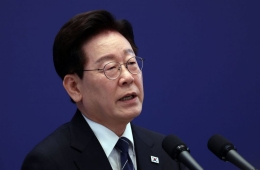
President Lee Jae-myung and Prime Minister Han Seong-sook are listening to participants' remarks at the National Real Estate Policy Debate held on the 23rd at the KBS Annex in Yeouido, Seoul. Photo by Yonhap News
View original image"Selective support needed for jeonse loans"
President Lee indicated that jeonse loans (lump-sum rental deposit loans) played a major role in rising apartment prices and high housing costs, suggesting stronger regulation. He proposed reducing the overall supply and guarantee ratio for jeonse loans, while providing targeted support for actual demand groups such as young people, newlyweds, and first-time renters.
He said, "To help the public easily find rental housing, we extended almost unlimited jeonse loan support. But if it becomes too easy to get a jeonse loan, all housing prices will rise. This is one reason for the sharp increase in apartment prices." He explained further, "Historically, jeonse prices accounted for 60–70% of home prices, and only 70–80% of the jeonse deposit should have been guaranteed or loaned—but we ended up covering the whole value of the home. Ultimately, loans and guarantees went up to 100% of the home price, leading to the rise of jeonse-related fraud."
President Lee stated, "People with no money suddenly lease hundreds of properties on jeonse; if just one unit has a problem, the whole system collapses. While jeonse loans support housing stability for low- and middle-income households, they have also fueled soaring housing prices. It's time for adjustment."
Hot Picks Today
!["How Little Do Koreans Read? Who Will Acquire Munhakdongne Now on the Market [Weekend Money]"](https://cwcontent.asiae.co.kr/asiaresize/93/2026091716280432990_1789630084.jpg) "How Little Do Koreans Read? Who Will Acquire Munhakdongne Now on the Market [Weekend Money]"
"How Little Do Koreans Read? Who Will Acquire Munhakdongne Now on the Market [Weekend Money]"
- "Bank Offers 3.5%, but... Which ETF Hit a 21% Dividend Yield? [Weekend Money]"
- "Holiday Liquor Price Hits 1.8 Billion Won"... The Identity of the Whisky That Sold Out Instantly After Launch
- "Please Be Quiet"... China to Fine Up to 210,000 Won for Disruptive Passengers Using Speakerphones
- "Raised a Stray Kitten, but..." Scientific Community Stunned: First New Wild Cat Species Discovered in 100 Years
However, he rejected the idea of cutting back jeonse loans across the board. President Lee said, "Jeonse loan regulations must be strengthened to prevent a housing price surge, but targeted support should be provided for youths, newlyweds, first-time jeonse loan applicants, and working-class households in accordance with specific needs and practicality."
© The Asia Business Daily. All rights reserved. Unauthorized AI training and use prohibited.