UNESCO Adopts Resolution Urging Japan to Address "Entire History" of Sado Mine
Adopted by Consensus Without Separate Discussion or Amendments
Japan Required to Consult With Korea and Submit a New Report by 2027
The UNESCO World Heritage Committee has adopted a resolution requiring that Japan comprehensively address the "entire history" of the Sado Mine, covering all periods in which the mine was in operation, through its interpretation and exhibitions. While the Committee acknowledged that Japan has made some amendments to its exhibits related to Korean laborers, it determined that it remains unclear whether the history—particularly including forced mobilization—is being adequately conveyed on site.

Family members of Korean victims forcibly mobilized at Sado Mine are listening to explanations about the facilities inside the mine after a memorial ceremony held at the former dormitory site for Koreans at Sado Mine in Niigata Prefecture, Japan, in 2024. Photo by Yonhap News.
View original imageThe 48th session of the UNESCO World Heritage Committee convened at BEXCO in Busan on July 23, unanimously adopted the decision on the conservation status of the "Sado Island Gold Mines" in Japan without any separate discussion or proposal for amendment. There were no additional remarks from the South Korean or Japanese delegations after the resolution was adopted.
The adopted resolution states there has been "some progress" in the interpretation and exhibition strategies and facilities at Sado Mine. However, it also notes that "further clarification is needed" as to whether the entire history of the mine's development across all periods is being addressed comprehensively on site. The resolution also observes that exhibition and interpretation strategies addressing the entire history have not yet been fully developed, and recommends that Japan work closely with relevant parties to improve both the content of the exhibitions and the facilities.
Advisory bodies such as the UNESCO World Heritage Centre and the International Council on Monuments and Sites (ICOMOS), after reviewing the conservation status report submitted by Japan, pointed out that other than the inclusion of information on laborers from the Korean Peninsula in the Aikawa Local History Museum, there is limited evidence as to how the "entire history" is being conveyed at the site. While Japan's exhibits introduce the poor working conditions of Korean laborers at the time, terms such as "forced mobilization" or "forced labor" are not used.
The resolution itself does not directly mention "forced mobilization." However, the South Korean government maintains the position that the "entire history" of Sado Mine must fundamentally include the history of forced mobilization of Koreans during the Japanese colonial period. The National Heritage Administration noted that the resolution reflects the concern that “some progress has been made, but the measures are still insufficient.”
Japanese media also reported this resolution as a call to strengthen the explanation of Sado Mine’s history and improve on-site exhibitions. Fuji News Network (FNN) reported that the World Heritage Committee requested the Japanese government strengthen the historical explanation and exhibitions covering all periods of mining activity, and to hold consultations with related countries, including South Korea. In Japan, the focus has tended to be on the "insufficiency of historical explanation and exhibitions" rather than directly highlighting the issue of forced mobilization.
When the Sado Mine was inscribed as a World Heritage site in 2024, Japan announced that it would implement interpretation and exhibition strategies and facilities that comprehensively address the mine’s full history, including laborers from the Korean Peninsula, and would work closely with South Korea. However, the subsequent memorial ceremony was held without direct reference to or apologies for forced mobilization or colonial rule; the Korean government did not participate, fueling ongoing controversy over whether Japan was upholding its commitments.
Hot Picks Today
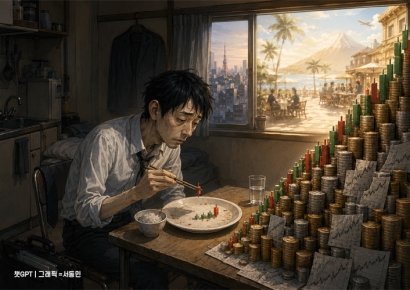 "Surviving on One Meal a Day to Invest 3.5 Million Won Monthly... 'FIRE' Craze Sparks 'NISA Poverty' in Japan"
- "Spend 200,000 Won, Get 100,000 Won Back?"... Government's Bold Move Unveiled [Essential Tips for Benefits]
- Nationwide Gas Station Fuel Prices Drop for 16 Straight Weeks... International Oil Prices Rise
- "Is Extended Fasting Risky Beyond This Age?... The Twist in 'Intermittent Fasting' [Experiment Note]"
- "I'm Getting Married, But Please Don't Come"... Gen Z's Changing Wedding Trends [World is Z-gold]
Under the adopted resolution, Japan is required to submit a new report detailing improvement measures and the status of conservation to the World Heritage Centre by December 1, 2027. On this basis, the Committee will reassess Japan's implementation of its recommendations at the 50th session scheduled for 2028.
© The Asia Business Daily. All rights reserved. Unauthorized AI training and use prohibited.



![Listings Pile Up in Gangnam, While Gangbuk Has None Left to Sell... As Seoul Transactions Dwindle, Buying Sentiment Diverges [Real Estate A to Z]](https://cwcontent.asiae.co.kr/asiaresize/307/2026090415531016688_1788504791.jpg)
![[Report] "From AI Homes to Premium Lineups"... Chinese Electronics Dominate IFA 2026](https://cwcontent.asiae.co.kr/asiaresize/307/2026090505514216935_1788555102.jpg)
![[New York Stock Exchange] Interest Rate Hike Concerns Rise on Strong Employment Data... Dow Down 0.51%](https://cwcontent.asiae.co.kr/asiaresize/307/2026090223194913207_1788358790.jpg)