Ruling Party and Government Discuss 'Jang Yoonki Police Investigation Failure'... "Rotation System Plan by First Half of Next Year"
The ruling party and government have reached a consensus to develop a plan for introducing a rotation system in the police force by the first half of next year, in response to the controversy over inadequate police investigations triggered by the Jang Yunki case.
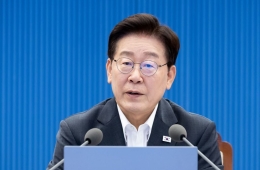
Assemblyman Lee Hae-sik of the Democratic Party of Korea, the ruling party's secretary on the National Assembly Public Administration and Security Committee, met with reporters on July 23 at the National Assembly in Yeouido, Seoul, after a closed-door meeting between the party and the government. He stated, "The root cause of the Jang Yunki case was collusion at the local level," adding, "There was a demand to firmly establish a rotation system in order to break such collusive relationships."

(Gwangju=Yonhap News) Reporter Daum Jung stands in the photo line on the morning of May 14, 2026, at Gwangju Seobu Police Station before being sent to the prosecution on charges of murder and attempted murder. daum@yna.co.kr (End)
View original imageAssemblyman Lee acknowledged, "It is indeed true that implementing a rotation system for police officers at or below the rank of inspector faces practical challenges." He added, "In response, the police have reported that they will gather feedback, including concerns from police officers, through a renewal task force, and will prepare a proposal by the first half of next year."
He went on to say, "In the recent Jang Yunki incident, the individual who leaked official secrets to Jang Yunki's father held the rank of sergeant," explaining, "Since officers at the sergeant level are directly involved in investigations, the suggestion was raised that they should also be part of the rotation system."
He also mentioned, "Currently, only one investigator is typically assigned to a case, but there was an opinion that this should be increased to two. There was a demand for a dual-investigator system, with two officers working as a team."
Other measures discussed at the closed-door meeting included the establishment of an Internal Affairs Investigation Division within the National Office of Investigation, as well as a police investigation, human rights, and inspection oversight organization within the National Police Commission.
Hot Picks Today
 "No Wonder It Soared Today... Morgan Stanley Eyes 3 Million Won Target—Which Stock Is It?"
- "Who Wants to Hire 40 Skilled Kimbap-Making Women?"... A 'Suspicious Ad' Appears Online
- "Why Waste Scorching Subway Heat? New York Launches 1.1 Billion Won 'Innovative Experiment'"
- "If You're So Sure, Try It Yourself": 44-Year-Old Father Admitted to Prestigious University After Daughter's Challenge
- "This Is Not Right, Chairman"...Flood of Criticism over SK hynix's Pursuit of 'Five-Layer Duplicate Listing'
Regarding these issues, Assemblyman Lee commented, "From the perspective of our lawmakers, there has been excessive protectionism within the organization, which may appear merely procedural to the general public." He added, "At present, police oversight mechanisms—such as the enhancement of the National Police Commission and the autonomous police system—are still insufficient, so definite countermeasures are necessary."
© The Asia Business Daily. All rights reserved. Unauthorized AI training and use prohibited.