Financial Services Commission and Industry Ministry to Utilize National Growth Fund for Critical Mineral Supply Chain Stabilization
The government has announced plans to provide financial support utilizing the National Growth Fund in order to secure stable supply chains for critical minerals—essential raw materials for advanced industries such as semiconductors, electric vehicles, and artificial intelligence (AI). The policy aims to strengthen investment support for the entire lifecycle of critical minerals, spanning overseas resource development, domestic refining and processing, and resource recycling.

On July 23, the Financial Services Commission and the Ministry of Trade, Industry and Energy held a joint investment support roundtable for stabilizing the critical mineral supply chain at the headquarters of Korea Trade Insurance Corporation in Seoul. The event was attended by Yang Kiwook, Director General for Industrial Security at the Ministry of Trade, Industry and Energy, Son Youngchae, Director of the National Growth Fund Initiative at the Financial Services Commission, as well as representatives from companies involved in overseas resource development, processing, and recycling of critical minerals.
The roundtable was organized as a follow-up measure to the "Comprehensive Strategy for the Rare Earth Element Supply Chain," which was announced at the 3rd Resource Security Council in February. Government officials and companies reviewed investment demand and on-site difficulties in the critical minerals sector, and discussed support measures to strengthen overseas resource acquisition, reinforce domestic processing capabilities, and establish a recycling ecosystem.
In particular, considering the long investment periods and large-scale funding required for critical mineral projects, discussions included the possibility of using the National Growth Fund to share private sector investment risk. Critical minerals are included among the 12 core advanced strategic industries supported by the National Growth Fund, alongside sectors such as AI, semiconductors, batteries, bio, future mobility, defense, and robotics.
The Ministry of Trade, Industry and Energy presented the current status and expansion plans for support programs targeting overseas resource development and recycling companies. The ministry intends to expand support for overseas resource development through overseas research projects and special loans, as well as to foster a resource circulation ecosystem by subsidizing investments in recycling facilities and stockpiling raw materials. The direction of R&D support for the permanent magnet industry, a key rare earth processing sector, was also explained.
The Financial Services Commission stated that it would support investment across the entire lifecycle of critical minerals—including overseas resource acquisition, domestic refining, material processing, and the creation of a resource recycling ecosystem—to address the high import dependency and supply chain risks linked to critical minerals. The commission plans to actively consider providing support from the National Growth Fund to projects that offer significant supply chain stabilization benefits.
Companies participating in the roundtable shared their investment plans for projects related to overseas resource development, processing of critical minerals such as permanent magnets, and recycling. They highlighted major challenges including intense global competition in securing overseas resources, difficulties in expanding processing facilities and technologies, and issues in sourcing raw materials necessary for recycling projects.
Hot Picks Today
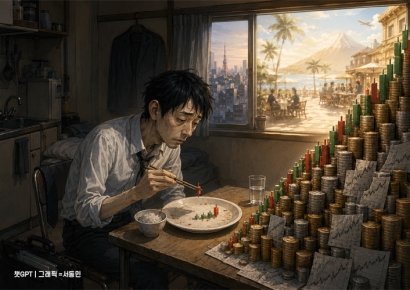 "Surviving on One Meal a Day to Invest 3.5 Million Won Monthly... 'FIRE' Craze Sparks 'NISA Poverty' in Japan"
- "Spend 200,000 Won, Get 100,000 Won Back?"... Government's Bold Move Unveiled [Essential Tips for Benefits]
- "Is Extended Fasting Risky Beyond This Age?... The Twist in 'Intermittent Fasting' [Experiment Note]"
- "I'm Getting Married, But Please Don't Come"... Gen Z's Changing Wedding Trends [World is Z-gold]
The companies stressed that the uncertainty and long-term investment burdens associated with critical mineral businesses cannot be borne entirely by the private sector alone, and requested proactive public risk-sharing measures such as financial support and subsidies. Yang Kiwook commented, "Building a stable supply chain for critical minerals is a bulwark for safeguarding the competitiveness of our advanced industries—such as semiconductors, electric vehicles, and AI—and is a key challenge that determines national economic security. The Ministry of Trade, Industry and Energy and the Financial Services Commission will strengthen support for commercialization and financing across the full lifecycle of critical minerals, including overseas resource development, refining, processing, and recycling." Son Youngchae added, "Critical minerals are strategic assets supporting advanced industrial competitiveness and national economic security. The National Growth Fund, together with relevant ministries, will develop measures that contribute to supply chain stabilization and industrial competitiveness for critical minerals."
© The Asia Business Daily. All rights reserved. Unauthorized AI training and use prohibited.


![Listings Pile Up in Gangnam, While Gangbuk Has None Left to Sell... As Seoul Transactions Dwindle, Buying Sentiment Diverges [Real Estate A to Z]](https://cwcontent.asiae.co.kr/asiaresize/307/2026090415531016688_1788504791.jpg)
![[Report] "From AI Homes to Premium Lineups"... Chinese Electronics Dominate IFA 2026](https://cwcontent.asiae.co.kr/asiaresize/307/2026090505514216935_1788555102.jpg)
![[New York Stock Exchange] Interest Rate Hike Concerns Rise on Strong Employment Data... Dow Down 0.51%](https://cwcontent.asiae.co.kr/asiaresize/307/2026090223194913207_1788358790.jpg)