FSC Considers Separating Digital Asset Custody as an Independent Business
Financial authorities announced that they are reviewing the possibility of establishing a separate regulatory framework for the 'custody' function—dedicated to the safekeeping and management of digital assets—in response to the opening of the corporate digital asset market. This move is driven by the view that an independent custody system is essential to securing the safety and trust of the virtual asset market.

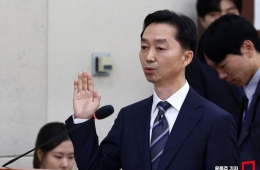
At the "Academic Conference on Opening the Corporate Market and Building a Safe Digital Asset Ecosystem" held at the National Assembly on July 23, Kim Sungjin, Director of Virtual Assets at the Financial Services Commission, stated, "Smooth transactions cannot occur unless digital assets are safely kept and managed. In pursuing the second phase of legislation—the enactment of the Digital Asset Basic Act—there is no theoretical objection to separating custody as a standalone business. We are currently considering detailed regulations for entry and operational conduct."
Regarding the relationship between custody and traditional trust businesses, Director Kim explained, "Custody of digital assets is characterized by the management and safekeeping of private keys (control keys), which is a unique aspect, but functionally it is very similar to trust business. We are referencing legislative examples from the European Union (EU) and others, where entry regulations are eased based on functional considerations, as we develop the system."
On the issue of exchanges operating both as custodians and trading platforms, he added, "Even overseas, it is rare to see such businesses forcibly separated. We are examining ways to supplement conduct regulations, taking into account both user convenience and potential conflicts of interest within exchanges."
Regarding the announcement of guidelines for corporate participation in virtual assets, Director Kim said, "There are many matters linked to the second phase of the legislation, and we are coordinating with related agencies. In line with the government's economic policy direction for the second half of the year, we will work with the National Assembly to accelerate the enactment and institutional improvement of relevant laws as quickly as possible."
During the conference, representatives from the political sphere, academia, and industry continued to emphasize the urgency of opening the corporate market and establishing custody infrastructure.
Ando Geol, a lawmaker from the Democratic Party of Korea, commented, "Global financial institutions have already included digital assets in their portfolios and are taking the lead in forming a new financial order. To avoid falling behind, we must expedite the opening of the corporate market, but a secure custody and internal control system must be a prerequisite to minimizing risks. The National Assembly will also accelerate the enactment of the Digital Asset Basic Act."
Ryu Hongyeol, CEO of Bithumb X, stated, "The potential demand for corporate custody services in Korea is conservatively estimated at 75 trillion won. As corporate funds flow in, the market will move away from being retail-dominated, resulting in increased liquidity and improved stability. Corporate participation is not just recommended; it is essential to regulate and mandate custody to prevent internal control failures and lapses in audit processes."
Hot Picks Today
!["Made in Korea, Yet Korea Is Left Out?"... What's Going On With Galaxy's New Feature? [Crypto Radar]](https://cwcontent.asiae.co.kr/asiaresize/93/2018020609505496064_1517878250.jpg) "Made in Korea, Yet Korea Is Left Out?"... What's Going On With Galaxy's New Feature? [Crypto Radar]
"Made in Korea, Yet Korea Is Left Out?"... What's Going On With Galaxy's New Feature? [Crypto Radar]
- "Even New York Taxi Drivers Are Talking About the KOSPI; South Korean Market to Top 9,000 Again Within a Year"... 'Wall Street's Stock-Picking Ace' Names His Picks
- "Over 1 Trillion Won Poured Into 3x Semiconductor ETF"... But the No. 2 and No. 3 Picks Are Unexpected
- “Made 2 Billion Won in One Year in Prison,” PPP Lawmaker Retorts: “If You’re Jealous, Go There Yourself”
- "Shall We Grab a Drink?" KRW 30,000 a Round... Young Adults: "Prices Make My Hands Shake; I Can't Drink Out"
Shin Heejin, an executive director at Kyobo Securities, said, "The key for the era of institutional investors is not access to the market, but trust in the control and procedural mechanisms. Only when there is a clear separation between investment decisions, order execution, external custody, and management of fund flows (KYT·KYW) will long-term institutional capital be able to enter the market."
© The Asia Business Daily. All rights reserved. Unauthorized AI training and use prohibited.