President Lee Steps In Amid Real Estate Policy Turmoil: "Seeking Social Consensus"
Increase Supply of Non-Apartment Housing for Greater Impact
Ease Public Inconvenience in Regulated Areas
Relax Financial Regulations for Youth and Relocation Loans
Restructure Property and Capital Gains Tax Based on Value
Additional Measures Expected for Tax, Supply, and Finance Policies
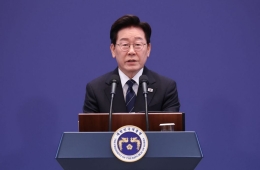
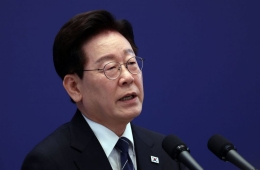
President Lee Jae-myung acknowledged on the 23rd, during the national real estate policy debate, that it is not easy to implement policies that satisfy everyone. Before starting the discussion, President Lee commented, "While we cannot ignore the function of housing as an investment vehicle, the problem lies in the proportion it occupies." He added, "Land is limited, but demand keeps rising, causing prices to increase. Eventually, once it hits a threshold, it may burst like a balloon." He further noted that it is difficult to find large-scale plots for development in high-demand areas such as Seoul and the greater metropolitan region.

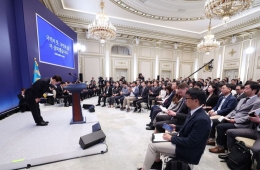
On the 23rd, a national public debate on real estate policy is being held at the KBS Annex in Yeouido, Seoul, presided over by President Lee Jae-myung. Photo by Yonhap News
View original imageAdditional Measures for Supply and Financial Policies Following Tax Reform
The policy presentations delivered by experts prior to the debate offered insights into the direction of real estate policies the current administration may pursue going forward. The three experts presenting that day had also spoken at last week’s ministry-level debates. Jin Miyoon, professor at the Graduate School of Real Estate at Myongji University, who spoke on supply and regulation, suggested that, to create palpable short-term effects, it is necessary to increase the supply of non-apartment housing and prioritize support and deregulation for vulnerable areas to revitalize the private redevelopment market.
She specifically pointed to the need to secure housing at affordable prices and selectively ease urban and building regulations for plots where function has declined or utilization is low. With regard to the operation of regulated areas, such as adjustment target areas, speculative zones, and land transaction permission zones, she emphasized the need to review their effectiveness and reduce public inconvenience as much as possible.
Kim Youngdo, research fellow at the Korea Institute of Finance, stated that while there is a need to ease some financial regulations, such as policy mortgages for young people and relocation loans, he believes overall financial regulations must be maintained. He reiterated the necessity of the macroprudential management fee, which he previously proposed at last week’s debate, saying it would help flexibly manage demand for housing loans and contribute to stabilizing the housing market. Kang Sunghoon, professor at Hanyang University, who presented on taxation, pointed out the need to restructure property and capital gains taxes with a focus on owner-occupation, and to set taxation standards and rates based on property value rather than the number of properties owned.

One Year After Inauguration, Seoul Home Prices Surge...“Seeking Social Consensus”
The Lee Jae-myung administration’s decision to overhaul real estate policy just a year after taking office is attributed both to a sharp surge in home prices, particularly in Seoul and the metropolitan area, and to growing instability in the lease and rental markets in recent months. According to the KB Housing Price Trend Survey, Seoul apartment prices rose by 13.12% in the year following President Lee’s inauguration. This is higher than the 11.45% and 9.17% increases seen during the first year in office of the Roh Moo-hyun and Moon Jae-in administrations, both of which also struggled with surging home prices. This year, the pace of conversion from Jeonse (lump-sum lease) to monthly rent has accelerated, causing Jeonse prices to rise sharply as well.
Although the main factor is cited as the severe supply shortage of the past two to three years, the market sees heightened anxiety stemming from expectations that the current administration would continue with strong regulatory policies. Analysts interpret President Lee’s decision to introduce property tax reforms—the “last card” he had signaled before and after inauguration—just after marking his first year in office as a sign of urgency to respond swiftly. Given that the administration was blamed for alienating public opinion on real estate after losing the Seoul mayoral race in last month’s local elections, and with the stock market also showing signs of instability, there are concerns that the administration's policy momentum could be weakened.

On the 23rd, participants are requesting to speak at the National Real Estate Policy Debate presided over by President Lee Jae-myung at the KBS Annex in Yeouido, Seoul. Photo by Yonhap News.
View original imageWith this debate as a turning point, the Lee Jae-myung administration is expected to treat the real estate policy failures of the past Roh Moo-hyun and Moon Jae-in administrations as lessons. Instead of one-sided regulations, there are plans to seek a balanced solution that blocks speculative demand but protects genuine demand, such as non-homeowners, through a process of public debate that takes into account both citizens' and experts’ perspectives. President Lee stated, "I want to hear what the public thinks," adding, "Real estate is a difficult issue, but if we have a dialogue and listen to opposing views, social consensus can be reached to some extent."
Hot Picks Today
!["How Little Do Koreans Read? Who Will Acquire Munhakdongne Now on the Market [Weekend Money]"](https://cwcontent.asiae.co.kr/asiaresize/93/2026091716280432990_1789630084.jpg) "How Little Do Koreans Read? Who Will Acquire Munhakdongne Now on the Market [Weekend Money]"
"How Little Do Koreans Read? Who Will Acquire Munhakdongne Now on the Market [Weekend Money]"
- "Bank Offers 3.5%, but... Which ETF Hit a 21% Dividend Yield? [Weekend Money]"
- "I'll Pay Cash for This Home"... Cash Purchases Rise and Loan Share Falls as Sub-1 Billion Won Listings Increase in China
- "Please Be Quiet"... China to Fine Up to 210,000 Won for Disruptive Passengers Using Speakerphones
- "Raised a Stray Kitten, but..." Scientific Community Stunned: First New Wild Cat Species Discovered in 100 Years
The government is expected to select and incorporate some of the opinions gathered at this debate into related policies. By the end of this month, the administration will announce tax reform measures and will also review and coordinate previously announced policies on housing supply and finance, factoring in feedback from this debate.
© The Asia Business Daily. All rights reserved. Unauthorized AI training and use prohibited.