Stronger Regulations Drive Demand for Apartments Under KRW 1.5 Billion and in Non-Regulated Areas... "Giwell Elium Yangju Deokgye Station" Gains Attention
After the October 15 Policy Package...
Buyers Flock to Complexes Priced at KRW 1.5 Billion or Less, Where Barriers to Entry Are Lower
Balloon Effect Spreads in Non-Regulated Metropolitan Areas Such as Yangju, Uijeongbu, and Paju

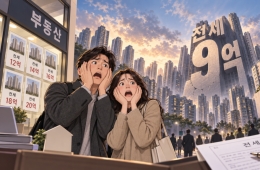
Recently strengthened real estate regulations are reshaping the landscape of the metropolitan area’s apartment market, as buyers flock to complexes priced at “KRW 1.5 billion or less” and “non-regulated areas,” where barriers to entry are lower.
The government designated all of Seoul and 12 regions in Gyeonggi Province as regulated areas or speculative districts through the policy package announced on October 15 last year, significantly adjusting mortgage loan limits. For homes priced over KRW 1.5 billion and up to KRW 2.5 billion, the loan ceiling was reduced from KRW 600 million to KRW 400 million. Properties above KRW 2.5 billion are now capped at KRW 200 million, while properties at or below KRW 1.5 billion maintained the KRW 600 million limit. As a result, demand that was previously focused on high-priced properties is shifting toward price ranges less affected by the regulations.
Consequently, the proportion of transactions involving apartment complexes priced at KRW 1.5 billion or less has increased in the metropolitan area’s sales market. According to an analysis of actual transaction data from the Ministry of Land, Infrastructure and Transport, in the metropolitan area, the share of transactions under KRW 1.5 billion was 89.3% from January to September last year, prior to the implementation of the new regulations. From November last year to May this year, that share rose by 4.6 percentage points to 93.9%. Over the same period, the average number of monthly transactions for apartments over KRW 1.5 billion plunged 53.7%, from 2,287 to 1,060.
The subscription market shows a similar trend. Analysis of data from Korea Real Estate Board’s subscription website revealed that, during the first half of this year, 19 complexes in the metropolitan area offering both under and over KRW 1.5 billion units saw higher average competition rates for the lower-priced units in every case.
For example, at “Jangwi Prugio Mark One” in Seongbuk District, Seoul, which was offered for sale in June, there were 3,864 first-priority applications for 257 general supply units priced under KRW 1.5 billion (excluding special supply), resulting in an average competition rate of 15:1. This greatly exceeded the 6.3:1 average for units priced over KRW 1.5 billion. Similarly, “The Sharp Songdo Grand Terre (G5-1)” in Yeonsu District, Incheon, launched in May, reported a first-priority competition rate of 29.8:1 for units priced under KRW 1.5 billion and 11:1 for units above that threshold.
In addition, the balloon effect is now evident in non-regulated areas within the metropolitan real estate market. Based on data from Real Estate R114 comparing apartment transaction volumes from January to September last year and from November last year to this May, regulated regions such as Gwacheon and Seongnam in Gyeonggi Province saw their average monthly transaction volumes shrink by 71.4% and 31.8%, respectively, following the implementation of the regulations.
By contrast, outer cities in Gyeonggi Province that remain non-regulated—such as Yangju (+21.9%), Uijeongbu (+16.4%), and Paju (+12.5%)—all experienced increased transaction volumes over the same period. Notably, as of the 1st of this month, areas that saw sharp price increases—Dongtan in Hwaseong, Giheung in Yongin, and Guri—have now been additionally designated as regulated areas (raising the number of regulated cities in Gyeonggi from 12 to 15). As a result, non-regulated areas are expected to become even more scarce and sought after.
It is considered more rational to bypass purchasing high-priced apartments in regulated areas in favor of locations with easier financing and lower barriers to entry.
A real estate expert commented, “With a series of real estate regulations, end users are increasingly turning their attention to units under KRW 1.5 billion and to non-regulated areas. Newly built apartments, especially those with good transport links, living infrastructure, and development potential, are emerging as attractive options to absorb this demand.”
Accordingly, attention is focused on new apartment complexes in non-regulated areas of the metropolitan region that offer excellent conditions for actual residency, appealing to genuine homebuyers.
Hot Picks Today
 "450,000 Deaths Expected by Early Next Year"... World's Worst-Ever El Nino Forecast Spurs Global Alarm
- "10,000 Won for a Box of Pears, Hurry and Buy!"... Chuseok 'Daangn Frenzy' as Search Volume Surges 4,600%
- The Game Is About to Change: Samsung Electronics and SK hynix Poised for Revaluation as "GPUs Are the Heart, Memory Is the Blood Vessel" [Weekend Money]
- "Do You Also Think I'm a Loser?" Seungri Caught on CCTV Wielding Soju Bottle
- "What's With a Joseon Widow's Plump Filler Lips?"... Nana Apologizes: "If It Seemed Awkward, It's My Fault"
Shinyoung is currently selling the “Giwell Elium Yangju Deokgye Station” in the Deokgye-dong area of Yangju, Gyeonggi Province. This large-scale complex consists of 1,595 units across 10 buildings, ranging from four basement floors up to 39 floors above ground, with exclusive floor areas from 49 to 122 square meters. It is just a five-minute walk from Deokgye Station (metropolitan line 1, with express trains stopping). The site also benefits from several major transportation developments, including the GTX-C line (main construction to start within the year) and the Line 7 extension (scheduled to open by the end of this year). The complex offers a fixed first down payment of KRW 5 million, an interest-free loan for the second down payment, a contract security guarantee, and the option to resell before paying the interim payment.
© The Asia Business Daily. All rights reserved. Unauthorized AI training and use prohibited.