'Sishellin 3 Stars' for Good Companies... Kim Jungkwan: "Social Contribution Is the New Competitive Edge"
Combining Corporate Social Responsibility (CSR) and the Michelin Guide Concept
'Sishellin Mark' Awarded to Leading Social Contribution Companies
Dashboard Development and Monetization of Social Contribution Performance Also Planned

The government is introducing the 'Sishellin (CSR+Michelin) Guide', a system where citizens can directly evaluate companies' social contribution activities, similar to how restaurants are rated in the Michelin Guide. The plan aims to grant the 'Sishellin Mark' to companies excelling in social responsibility, encouraging consumer choice, and enhancing corporate brand value and competitiveness.
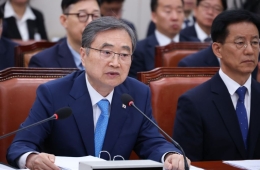
On July 22, Minister of Trade, Industry and Energy Kim Jungkwan posted on his social media channel under the title, “Corporate Social Contribution: Korea's New Competitive Edge,” stating, “Social contribution is no longer a choice, but an essential management strategy to enhance brand value and future competitiveness. Until all companies in Korea become 'Sishellin 3-Star' brands beloved by the public, the Ministry of Trade, Industry and Energy will serve as a strong bridge and supporter connecting companies and citizens.”
Minister Kim pointed out, “Today, the gaps between social classes and the disappearance of regional communities threaten the sustainability of both the nation and businesses. Sustainable growth will not be possible unless polarization is alleviated.” He further emphasized, “Corporate social contributions should go beyond simple charity or benevolent donations; they need to become a vital social investment to reduce polarization and restore the ladder of opportunity.”
This initiative is detailed in the plan titled “Activation of Corporate Social Contribution Activities and Enhancement of Public-Private Cooperation Measures,” which Kim reported at the Cabinet meeting the previous day. The key element is the 'Sishellin Guide', being developed in cooperation with the Korea Federation of Enterprises. Combining the concepts of corporate social responsibility (CSR) and the Michelin Guide, the system will select ten top-performing companies in social contribution each year through expert review and votes by a citizen evaluation panel, awarding them the 'Sishellin Mark'. The government plans to link this recognition to additional rewards and offer support so companies can use it for promotional purposes.
The government will also establish an information disclosure system enabling the public to review corporate social contribution activities at a glance. In collaboration with the Federation, the government will expand its survey of social contribution practices from the top 500 sales-ranked companies to the top 1,000 and provide a dashboard to track companies’ activities by company and by area. Minister Kim explained, “Just as there are 'Kind Gas Stations' and 'Extremely Kind Gas Stations', we will foster a virtuous cycle where responsible corporate actions earn public choice, and those choices spur other companies to participate voluntarily.”
Institutional improvements to maximize the impact of social contributions are also slated. Each year, the government will identify areas of social contribution most needed by the public, link them to corporate capabilities, and reveal the economic value of social contribution performance. The objective is to encourage more companies to participate in areas of high social priority and ensure corporate social responsibility efforts are objectively evaluated.
Public-private cooperation models will be expanded as well. The government is planning to broaden corporate participation in welfare programs for vulnerable groups, such as the Welfare Ministry’s 'Just Dream' and 'Baroit', while pursuing the 'Industrial Ecosystem Co-Growth Project' in which the government and leading corporations jointly support the enhancement of partner companies’ capabilities as well as the localization of core materials, parts, and equipment technologies. The goal is to link individual companies’ social responsibility activities to overall industrial ecosystem competitiveness.
Hot Picks Today
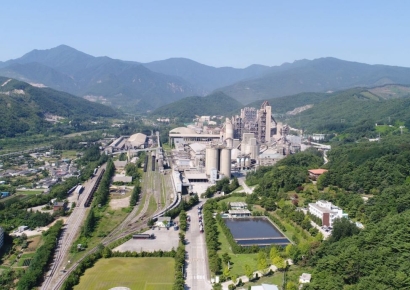 "Ssangyong C&E to Leave Seoul Headquarters With 120 Staff and Move to Donghae City... First Major Gamble in 60 Years"
- "Groom Disappears After Promising Marriage for Abortion... Woman Faces Stalking Charges"
- [Bitcoin Now] US SEC Eases Virtual Asset Issuance Rules... Proposes Exemption from Securities Registration for Up to $75 Million
- "Turned 600 Million Won into 100-Fold Profit"…Chinese Actress Zhang Ziyi Scores 63.5 Billion Won Windfall from Investment, Not Acting
- "Persistent Musty Odor Despite Repeated Washing" ... Tackling the Source of Stubborn Sweat Smells in Workout Clothes Boosted Sales by 316% [Interview]
The Ministry of Trade, Industry and Energy cited stagnation in corporate social contribution as the background for these policies. According to the ministry, last year domestic corporate donation amounts equaled 0.203% of Korea’s gross domestic product (GDP), higher than the United States (0.153%) and Japan (0.186%), but have remained around 5 trillion won since 2018. The government expects that by making social contribution activities more transparent and establishing an evaluation system that the public can feel, voluntary corporate participation will increase further.
© The Asia Business Daily. All rights reserved. Unauthorized AI training and use prohibited.