Public Opinion Floods In Ahead of Real Estate Debate... What Lies Ahead for Ultra-High-Priced Home Criteria, Loan Regulations, and Floor Area Ratios?
National Debate on Real Estate Policy Chaired by President Lee Jaemyung Set for July 23
First Vice Minister Lee Hyungil Announces Results of Preliminary Public Feedback
Ahead of the "National Debate on Real Estate Policy" chaired by President Lee Jaemyung on July 23, experts and members of the public have voiced a wide range of opinions on supply, finance, and taxation. More than 5,300 posts have been registered on the official government petition website. Opinions were sharply divided on key issues ranging from the easing of loan regulations and increasing the floor area ratio for reconstruction, to expanding property tax on ultra-high-priced homes. The government plans to incorporate these opinions into a comprehensive real estate policy package, which will be announced at the end of this month.

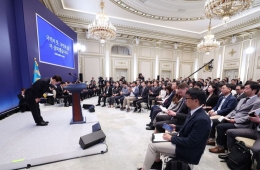
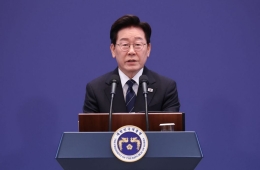
Lee Hyungil, First Vice Minister of the Ministry of Economy and Finance, presented the results of preliminary feedback at the "National Debate on Real Estate Policy" chaired by President Lee Jaemyung that morning. This included comments collected from separate forums held prior to the main debate, hosted by the Ministry of Land, Infrastructure and Transport (supply), the Financial Services Commission (finance), and the Ministry of Economy and Finance (taxation), along with opinions from academia, industry, and the public submitted via the online petition site.
In the area of housing supply, there was general agreement on utilizing idle urban land and public housing sites, raising the floor area ratio for private redevelopment and reconstruction, lowering the consent rate required to establish cooperatives, easing reconstruction charges, and expanding support for new non-apartment housing. However, positions diverged sharply on other major issues. Vice Minister Lee explained, "Regarding rental housing expansion, there was a split between those who argued for the increase of high-quality public rentals and those who advocated for easing regulations on private rental business operators to boost supply." There was also a conflict between arguments to maintain regulated areas for market stability and calls to redesign or lift these measures to prevent interference with housing supply. Opinions were also divided on the ratio between public sale and public rental housing.

In the field of housing finance, opinions were clearly divided by issue. Concerning the management of the total volume of loans, some argued it should be used as a temporary measure, while others insisted it must continue in light of the high level of household debt. Vice Minister Lee explained, "Online, the majority opinion was in favor of easing total loan volume controls." On easing loan regulations for young people and genuine homebuyers, some advocated relaxation to support young people with limited income and assets, while others insisted on maintaining the rules for the sake of stabilizing housing prices. Differing views also emerged regarding relocation loans for redevelopment projects and the management of jeonse loans. Particularly with jeonse loans, some argued for expanding supply to ensure housing stability for people without homes, while others called for restrictions to prevent them from contributing to rising real estate prices. Online, there were more opinions calling for an increase in jeonse loan supply.

In the area of real estate taxation, there was broad consensus on shifting the comprehensive real estate tax base from the number of houses owned to the combined property value. In contrast, positions were clearly divided on the remaining major issues. Regarding property tax on owners of ultra-high-priced single homes, some called for reducing benefits to curb the preference for so-called "smart single units," while others voiced concerns about taxing unrealized gains and potential pass-through of tax burdens to tenants. Vice Minister Lee said, "On what constitutes an ultra-high-priced home, opinions ranged from 3 billion to over 5 billion won." As for the relationship between property tax and transaction tax, there was disagreement between the suggestion that transaction taxes should be lowered if property tax is increased to allow an exit, and the argument that capital gains from price increases should still be reasonably taxed. For the special long-term ownership deduction, some argued that benefits for non-resident owners should be reduced, while others opposed this out of concern that it might further lock up available housing inventory. Concerning special measures for seniors, opinions split between calls to maintain these to reduce the tax burden on retirees and those demanding abolition to prevent tax avoidance.
Hot Picks Today
!["How Little Do Koreans Read? Who Will Acquire Munhakdongne Now on the Market [Weekend Money]"](https://cwcontent.asiae.co.kr/asiaresize/93/2026091716280432990_1789630084.jpg) "How Little Do Koreans Read? Who Will Acquire Munhakdongne Now on the Market [Weekend Money]"
"How Little Do Koreans Read? Who Will Acquire Munhakdongne Now on the Market [Weekend Money]"
- "Bank Offers 3.5%, but... Which ETF Hit a 21% Dividend Yield? [Weekend Money]"
- "Holiday Liquor Price Hits 1.8 Billion Won"... The Identity of the Whisky That Sold Out Instantly After Launch
- "Please Be Quiet"... China to Fine Up to 210,000 Won for Disruptive Passengers Using Speakerphones
- "Raised a Stray Kitten, but..." Scientific Community Stunned: First New Wild Cat Species Discovered in 100 Years
Meanwhile, the area that received the most citizen proposals on the advance petition website was finance. As of 9:20 a.m. on the day of the debate, 5,357 posts had been made, with 2,360 related to finance. While lottery winners, those hoping to live in their single home, and genuine non-homeowning buyers are in different situations, their main demand was the relaxation of loan regulations. In the area of supply, 1,621 posts were registered, with the largest number calling for the easing of regulations on reconstruction and redevelopment, particularly a strong demand to lower requirements for "succession of membership status" in housing cooperatives. In taxation, 1,376 posts were submitted, with many voicing the opinion that if comprehensive property or ownership taxes are raised, transaction taxes such as the capital gains tax should be reduced.
© The Asia Business Daily. All rights reserved. Unauthorized AI training and use prohibited.