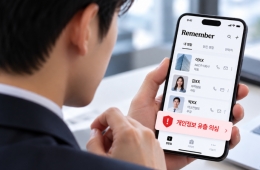
Young People Burdened by Private Employment Education... "3.6 Million Won Spent Per Year"
The Spring of Education Foundation and Youth Foundation Release "Private Employment Education Expense Survey"
Most Rely on Part-Time Jobs and Parental Support for Private Education Expenses
"Government Should Investigate Employment-Related Private Education Costs Like Regular School Surveys"
"Alleviate 'Overqualification' Competition... Expand Competency-Based Recruitment"
A recent survey found that young people spend an average of 300,000 won per month, amounting to 3.6 million won per year, on private education for employment preparation. More than 6 out of 10 respondents reported that they have experienced financial difficulties due to these employment-related private education expenses.
The Spring of Education Foundation and the Youth Foundation released the results of the "2026 Private Employment Education Expense Survey" on July 23, 2026. The online survey was conducted with 565 young people aged 19 to 39 between June 30 and July 15, 2026.

The KB Good Job Employment Fair was held on April 27 at COEX in Gangnam-gu, Seoul. Many job seekers visiting the fair are checking the job posting board. April 27, 2026 Photo by Dongju Yoon
View original imageFirst, 93.7% of the respondents said they had received employment-related private education, while only 6.3% reported having no such experience.
The most common type of private education was "major-related certification" (52.1%), followed by "language courses" (43.4%), "job application consulting services, including self-introduction letter/interview/portfolio preparation" (40%), "non-major certifications" (32.3%), and "IT/computer skills" (30.2%).
On average, young people were spending 300,000 won per month and 3.6 million won per year on employment-related private education. When asked about their average monthly expenditure, 25.9% responded "200,000 to 300,000 won," the highest proportion, followed by "300,000 to 400,000 won" (21.5%), and "100,000 to 200,000 won" (20%).
By setting the midpoint for each price range as the representative value and multiplying it by the response ratio (weight) for each range, then summing the results, the weighted average found that young respondents spent approximately 300,000 won per month on average.
By university location, the "SKY" group (Seoul National University, Yonsei University, Korea University) reported the highest spending at 333,000 won. This was followed by universities in the metropolitan area (Gyeonggi/Incheon) at 330,000 won, private universities in non-metropolitan areas at 299,000 won, national universities in non-metropolitan areas at 278,000 won, and Seoul-based universities excluding SKY at 226,000 won.
By final educational background (including those currently enrolled), those with a "high school diploma or less" spent the most at 442,000 won, followed by "junior college" at 337,000 won. Both groups spent more on average than graduates of four-year universities (274,000 won) and graduate schools (306,000 won).

Over 6 out of 10 young people (63.6%) responded that they have experienced economic hardship due to the cost of private employment education.
When asked about the methods of covering these costs (multiple answers allowed), the most common responses were "part-time job income" (65.0%) and "financial support from parents" (55.1%). This shows that the responsibility of private employment education costs is largely borne by individuals or their families.
Additionally, most young people agree with the need for regular investigation and release of employment-related private education expenses by the government. As many as 93.5% said, "The government should regularly investigate and disclose the actual employment-related private education expenses."
Asked what the government's top policy priority should be to alleviate the burden, the highest proportion selected "expanding financial support for private employment education, such as the Naeil Baeum Card" (28.5%), followed by "strengthening career education programs within universities" (22.8%) and "providing more work and internship experience" (20.5%).
A representative from the Spring of Education Foundation noted, "There has so far been no official government survey on private employment education expenses. As a result, the actual burden has not been properly understood, and it has been difficult to develop targeted policies to address this issue."
They added, "The government should conduct regular nationwide surveys on private employment education expenses, using representative samples by gender, educational background, region, and age, and release the results, just as it does for primary, middle, and high school private education spending."
They further emphasized, "Existing support systems should be reviewed and improved in line with the actual burden faced by young people, and more opportunities should be created to help young people build practical skills."
Hot Picks Today
 "Why Is the Amount in My Account So Low?"... Why Pension Savings Subscribers Were Surprised
- [Exclusive] Personal Data of 67,000 Leaked at Woongjin Compass, a Woongjin Thinkbig Affiliate
- Democratic Party Issues Warning to Choo Miae and Bu Seungchan... "No Further Action, Including Ethics Inspection Unit Referral, Expected"
- Get in a Taxi and Find 22 Galaxy Flips... Taiwanese Taxi Driver's "Galaxy Obsession" Goes Viral
- "I wanted her to feel my passionate love"... Wife collapses after husband's overly tight hug, diagnosed with broken ribs
Lastly, "To alleviate one of the drivers of private employment education spending, namely the 'overqualification' competition, it is necessary for the government's competency-based recruitment initiative to spread to most private companies as well," they said.
© The Asia Business Daily. All rights reserved. Unauthorized AI training and use prohibited.


![[Editorial] Semiconductor Labor Exceptions: Don't Hide Behind Social Dialogue](https://cwcontent.asiae.co.kr/asiaresize/307/2026091511203728817_1789438836.jpg)
![[Editorial] Reviving the Special Inspector Is Only the Beginning... Authority and Scope Must Be Expanded](https://cwcontent.asiae.co.kr/asiaresize/307/2026091810333133998_1789695212.jpg)