Minimum Pay Reduction for Passive Civil Servants... Dismissal for Hate Speech Possible
Stricter Disciplinary Standards for Civil Servants to Take Effect October 1
Managers Also Held Responsible for Duty Neglect
Hate Speech Offenses No Longer Eligible for Award-based Leniency
From now on, public officials who engage in passive administration—such as unnecessarily delaying or neglecting their work without valid reason—will face a minimum disciplinary measure of pay reduction or harsher penalties. Public officials found to have used hate speech targeting an individual or specific group will be subject to separate disciplinary standards, with possible penalties up to dismissal.

On July 23, the Ministry of Personnel Management announced that it will be issuing a legislative notice for the proposed amendment to the 'Enforcement Rules of the Public Officials Disciplinary Act,' which contains these details. The revised regulations are scheduled to take effect on October 1, following the period for public notice and review by the Ministry of Government Legislation.
The amendment focuses on strengthening the level of disciplinary action for inaction, neglect of duty, and passive administration when there is an obligation to perform a certain administrative act or disposition, but the official fails to fulfill it.
Under the current rules, misconduct arising from inaction or neglect of duty is regulated together with separate issues such as disturbance of fiscal order. However, going forward, these will be separated into distinct categories of misconduct. The minimum standard for disciplinary measures will be raised from a warning (reprimand) to pay reduction.
The minimum disciplinary standard for passive administration will also be increased from a warning to pay reduction. The concept of passive administration includes cases where, through inaction or neglect of duty, a public official infringes on the rights and interests of citizens or causes losses to the national budget.
The responsibility of supervisors will also be clearly specified. While there has previously been no clear regulation holding supervisors accountable for inaction or neglect of duty (unlike passive administration), the amendment will allow for disciplinary responsibility in cases where a supervisor is found to have neglected their supervisory obligations.
Separate disciplinary standards for hate speech by public officials will also be newly established. Until now, hate speech has not had independent disciplinary criteria and has instead been handled under the "Other" category for breaches of the obligation to uphold dignity.
The amendment allows for disciplinary actions ranging from pay reduction up to dismissal if hate speech seriously damages the dignity of a public official. Even if the offending official has previously received a government award, this will not be considered as a mitigating factor for reducing punishment. The Ministry of Personnel Management plans to determine the level of disciplinary action by comprehensively considering factors such as the target and content of the hate speech, its recurrence, its impact, and the effect on official duties.
Hot Picks Today
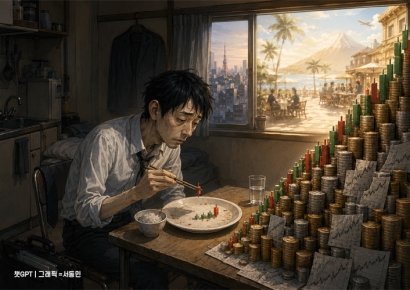 "Surviving on One Meal a Day to Invest 3.5 Million Won Monthly... 'FIRE' Craze Sparks 'NISA Poverty' in Japan"
- "Spend 200,000 Won, Get 100,000 Won Back?"... Government's Bold Move Unveiled [Essential Tips for Benefits]
- Nationwide Gas Station Fuel Prices Drop for 16 Straight Weeks... International Oil Prices Rise
- "Is Extended Fasting Risky Beyond This Age?... The Twist in 'Intermittent Fasting' [Experiment Note]"
- "I'm Getting Married, But Please Don't Come"... Gen Z's Changing Wedding Trends [World is Z-gold]
Choi Dongseok, Minister of Personnel Management, stated, "We will apply stricter standards to public officials who evade responsibility through passive administration," and added, "By strengthening disciplinary standards for passive administration and hate speech, we aim to foster a public service culture that meets public expectations and aligns with the present times."
© The Asia Business Daily. All rights reserved. Unauthorized AI training and use prohibited.



![Listings Pile Up in Gangnam, While Gangbuk Has None Left to Sell... As Seoul Transactions Dwindle, Buying Sentiment Diverges [Real Estate A to Z]](https://cwcontent.asiae.co.kr/asiaresize/307/2026090415531016688_1788504791.jpg)
![[Report] "From AI Homes to Premium Lineups"... Chinese Electronics Dominate IFA 2026](https://cwcontent.asiae.co.kr/asiaresize/307/2026090505514216935_1788555102.jpg)
![[New York Stock Exchange] Interest Rate Hike Concerns Rise on Strong Employment Data... Dow Down 0.51%](https://cwcontent.asiae.co.kr/asiaresize/307/2026090223194913207_1788358790.jpg)