President Lee's "National Real Estate Grand Debate": Key Issues from Supply to Taxation
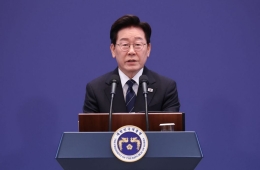
President Lee Jae-myung will preside over the "National Real Estate Grand Debate" on the 23rd. Prior to this, the government held a series of thematic listening forums divided into three sectors—supply (Ministry of Land, Infrastructure and Transport), finance (Financial Services Commission), and tax system (Ministry of Strategy and Finance)—from the 14th to the 16th. During the three-day forums, a range of issues were raised, from easing restrictions on redevelopment and reconstruction to expanding supply, to revamping property holding taxes to focus on housing value and actual residence. The following summarizes the key issues by sector that the President is expected to face at the comprehensive debate.

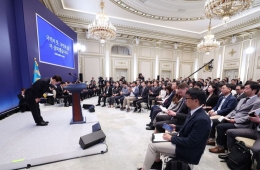
President Lee Jae-myung listens to remarks from attendees at the Regional, Essential, and Public Healthcare Meeting held at the Blue House on the 22nd. Photo by Yonhap News Agency
View original image"Announcing Supply Increases While Cutting Financing... Policymaking Is Inconsistent"
At the supply forum, concerns from the field were raised that financial regulations aimed at suppressing demand are in fact impeding supply. Kang Kyung-hoon, CEO of Jingyeong Construction, pointed out, "The loan-to-value (LTV) ratio for housing sales and rental businesses has been restricted to 0%, and the same rule applies to housing construction sales businesses, which are responsible for providing new housing." He argued, "There should be a distinction between businesses acquiring homes for holding purposes and those supplying new homes after demolition."
Citizens engaging in private sector redevelopment or reconstruction expressed the business challenges they face in securing relocation funds due to stricter loan regulations. Kim Myung-hee, Chair of the Shingil District 2 Urban Complex Project Committee, remarked on relocation loans for redevelopments and reconstructions, stating, "Relocation loans are a type of livelihood loan backed by existing assets, not speculative loans." She continued, "While the government claims urban complex projects are a means for swift housing supply, it's contradictory to block the very funding needed for these projects to proceed."

Yoon-Duk Kim, Minister of Land, Infrastructure and Transport, is attending a listening forum on expanding housing supply measures for national housing stability held on the 14th at Jeongdong 1928 Art Center in Jung-gu, Seoul. Ministry of Land, Infrastructure and Transport
View original imageThere were also calls for the need for long-term, low-interest financing to enable the supply of rental housing. Kim Yong-jin, Head of the REITs Division 1 at Korea Land & Trust, argued, "Rental housing must be operated for more than 10 years after completion, but there is not a single domestic bank that offers long-term fixed-rate loans." He suggested, "A long-term, low-interest financing system, like the 30-year fixed-rate MBS in the United States, should be established."
On the other hand, Choi Eun-young, Director of the Korea Urban Research Institute, criticized the relaxation of regulations for suppliers, saying, "The forum has become a venue mainly for business interests, not for tenants’ concerns." She lamented the lack of tenant voices. Choi Ha-eun, an activist with Mindalpaengi Union, highlighted the burden of housing costs on young tenants, noting that "82.6% of young people are tenants," and called for supply policies centered on tenant protection.
"Debate Over Easing Relocation Loan Regulations... Divided Opinions on Supporting Actual Demand Among Youth"
At the second national debate on housing finance, heated discussions unfolded around key issues such as youth support, Jeonse (long-term leasing) loans, and relocation loans. There was ongoing debate over relocation loan regulations. Baek Doo-jin, Head of Seoul City’s Real Estate Finance Analysis Team, observed, "Our survey of areas in Seoul set for relocation this year found clear difficulties in smooth relocations due to relocation loan issues." He added, "In areas like Gangnam, large construction firms fully cover additional relocation funds, so calls to relax relocation loan rules are rare. The problem arises because construction companies cannot invest in smaller, less profitable regions if they need to raise extra relocation funds." Conversely, some pointed out that loosening relocation loan regulations conflicts with the government’s principle of "separating real estate and finance." Choi, the institute director, commented, "It is not that redevelopment and reconstruction association members are not getting relocation loans—they are asking for loans exceeding 600 million won. Easing relocation loan regulations will concentrate benefits in certain areas of Seoul where luxury homes are clustered and where redevelopment is already progressing well," she argued.

Lee Eogwon, Chairman of the Financial Services Commission, is speaking at the Real Estate Finance Policy National Opinion Listening Forum held on the 15th at the Seoul Bankers' Hall. Photo by Yonhap News Agency
View original imageOn youth support, many participants agreed on the need for measures aimed at supporting actual housing demand. Lee Dae-yeol, Director of Policy at the Korea Housing Builders Association, emphasized, "A key concern is how to create a stepping stone for youth, who are our future." He added, "If there is no government support, whether a young person can purchase a home will depend more on parental assets than on individual repayment ability, possibly widening the gap among the youth." However, there was division over whether regulatory relaxation on lending should be the main form of support. Park Sun-young, Professor of Economics at Dongguk University, cautioned, "Easing lending regulations for the youth could unintentionally drive up home prices for them, causing sellers and developers to reap the benefits." She stressed, "Youth-specific supply measures or expanding public housing for youth, approached through supply and fiscal policy, would be more appropriate."
There were also calls to account for private financing, such as intra-family loans and workplace loans, in the total debt service ratio (DSR), not just bank loans. Seo Young-soo, Executive Director at SK Securities, said, "As cases of using private financing, such as intra-family or workplace loans, are rising, it is difficult to prevent them through aggregate loan caps alone." He insisted, "All intra-family leasing in fund procurement plans should be included in DSR assessments." Bae Moon-sung, Director at Life Asset Management, added, "If surcharges and regulations apply only to mortgage loans, people can avoid restrictions by using parental or workplace borrowing. The DSR should account for not only mortgage loans but also unsecured loans and shadow banking schemes."

Deputy Prime Minister and Minister of Strategy and Finance Koo Yun-chul is attending the 'Real Estate Tax System Public Opinion Listening Forum' held on the 16th at the Bankers Hall in Myeongdong, Seoul, greeting attendees. Photo by Yonhap News Agency
View original image"Not the Number of Homes, but Their Value... Not Just Holding, but Actual Residence"
At the tax policy forum, there were concentrated demands to shift the comprehensive real estate tax assessment from the number of properties held to their total value, and to prioritize actual residence tenure over mere ownership duration. Ham Young-jin, Head of the Real Estate Research Lab at Woori Bank, argued, "A person owning a single home with a posted value of 1 billion won pays more than twice the tax of someone with two homes totaling the same value." He proposed, "It is more appropriate to impose the comprehensive real estate tax based on property value." Oh Jong-hyun, Director of Tax Studies at the Korea Institute of Public Finance, also stated, "Using property value as the standard instead of the number of homes is fairer." He added, "Taxes should be lowered for those who meet actual residence requirements and raised for non-residential, investment properties."
Nam Ki-yeop, Director of the Land Freedom Research Institute, agreed with shifting to a combined value standard rather than property count, but warned, "Strengthening only the comprehensive real estate tax could spark controversy over punitive taxation." He called for a broad overhaul of the property tax system. Similar arguments were made for restructuring the special long-term holding deduction for capital gains tax. Shim Chung-jin, Professor at Konkuk University, noted, "The deduction of 40% just for holding leads to speculative demand." He suggested, "The holding period deduction should be abolished and a special deduction based on actual residence be introduced." Director Oh added, "As the capital gains tax is actually a capital gains rather than a transaction tax, its principle should be upheld. Actual single-homeowners should not face capital gains taxes when moving homes, but transfer income from non-residential investment properties should be appropriately taxed according to the principle."
Hot Picks Today
!["How Little Do Koreans Read? Who Will Acquire Munhakdongne Now on the Market [Weekend Money]"](https://cwcontent.asiae.co.kr/asiaresize/93/2026091716280432990_1789630084.jpg) "How Little Do Koreans Read? Who Will Acquire Munhakdongne Now on the Market [Weekend Money]"
"How Little Do Koreans Read? Who Will Acquire Munhakdongne Now on the Market [Weekend Money]"
- "Why Is Everyone Gathering in Front of the Office?" MZ Flock to 'Yajang' with Lines Forming Even Before Sunset
- "If You Become a Teacher, You Don't Have to Repay Student Loans"... Japan Pulls Out 'Repayment Exemption' After 30 Years
- "Please Be Quiet"... China to Fine Up to 210,000 Won for Disruptive Passengers Using Speakerphones
- "Raised a Stray Kitten, but..." Scientific Community Stunned: First New Wild Cat Species Discovered in 100 Years
However, Ham, the research lab head, expressed concern that strengthening holding taxes could stiffen the market. He recommended, "If holding taxes are raised, transaction taxes should be correspondingly lowered for multi-homeowners in adjusted areas by reducing capital gains tax rates."
© The Asia Business Daily. All rights reserved. Unauthorized AI training and use prohibited.