"The Paradox of AI Optimization... More Demand for SK hynix Memory" [Click e-Stock]
KB Securities Maintains 'Buy' Rating and Target Price of 4.2 Million Won
Ongoing Big Tech Investment by Google and Meta
Operating Profit Projected at 258 Trillion Won This Year
Securities firms have analyzed that improvements in the efficiency of AI (artificial intelligence) models will actually cause an explosive increase in demand for memory semiconductors, driving the long-term growth of SK hynix.
Expanding B2B Revenue Share... Reinforced Earnings Stability
On July 22, Dongwon Kim, a researcher at KB Securities, stated regarding SK hynix, "Improvements in AI models and semiconductor efficiency are not factors that will reduce AI investment. Instead, they will boost memory demand by lowering service prices and expanding applications." He maintained a 'Buy' investment opinion and a target share price of 4.2 million won.
Researcher Kim predicted that, starting next year, the proportion of HBM (High Bandwidth Memory) production will increase, which will effectively limit the supply capacity of general-purpose memory. He also projected that, as the proportion of long-term supply agreements (LTA) increases, the proportion of sales from big tech companies (large information technology enterprises) and AI data centers will expand to as much as 70% of SK hynix's total sales.
This B2B (business-to-business) oriented revenue structure distinguishes itself from previous upcycles. Researcher Kim commented, "The B2B revenue proportion, which was around 30% in 2017, is expected to rise to as much as 70% next year. This will reduce earnings volatility, improve the predictability of performance, and is expected to raise SK hynix's valuation."
'The Paradox of AI Efficiency'... Lower Inference Costs Will Increase Memory Demand Sevenfold
!["The Paradox of AI Optimization... More Demand for SK hynix Memory" [Click e-Stock]](http://www.asiae.co.kr/news/img_view.htm?img=2026050813540755243_1778216048.jpg)
He dismissed recent concerns that algorithm optimization would slow memory demand. Researcher Kim stated, "Lower operating costs can increase usage frequency, thereby raising overall gasoline consumption. Similarly, following the recent unveiling of Moonshot AI's Kimi K3 in China, there have been worries that algorithmic optimization could lead to reduced AI investment and slower memory demand. However, like short-term concerns that arose with the appearance of DeepSeek and TurboQuant in the past, these worries will also be temporary."
He added, "Even if the memory needed for a single inference operation drops to one-third, if usage increases by twentyfold, overall memory demand will rise sevenfold. As AI inference costs drop for enterprises, they will operate far more AI services by connecting multiple agents," he emphasized.
Performance growth is also strong. KB Securities estimates that SK hynix will reach annual revenue of 340.748 trillion won this year, up 250.8% from the previous year, and an operating profit of 258.138 trillion won, up 446.8%. For the second quarter alone this year, operating profit is forecasted to reach as much as 62 trillion won, a 573.1% increase over the same period last year.
Hot Picks Today
 "Ppalli-ppalli Korea, No Wonder It Stings": Plunges from No. 1 to 22nd, Falls Behind Vietnam and Thailand
- "Even New York Taxi Drivers Are Talking About the KOSPI; South Korean Market to Top 9,000 Again Within a Year"... 'Wall Street's Stock-Picking Ace' Names His Picks
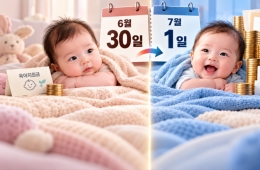
- "'Some Get KRW 74 Million, While a One-Day Difference Means a KRW 34 Million Gap' Sparks Outrage... President Weighs In"
- Kim Jiyong: "Yoon Suk Yeol Is No. 1 Political Prosecutor... Can't Deny Han Donghoon Either"
- 220 cm-Tall 26-Year-Old Woman Dies Less Than a Year After Giving Birth... Deadly Complications Hidden Behind 'Gigantism'
Aggressive infrastructure investment by big tech companies also underpins these results. This year, Google's AI investment is estimated at 270 trillion won and Meta's at 220 trillion won. Researcher Kim said, "This accounts for 46% of all U.S. big tech AI investment. Google is simultaneously pursuing external data center lease guarantees and the development of its own next-generation server chips, while Meta plans to secure a total AI computing infrastructure capacity of 14GW by next year," he added.
© The Asia Business Daily. All rights reserved. Unauthorized AI training and use prohibited.