Innovation City Restricted by Semiconductor Cluster Regulation... Naju City Urges Revision of Standards
Low-Density Urban Planning Makes Many Multi-Family Residences Subject to Regulation
Mayor Yoon Byeong-tae: "Contrary to the Original Purpose... No Room for Reverse Discrimination"
With a significant number of multi-family residential complexes in Bitgaram Innovation City included as regulated properties due to the government's designation of land transaction permit areas following the establishment of the Honam Region Semiconductor Cluster, Naju City has officially submitted a request to the government for a system improvement that reflects the unique characteristics of the city’s urban planning.
There is criticism that the purpose and reality of the policy are now at odds, as the low-density development approach adopted in these purposefully designed innovation cities has, in effect, widened the scope of regulated properties.
According to Naju City on July 22, the Ministry of Land, Infrastructure and Transport designated an area within a 10 km radius of the relocation site for the Gwangju military airport as a land transaction permit zone for two years, from July 14, 2026, to July 13, 2028. This measure is intended to block real estate speculation and guide transactions toward genuine end-user demand.

With the establishment of the Honam Semiconductor Cluster, a significant number of apartment complexes in Bitgaram Innovation City have been included in the land transaction permit system. The photo shows a dense area of apartment complexes in Bitgaram Innovation City. Provided by Naju City
View original imageIn a land transaction permit zone, prior approval from the head of the local government is required for transactions involving land of a certain size or greater. For multi-family residential complexes, the determination of whether a property is subject to this regulation is based on each unit’s land share, not its actual floor area. Therefore, even so-called "standard" apartments of about 84 square meters in exclusive area become subject to approval if their land share exceeds 60 square meters.
The issue stems from Bitgaram Innovation City’s urban planning structure. As a government-led project with the goal of creating an eco-friendly, low-density city, both the building coverage ratio and floor area ratio were designed to be low, resulting in a relatively large land share per household. Due to this characteristic, a considerable number of multi-family residential complexes became subject to the land transaction permit regardless of their actual unit size.
In contrast, in the high-rise apartment clusters of central Gwangju, the land share per household is relatively small, which has resulted in some areas situated even closer to the planned semiconductor cluster being excluded from regulation. This has sparked controversy regarding fairness.
Naju City stated that, due to this new designation, all 9,003 households across 19 apartment complexes in Bitgaram Innovation City, Nampyeong-eup, and Geumcheon-myeon are now subject to land transaction approval. In addition, 7,877 of the households in 10 complexes in Innovation City and Geumcheon-myeon are partially subject to the permit requirement.
The city expressed concerns that this regulation could dampen real estate transactions in the region, potentially leading to a decline in available lease properties and negatively affecting the local real estate market. The city especially emphasized that it is contrary to the original purpose of the innovation city project for the very urban planning features mandated by the government to become the basis for regulation.
In response, Mayor Yoon Byeong-tae of Naju City officially submitted a request—through the Jeonnam-Gwangju Integrated Special City—to the Ministry of Land, Infrastructure and Transport to either exempt innovation city multi-family residential complexes from the land transaction permit requirement or revise the permit standards to better match the characteristics of local urban planning.
Mayor Yoon stated, "Innovation cities, which were systematically planned by the government, are inevitably structured so that the land share per household is large due to the low-density urban planning model. Making them subject to land transaction approval because of these planning features does not align with the intent of the regulation."
Hot Picks Today
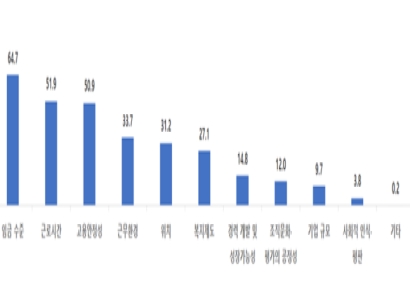 "Please Pay Me at Least 3 Million Won a Month": More Than Half of Young People Today Prioritize "Working Conditions" Over Company Size
- Selling Like Crazy Every Year... 30-Year-Old Hetbahn Takes on a New Challenge: Tastes Better Than "Mom's Home Cooking" [On-Site Report]
- "Americans Would Be Amazed If They Came": Wide-Eyed at a Sight They've Never Seen Before... Foreigners Also Fall for K-Baseball [K-Holic]
- President Lee Narrows Candidates for Next Justice Minister to Former Prosecutors Yang Bunam and Park Gyuntaek
- Beachgoer Finds 'Plastic' That Turns Out to Be Perfume Ingredient Worth More Than Twice as Much as Gold
He added, "While I respect the policy objective of preventing speculation, residents of innovation cities created under government policy should not be subjected to reverse discrimination. We will continue to work with the government to achieve either exemptions for these properties or realistic improvements to the approval criteria."
© The Asia Business Daily. All rights reserved. Unauthorized AI training and use prohibited.