'All In' on Samchundang Pharm After Forced Liquidation of SK Hynix Margin Trading... Warning Signs Over Investor Behavior
Unprecedented Volatility in KOSPI Expands Investment Risk
Loss Aversion Psychology May Actually Exacerbate Losses
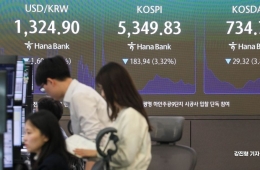
This year, the so-called "roller-coaster KOSPI" market continues, with volatility on the KOSPI exceeding 60%—even higher than that of virtual assets such as Bitcoin. Against this backdrop, concerns are rising over investment behavior as cases are spreading in which individual investors, having incurred large losses due to margin trading, redeploy their entire funds into other stocks immediately after a forced liquidation. There is growing vigilance in the market, especially since this tends to involve repeated high-risk bets as investors attempt to recover losses in a short period of time.

On July 22, on social networking services (SNS), a post by Investor A from July 18 began circulating. The post read, "On Monday, I am in a margin transaction position that must be sold off," and requested financial support. He added, "Of my total investment of 230 million won, 140 million won is outstanding margin debt" and offered a reward in return for recovering his principal. The disclosed account screenshot showed SK hynix stock making up 100% of the portfolio, with a valuation loss of approximately 32 million won (-13.89%) at the time.
After Forced Liquidation, Funds Moved to 'Samchundang Pharm'... Hitting the Lower Limit Right After Hitting the Upper Limit—A Shocking Turn
The problem lies with the investor’s subsequent strategy. Evidence confirmed that after the forced liquidation, Mr. A’s portfolio was completely switched from SK hynix to Samchundang Pharm, a KOSDAQ-listed company. It is presumed that, in an attempt to swiftly recover losses after the margin call (forced liquidation), he shifted to a more volatile stock.
Analysts explain that this is closely related to the recent “loss recovery chasing” pattern seen among retail investors—a strategy that concentrates investments in assets promising higher returns after a loss. However, it is raising concerns because this comes with an exponentially increased level of risk.

On the 20th, the KOSPI was displayed on the status board at the Hana Bank dealing room in Jung-gu, Seoul. On that day, the KOSPI closed at 6,516.27, down 304.33 points (4.46%) from the previous session, and the KOSDAQ index closed at 749.64, down 42.20 points (5.33%). Yonhap News Agency
View original imageIn reality, Samchundang Pharm shares experienced extreme volatility. According to the Korea Exchange, this stock hit the daily upper price limit on the 20th, then plummeted by 29.92% within just one day on the 21st, touching the lower limit at 167,500 won. As a result, its share price fell below pre-surge levels in just two trading days.
"Loss Recovery Psychology Can Lead to Even Greater Risk"
Experts point out that this case is a typical example where psychology rather than rational investment judgment takes over. Investors who attempt to recover losses too quickly tend to take on greater risks, resulting in a vicious cycle where losses can actually deepen.
Hot Picks Today
 He Left It in the Car and Forgot... "I Nearly Collapsed with Joy": Man Wins $1.48 Million Lottery
- "'Nodding Off' on the Subway? Here's Why Koreans Are Getting Even Less Sleep"
- Goldman Sachs Cuts KOSPI Target by 25%... "Excessive Pessimism, Still Attractive"
- "Please Pay Me at Least 3 Million Won a Month": More Than Half of Young People Today Prioritize "Working Conditions" Over Company Size
- Beachgoer Finds 'Plastic' That Turns Out to Be Perfume Ingredient Worth More Than Twice as Much as Gold
Experts cautioned, "The higher the volatility in the market, the more important it is to diversify investments and manage risk. Overly concentrated investments or leverage aimed at short-term gains can lead to unforeseen losses."
© The Asia Business Daily. All rights reserved. Unauthorized AI training and use prohibited.