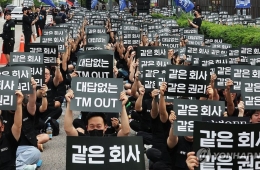
Pharmacy Professor Sentenced to 3 Years and 6 Months in Prison for Instructing Graduate Students to Ghostwrite Research for Child's University Admission
Daughter Found Guilty of Collusion,
Receives 10-Month Prison Sentence Suspended for 2 Years

A university professor who mobilized graduate students to ghostwrite research results in order to create achievements necessary for their child's university admission has received a finalized prison sentence.
According to the legal community on July 22, the Supreme Court's Second Division (Presiding Justice Cheon Dae-yeop) recently upheld the original verdict that sentenced Professor A, who was indicted on charges including interference with business and fraud, to three years and six months in prison. The daughter, B, who colluded with the professor, was also given a ten-month prison sentence, suspended for two years, and this verdict has become final.
Professor A, a faculty member at a college of pharmacy, was found to have instructed graduate students they supervised to conduct experiments on behalf of their high school daughter, B, in order to help her build an academic record for university admissions. The professor also ordered the graduate students to ghostwrite various research papers for submission to academic conferences based on those experiments. B used these achievements to gain admission to the Seoul National University School of Dentistry.
Additionally, Professor A was charged with managing jointly and misappropriating part of the labor costs from research projects commissioned by the university's Industry-Academic Cooperation Foundation for personal use, as well as fraudulently registering students who did not participate in the research to embezzle research funds.
The key issues in the trial included whether the act of misleading academic conference evaluators with research ghostwritten by graduate students constituted "interference with business by fraudulent means," and whether the process of embezzling research funds involved fraudulent conduct and an intent to unlawfully acquire benefits.
Previously, the court of first instance found Professor A guilty as charged and sentenced them to three years and six months in prison, while sentencing their daughter B to ten months in prison, suspended for two years. The appellate court also dismissed their appeals and maintained the initial verdict.
Hot Picks Today
!["Spend 200,000 Won, Get 100,000 Won Back?"... Government's Bold Move Unveiled [Essential Tips for Benefits]](https://cwcontent.asiae.co.kr/asiaresize/93/2022101316351067863_1665646511.jpg) "Spend 200,000 Won, Get 100,000 Won Back?"... Government's Bold Move Unveiled [Essential Tips for Benefits]
"Spend 200,000 Won, Get 100,000 Won Back?"... Government's Bold Move Unveiled [Essential Tips for Benefits]
- "Why Did Snacks Fly Off the Shelves Near the Pork Belly Display?... Sold Out in a Month at Five Times the Expected Pace [The Way We Shop Now]"
- Starbucks' Sales Slump Reverses: Surprise Comeback Against Twosome Place as Card Payments Rebound
- "Surviving on One Meal a Day to Invest 3.5 Million Won Monthly... 'FIRE' Craze Sparks 'NISA Poverty' in Japan"
- "I'm Getting Married, But Please Don't Come"... Gen Z's Changing Wedding Trends [World is Z-gold]
The Supreme Court affirmed the lower courts' decision. The Supreme Court found that there was no violation of the rules of logic and experience or any misinterpretation of the relevant legal principles, and thus dismissed the appeals and finalized the rulings.
© The Asia Business Daily. All rights reserved. Unauthorized AI training and use prohibited.




![[Report] "From AI Homes to Premium Lineups"… Chinese Electronics Dominate IFA 2026](https://cwcontent.asiae.co.kr/asiaresize/307/2026090505514216935_1788555102.jpg)