Still a Long Way to Go... Numerous Challenges Remain for the 'Korea Premium' Era [Commercial Act Amendment 1 Year] ④
Strengthening Board Independence and Execution Power among Next Steps
Behavioral Change in Corporates Is Key... Market Predictability Essential
"Stock Price Growth Reflects Corporate Profitability" — Enhancing Corporate Competitiveness Must Go H
With the enforcement of amendments to the Commercial Act focused on strengthening shareholder rights a year ago, Korea's capital market has taken its first step toward overcoming the "Korea Discount." Starting with the expansion of directors' fiduciary duties, a series of reforms to systems enhancing shareholder rights and improving corporate governance have unfolded over the past year. However, there are still many challenges to increasing the effectiveness of these systems. On the occasion of the one-year anniversary of the amended Commercial Act, The Asia Business Daily has conducted a four-part series based on surveys of experts in the financial investment industry, academia, business, and legal sectors, alongside domestic and international interviews, to review the impact of the amendments on the capital market and to identify the key tasks for steering Korea toward the era of the "Korea Premium."
What are the necessary conditions for opening the era of the Korea Premium? The experts' answers were clear: It is not enough for institutional changes such as the amended Commercial Act to simply be implemented on paper—both corporate and investor behavior must also change to truly secure the "Korea Premium." Voices from both inside and outside the market emphasize that beyond just strengthening shareholder rights, transparent corporate management, a predictable market environment, and a balance between corporate growth and shareholder protection are all needed for a new leap forward in the Korean stock market.
According to a survey conducted by The Asia Business Daily on July 24 of 20 capital market experts to mark the one-year anniversary of the amended Commercial Act, the experts commonly cited the following core prerequisites for achieving the "Korea Premium": ▲ Transparent corporate management and responsible governance ▲ Predictable market environment and policy consistency ▲ Balance between shareholder protection and corporate growth ▲ Substantive changes in corporate behavior ▲ Improved corporate competitiveness and more.
"Still at the Early Stage of Reform... Successive Reforms Needed"
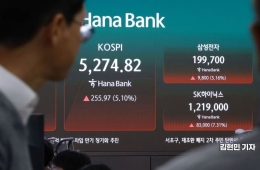
While experts acknowledged that the amended Commercial Act marks a starting point for resolving the Korea Discount, they agreed that continued, follow-up reforms are necessary to usher in the era of the Korea Premium. There are still regulatory blind spots in the capital market that fuel the discount, such as price manipulation during succession processes and intentional delisting, and even after the reform, new cases of shareholder rights violations could arise at any time. Over the past year, the KOSPI index has risen sharply, signaling a re-evaluation of the Korean stock market, but much of this can be attributed to the semiconductor industry's performance. Kim Woochan, Professor of Business Administration at Korea University, warned, "We should not be misled by sharp price increases in a handful of stocks. Corporate governance reform is still in its early stage, and more than half of stocks still have a price-to-book ratio (PBR) below 1. If reforms halt here or become merely formal, resolving the Korea Discount will be difficult."
Notably, the reform experts identified as the most pressing was "enhancing board independence" (multiple responses, 55%). This is closely connected to the fact that "a lack of independent boards" (multiple responses, 70%) was cited as the most significant flaw in current corporate governance. In addition, strengthening enforcement (precedents and supervision), and expanding cumulative voting were highlighted as necessary reforms.
Further suggestions included improving the delisting system for swift removal of zombie companies and introducing a mandatory tender offer system.
Kim Minkook, CEO of VIP Asset Management, stated, "We need to revise the 5% rule (large shareholding reporting system) to allow sound interaction among institutions, clarify and legislate the criteria for breaches of fiduciary duty, and make cumulative voting mandatory even for companies with smaller asset sizes to more effectively protect minority shareholders." He added, "If these measures are pursued in parallel, the amended Commercial Act can serve as the starting point for the Korea Premium." From the business community, several voices also called for the codification of business judgment principles. An academic respondent who requested anonymity said, "As shareholder authority is strengthened, the authority of company directors also needs to be protected, and codifying the business judgment rule is necessary."

Examining the Prerequisites for the Era of the Korea Premium, According to Experts
However, achieving the Korea Premium cannot be accomplished by institutional reform alone. Professor Lee Joonseo of Dongguk University said, "Based on the PBR standard, the Korea Discount has already been resolved and we are entering the Korea Premium era," highlighting "improved performance and industrial restructuring" as prerequisites for this new phase. Professor Kim Woochan also asserted, "It is essential for managers to make efforts to improve both current profitability (ROE) and future growth potential (PER). For such efforts to take hold, the active role of institutional investors in strengthening shareholder rights and engagement is also needed."
Lee Sangmok, CEO of the minority shareholder activism platform ACT, called for "actual changes in corporate behavior that go beyond mere institutional measures." Expert participants also stressed the importance of accountability for controlling shareholders and a sense of partnership with general shareholders. Kim Kwangjoong, attorney at the law firm Klass Hangyeol, pointed out, "In reality, rather than responding to the intent of the Commercial Act revisions, companies are focused on finding ways to circumvent them," stressing the need for transparent corporate management and for regulations and oversight that encourage it.
There were also calls for new driving forces to propel the transition to the Korea Premium era. Oh Seungjae, Co-CEO of Sustinvest, stated, "A new driver will be mandatory ESG disclosures. This will not only strengthen corporate transparency further and extend management and investment perspectives from short- to mid- and long-term, but also provide a competitive edge in line with the evolving global order."
In addition, because share price increases ultimately stem from corporate profitability, several survey participants stated that it is essential to mitigate regulations that hinder corporate innovation and to strengthen corporate competitiveness. One survey participant from a leading business group said, "The most important prerequisite is striking a balance between shareholder protection and corporate growth. To bolster trust in the capital market, we need both protection of shareholder rights and transparent decision-making, but at the same time, companies must be able to stably engage in long-term investments, business restructuring, and entry into new industries to realize tangible increases in corporate value." The argument is that only by establishing clear standards ensuring that reasonable business judgments are protected can managerial uncertainty be reduced.
Another respondent, requesting anonymity, cautioned, "If institutional reforms are adopted as short-term fixes in the name of attracting foreign investment, and if follow-up measures are neglected, they will fail to translate into actual investment," and called for prerequisites such as flexible corporate governance, redefining the role of the capital market to facilitate disclosures that can lead to investment, and introducing defensive management measures commensurate with the strengthening of shareholder rights.
Related Articles
 Lee Yongwoo: "Leverage ETFs Undermine Stock Market Reform Momentum... Predictable Markets Are Essential" [Commercial Act Amendment 1 Year] ①
- [One Year Since the Commercial Act Revision]① 75% of Experts Say It Helped Resolve the "Korea Discount"
- [One Year After the Commercial Act Amendment]② "No Real Changes to Boards as Companies Attempt to Undermine Reform Intent"
- [One Year After Commercial Act Revision]② "Institutional Investors Must Exercise Voting Rights Properly... Role of National Pension Service Is Also Crucial"
There were also voices calling for strengthening corporate competitiveness alongside ensuring policy consistency. Another anonymous respondent stated, "If we are truly to enter the era of the Korea Premium, policies that can enhance corporate competitiveness must be pursued in tandem," adding, "The most important prerequisite is that market participants must have confidence that Korea’s capital market is a predictable market." The participant continued, "If improvements in governance, rational capital allocation, a culture of shareholder returns, and consistent policies are realized, Korean companies will be evaluated as having global competitiveness."
© The Asia Business Daily. All rights reserved. Unauthorized AI training and use prohibited.