Overlapping Listing Regulations Bring 'Cold Wave' to IPO Market... "A Crisis and an Opportunity"
Interview with Kang Inhye, Head of the IPO Support Center at Samjong KPMG
Stock Market Scales Up, But Fewer IPOs
"Restoring Investor Confidence Is a Positive Sign"
Hong Kong and Singapore Companies Eyeing the Korean Stock Exchange
"Now, IPO (initial public offering) underwriters cannot resolve the fundamental nature of a client's business, its future potential, or its marketability—in the end, this is something that executives and company management must contemplate. When a well-prepared company gets listed, investors will trust and invest, and companies can emerge that rapidly scale up like unicorns. I believe this is the basic principle of shareholder protection in the stock market."
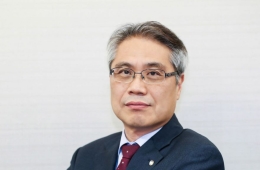
Kang Inhye, Deputy CEO and Head of the Samjong KPMG IPO Support Center, recently diagnosed the IPO market as being somewhat stagnant due to overlapping listing regulations and a series of system reforms. However, she noted that, as long as companies thoroughly prepare for an IPO, the strong market may actually present an opportunity.

Kang Inhye, head of the IPO Center at Samjong KPMG, is being interviewed by The Asia Business Daily at Samjong KPMG in Gangnam-gu, Seoul on the 13th. Photo by Kang Jinhyung
View original imageDuplicated Listing Guidelines Raise the Bar but Help Restore Investor Confidence
Deputy CEO Kang commented on the new duplicated listing guidelines issued by financial authorities on the 6th, stating that although the uncertainty caused by insufficient information sharing has been resolved, the policy practically discourages multiple listings. The core of the guidelines is to essentially prohibit the practice of separately listing unlisted subsidiaries that are substantially controlled by already listed parent companies. To be recognized as an exception, companies must meet stringent requirements. She said, "For spin-off subsidiaries formed via physical division, the risk is very high due to concerns of shareholder value dilution, making listing virtually impossible. Even subsidiaries from equity carve-outs fare only slightly better, as there are still worries about value protection such as share dilution."
However, she also added that the guidelines could have positive effects. If companies with strong fundamentals are selectively listed, the stock market could develop more robust internal strength. She explained, "If companies with substantial fundamentals go public, this could spread the belief throughout the market that listed firms have surpassed a certain threshold." Due to the higher standard of entry for IPOs at present, she described successful IPOs as offering advantages such as greater ability to defend stock prices. She further advised that only companies that differentiate themselves from competitors beyond mere compliance—such as simply preparing financial statements and submission documents—will be able to survive.

Kang Inhye, Head of the IPO Center at Samjong KPMG, is being interviewed by The Asia Business Daily on the 13th at Samjong KPMG in Gangnam-gu, Seoul. Photo by Kang Jinhyung
View original imageDelayed Recovery Amid IPO Market Reforms... Fortunes Diverge Across Industries
Deputy CEO Kang analyzed that triple regulations—ongoing IPO system reforms since last year, stricter requirements to maintain listing status, and restrictions on duplicate listings—have overlapped to cause a downturn in the IPO market. According to her, the number of companies requesting listing reviews has decreased since 2024, and the number of approvals has fallen noticeably this year compared to last year. In fact, according to data from IR Qudos, there were 17 new publicly listed companies in the first half of this year, a decline of 55.3% from 38 in the same period last year. The number of companies using special exceptions for listing also decreased to 10 from 17 last year.
She noted that tightening the sales revenue criteria in delisting conditions had a particular impact. Kang said, "In the past, we advised companies preparing for technology exception listings that they would need at least 10 billion won in sales, but now we are saying they need at least 20 billion won; for general listing cases, at least 30 billion won is required." As a result, companies in certain sectors, such as platforms and biotech, have been unable to meet the sales threshold and are tending to forgo listing. Conversely, manufacturing-based small and medium enterprises—because many operate as second- or third-tier vendors for large corporations—find it easier to secure sales and thus demand for IPOs in this sector has increased. The same is true for AI companies and firms in the semiconductor materials, parts, and equipment sectors, given high demand. Kang emphasized that not just the absolute sales figure but rather the company's sales growth trajectory is most important in IPO preparation. She said, "Since post-listing performance matters most, the upward trend in sales, rather than the absolute amount, will become increasingly critical."
She also mentioned that, unlike the previous trend toward US IPOs, domestic IPOs are now becoming more attractive. Thanks to the robust Korean stock market, the merits of listing in the United States versus the associated costs have diminished. Accordingly, she said, inquiries from foreign companies about Korean IPOs are on the rise. "When a company switches from preparing for a US listing to preparing for a Korean listing, it’s easier on all fronts, including documentation. However, changing from a Korean listing to a US listing requires a lot more costs," she observed. "Recently, more companies based in Asia, such as Hong Kong and Singapore, have been inquiring about listing on the Korean exchange," she added.

Kang Inhye, Head of IPO Center at Samjong KPMG, is being interviewed by The Asia Business Daily on the 13th at Samjong KPMG in Gangnam-gu, Seoul. Photo by Kang Jinhyeong
View original imageSamjong KPMG's IPO Center Offers Full Lifecycle Support from Industry-Specific Partners
Samjong KPMG established its dedicated 'IPO Support Center' last year to support qualitative growth and public listing processes for small- and medium-sized unlisted companies. Deputy CEO Kang emphasized that the center helps companies address the accounting issues they encounter during listing, especially since many unlisted firms lack effective closing and accounting capabilities. For example, the center provides concrete plans such as systematizing purchase and sales documentation, internalizing in-house accounting staff, and introducing enterprise resource planning (ERP) systems. It also recommends that companies pro-actively revise their financial statements based on general accounting standards before converting to International Financial Reporting Standards (IFRS) ahead of listing. In fact, a small business preparing for a listing in the second half of this year participated in a voluntary audit and proactively corrected errors in its general accounting financial statements through the IPO Center.
The IPO Center brings together professionals in four areas: audit, deal advisory, tax, and consulting, so companies preparing for IPOs can access all required services at once. In addition, ten industry-specific partners serve as members and provide services to a diverse range of clients. For technology exception listings, the center also arranges 'on-site Q&A sessions' with external technology review experts. Deputy CEO Kang explained, "The aim of the IPO Center was not immediate profit, but to allow companies to use the center as a public resource. Through seminars and private sessions, we make accounting easy to understand for entrepreneurs unfamiliar with the field, and ultimately, our goal is to deliver the maximum amount of content possible to small- and medium-sized companies over the long term."
Hot Picks Today
![[Breaking] Court: “Noh Tae-woo Support Fund Irrelevant to Property Division Ratio”](https://cwcontent.asiae.co.kr/asiaresize/93/2025101613320869362_1760589129.jpg) [Breaking] Court: “Noh Tae-woo Support Fund Irrelevant to Property Division Ratio”
[Breaking] Court: “Noh Tae-woo Support Fund Irrelevant to Property Division Ratio”
- A 'Chance' for Samsung and Hyundai Motor: "Unable to Scale Up" - Musk's Admission Sends Share Price Plunging 15%
- "Only in Korea": 1 in 5 Foreign Visitors Head Here First
- What Threatens Baby's Health More Than Alcohol or Cigarettes During Pregnancy?..."Parents' Wallet"
- "Offering Up to 90% Off"... Why Today's 20s and 30s Flock Here: The Emerging Beauty Powerhouse to Add 100 Stores [Why&Next]
© The Asia Business Daily. All rights reserved. Unauthorized AI training and use prohibited.