"Eggs with Shell Code Number 1... Are They Nutritionally Different from Number 4? [Mazjal X-File]"
"Inside the Eggshell": All You Need to Know About Shell Codes
"Rearing Environment Does Not Directly Affect Egg Quality or Nutrition"
Analysis of Egg Product Information on Kurly, Coupang, and Naver
- Comment 1. It doesn't matter. I used number 4 eggs, and my child grew up healthy.
- Comment 2. I buy both number 1 and 3 eggs; I use number 1 just for my child's food, and the adults eat number 3.
A post was uploaded to an online moms' community asking about eggs to use for a baby's weaning food. The question concerns which egg, based on its 10-digit shell code printed on the shell, would be more suitable for weaning food. This clearly reflects a parent's wish to provide their child with eggs of the best quality and nutritional content.
!["Eggs with Shell Code Number 1... Are They Nutritionally Different from Number 4? [Mazjal X-File]"](http://www.asiae.co.kr/news/img_view.htm?img=2022072515110262764_1658729463.jpg)
With the so-called "egg-flation" continuing to drive up the price of eggs, there is growing interest in egg shell codes. But can you simply rely on the shell code to choose a good egg? In this edition of Mazjal X-File, we examine the factors you should consider when buying eggs. To help consumers purchasing eggs online without seeing them in person, we've also analyzed the information about eggs provided by major shopping platforms.
The quality of eggs is determined by livestock grading... Freshness is checked by the laying date
First, the egg shell code refers to the 10-digit number printed on the egg's shell.
According to the Ministry of Agriculture, Food and Rural Affairs on the 26th, eggs distributed in Korea have a 10-digit code on the shell, including the 4-digit laying date, a 5-digit unique farm number, and a 1-digit rearing environment number. The "shell code" mentioned in the moms' cafe post commonly refers to the last digit representing the rearing environment.
The higher the rearing environment number at the end of the code, the poorer the conditions in which the chickens were raised. Number 1 means free range, number 2 means barn-raised, number 3 means improved cage, and number 4 means conventional cage. Numbers 1 and 2, which represent relatively improved environments, are categorized as animal welfare certified eggs.
In Korea, the rearing environment code began to be mandated on egg shells following the 2017 pesticide egg crisis. Back then, chickens were raised in cramped spaces leading to a mite problem, and pesticides were used to get rid of the mites. Some of these substances got into the eggs and were distributed as such. As a result, the government made it mandatory from 2018–2019 to display the rearing environment number as the last digit of the 10-digit shell code.
!["Eggs with Shell Code Number 1... Are They Nutritionally Different from Number 4? [Mazjal X-File]"](http://www.asiae.co.kr/news/img_view.htm?img=2026072111072352432_1784599643.jpg)
So, does a lower rearing environment number mean the egg is better in quality or nutritional value? Experts say the rearing environment code does not serve as an indicator of the egg's actual quality or nutrition content. Even among eggs with the same rearing environment number, each farm manages its chickens differently, and these differences do not directly translate into better or worse nutritional content.
The rearing environment is more about animal health and welfare than taste or nutrition. According to a recent study by Professor Yoon Jinhyun's team at Chonnam National University's Department of Animal Science, eggs laid by chickens in small cages contained about twice the level of stress hormones as those from animal welfare certified farms. Therefore, from the standpoint of ethical consumption, the rearing environment code is significant.
Experts explain that, to actually assess the quality and nutritional value of eggs, you should refer to livestock product grading rather than the shell code. According to the Rural Development Administration, eggs are classified as 1+ grade, 1st grade, or 2nd grade based on grading criteria for livestock products. Grades are determined by factors such as shell shape and condition, an examination of the interior by candling, and the state of the yolk and white when the egg is broken.
However, when you go to buy eggs, most products do not have a grading mark. That's because grading is not mandatory, so only a small proportion of eggs have been graded. According to the Livestock Products Quality Evaluation Institute's "2025 Livestock Product Grading Statistics Annual Report," only 8.3% of all eggs produced last year (about 1.5 billion eggs) received a grade.
!["Eggs with Shell Code Number 1... Are They Nutritionally Different from Number 4? [Mazjal X-File]"](http://www.asiae.co.kr/news/img_view.htm?img=2021011115471720342_1610347636.jpg)
For this reason, consumers are advised to check the first four digits of the shell code, which indicate the laying date, when selecting eggs themselves. Industry experts believe that egg freshness affects quality and nutritional content. Because eggs lose freshness over time after being laid, the more recently they were laid, the fresher they will be. In general, refrigerated eggs should be consumed within one month of their laying date.
What online egg listings reveal...
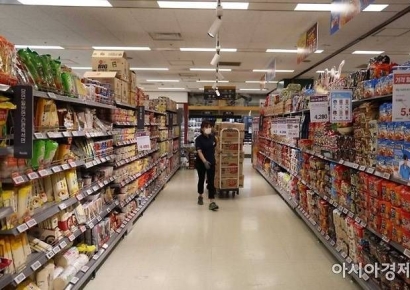
These days, many consumers buy groceries and daily essentials online. While it would be ideal to check the shell code in person, that's not easy when purchasing eggs online. So we examined how three major online shopping platforms—Coupang, Naver Shopping, and Kurly—provide information about eggs, looking at manufacturing date (laying date), rearing environment code, and livestock grading.
Kurly specifies the shell code, rearing environment, feed, and laying date for the eggs it sells. Laying dates are marked as "within ○ days of laying," with explanations such as "we ship products within ○ days from the laying date of dispatch, and the total consumption period is 30 days from the laying date." Depending on the product, the laying date may vary, such as within 7 or 10 days.
Kurly explained, "For eggs with rearing environment numbers 1 and 2, we only ship products within 7 days of the laying date; for numbers 3 and 4, we only ship eggs within 10 days. This is how we maintain quality." Livestock grading is stated in the product description only for eggs that have received an official grade. Kurly also stated that "with rising interest in animal welfare and rearing environments, the sales page is designed so that consumers can easily check and select the rearing environment code at the very top."
On Coupang, there is a difference in how egg information is presented for Rocket Fresh products versus others. For Rocket Fresh, the laying date is not listed, but the consumption expiration date is. Some eggs that have been officially graded also indicate this. Industry sources say the consumption expiration for Rocket Fresh eggs is listed according to the date on the item when it is stocked. The expiration is set by each supplier based on a production period of 7–10 days from the laying date.
For eggs sold on Coupang outside of Rocket Fresh, details like manufacturing date, rearing environment number, and livestock grade are provided differently, depending on the product. Key phrases like "shell code number 1" appear in the product title to indicate rearing environment, or product descriptions note "fresh eggs laid each morning," which also help verify details.
!["Eggs with Shell Code Number 1... Are They Nutritionally Different from Number 4? [Mazjal X-File]"](http://www.asiae.co.kr/news/img_view.htm?img=2021020815294967858_1612765789.jpg)
On Naver, egg products sold via Smart Store have a product information section at the top where sellers are required to state the rearing environment. However, the laying date, expiration, and livestock grade are not included in this section. As with non–Rocket Fresh eggs on Coupang, some sellers highlight "shell code number 1" in product titles, or they note "laid today, shipped today" in descriptions, allowing consumers to judge freshness based on this information.
The reason for different egg information by retailer lies in their distinct sales models. Kurly and Coupang Rocket Fresh purchase and manage products directly, allowing for diligent information disclosure. Coupang's non-Rocket Fresh listings, as well as those on Naver Smart Store, operate as open marketplaces accessible to both sellers and buyers, which means individual sellers enter the details themselves.
Naver explains that, via Smart Store, sellers can directly enter the manufacturing date for eggs, and the rearing environment code can be included at the seller's discretion in the product title or detail page. If the seller holds a livestock product grade, the system allows them to input this information as well.
An official at Naver stated, "From the consumer needs perspective, details such as the shell code are helpful in making purchase decisions, so we are considering improving the system to make these important facts more visible, or allowing more detailed information input at the time of product registration."
Hot Picks Today
 "I Ate at Home to Save Money, But My Account Balance Was Still a Shock"
- Suddenly Called Out During Class, Awarded $100,000 as Students Cheer in the Gym
- "Well, It's for Koreans Anyway"... Laughing While Boiling a Week-Old Fish
- "Drinking Zero-Calorie Beverages Won't Stop Weight Loss"… Surprising Results After Two Years of Study
- "Uncle Will Buy Them All for Wonie"... Men in Their 30s Sweep Up 600,000 'RESCENE Bread'
It is said that the average Korean consumes 278 eggs per year (as of 2022). With this year's sharp rise in egg prices, some people have even felt burdened by the cost of a simple fried egg. So, when buying eggs, it is wise to check carefully and choose high-quality eggs that are fresh and rich in taste and nutrition.
© The Asia Business Daily. All rights reserved. Unauthorized AI training and use prohibited.