Kolon TissueGene: "TG-C U.S. Phase 3 Not a Failure... Investigating Unusually Strong Placebo Response" (Comprehensive)
Failed to Achieve Statistical Significance over Placebo in VAS and WOMAC
"Efficacy in Treatment Group Equal to or Greater Than Past Trials"
Second Phase 3 Results Will Be Key for FDA Approval
Kolon TissueGene's cell and gene therapy for osteoarthritis, TG-C (formerly Invossa), faced a major setback in its first Phase 3 clinical trial conducted in the United States. The company explained that while the TG-C treatment group showed effectiveness similar to previous trials, the improvement in the placebo group was much greater than expected. Depending on the outcome of a second Phase 3 trial scheduled for announcement in October, the company will determine whether to proceed with an application for U.S. Food and Drug Administration (FDA) approval.
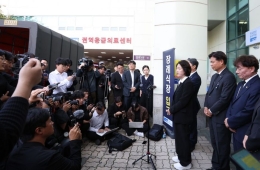
At a press conference held on July 21 at Kolon One & Only Tower in Gangseo-gu, Seoul, Seungho Jeon, co-CEO of Kolon TissueGene, addressed the U.S. Phase 3 trial results of its cell and gene therapy 'TG-C' for osteoarthritis. He stated, "This was not a clinical failure, but a partial success. The clinical results for the TG-C treatment group were equal to or better than those seen in the Korean Phase 3 trial and the U.S. Phase 2 trial. We plan to identify the cause of the unusually high placebo effect."
According to the recently released U.S. Phase 3 topline results, TG-C failed to demonstrate statistical significance over placebo for primary endpoints, which included the Visual Analogue Scale (VAS) for pain and the Western Ontario and McMaster Universities Osteoarthritis Index (WOMAC). The VAS pain score, evaluated on a scale of 0 to 100, decreased by an average of 38.6 points in the TG-C group compared to baseline, but also decreased by 39.1 points in the placebo group (p=0.8322). The total WOMAC score decreased by 26.34 points in the TG-C group and by 27.57 points in the placebo group, with no statistically significant difference between the two groups (p=0.5701).

Seungho Jeon, Co-CEO of Kolon TissueGene, is answering questions at the TG-C Phase 3 clinical trial results briefing held on the 21st at Kolon One & Only Tower in Gangseo-gu, Seoul. Photo by Yonhap News.
View original image"Placebo Response Exceptionally High... No Issue with Efficacy"
The company believes that the lack of difference between treatment and placebo groups was not due to insufficient efficacy of TG-C, but rather because the placebo group experienced an exceptionally large improvement. Co-CEO Moonjong Roh explained, "In osteoarthritis clinical trials, placebo group VAS and WOMAC scores typically decrease by about 9 to 14 points, and this effect lasts a maximum of around six months before gradually tapering off. In this trial group, both indicators behaved very unusually."
There is also a hypothesis that high baseline pain scores among participants at enrollment may have increased the placebo response. The theory is that patients who joined the trial while experiencing particularly severe pain may have seen their symptoms naturally lessen afterward, resulting in greater improvements in the placebo group. Andy Wayman, Chief Medical Officer (CMO), said, "The baseline score for patients in this trial averaged above 40, which is relatively high, and we can hypothesize that this may have contributed to the high placebo effect. However, it is still too early to draw any definitive conclusions."
The company also plans to examine whether the use of analgesics influenced the results. For ethical reasons, it is difficult to strictly prohibit painkiller use in osteoarthritis pain trials. This means that pain assessment results may differ depending on the amount and timing of analgesic use by each patient and the management methods used by each clinical site. Co-CEO Jeon added, "The way painkillers were used and managed could also have affected the results." However, the company maintained that there was no apparent correlation between analgesic use and the placebo response in the topline data reviewed so far.

Seung-Ho Jeon, co-CEO of Kolon TissueGene, is answering questions at a press conference announcing the results of the TG-C Phase 3 clinical trial in the US, held on the 21st at Kolon One&Only Tower in Gangseo-gu, Seoul. Photo by Yonhap News.
View original image"Not a Failure, but a Partial Success"... Shares Plunge to the Daily Limit
With the first trial failing to demonstrate efficacy, the previously suggested timeline of applying for FDA approval in 2027 and commercialization in 2028 is now likely to be delayed. Co-CEO Jeon commented, "Since we could not confirm a difference from the placebo group in this trial, our expected schedule will be postponed. A revised timeline can only be established once we complete detailed analysis of the causes."
The key will be the topline results from the second U.S. Phase 3 trial, which will be announced in October. The two trials were independently designed and conducted. If a significant difference between the TG-C and placebo groups is found in the second trial, the company says it will use that result as the basis for a U.S. market entry strategy. Jeon explained, "We need to see a clear difference with the placebo group in the results of the second trial to have a basis for a new drug application (NDA) afterward. Such results would allow us to begin in-depth discussions with the FDA."
Shares of Kolon TissueGene hit the daily lower limit immediately after the market opened. Previously, on the 16th, the share price also dropped sharply during trading, raising suspicions that trial results may have been leaked prior to the official announcement. In particular, questions were raised over the fact that, instead of a contract research organization (CRO), the statistical analysis was performed by internal company staff, fueling speculation that inside information may have been released to the market. Jongin Kim, Chief Financial Officer (CFO), stated, "The statistical analysis was performed internally by only a handful of people, so we believe there is no possibility of information leakage from within. We have banned all employees from trading company shares, so we do not believe that share price volatility resulted from insider information leaks."
Kolon TissueGene now plans to examine original patient-level data to analyze the cause of the high placebo response. The company intends to comprehensively review patient characteristics, differences between clinical sites, use of analgesics, and evaluation processes, and then reflect the findings in its FDA approval strategy and subsequent development plans. Co-CEO Jeon said, "Through detailed analysis at the level of raw (unprocessed) data, we will identify the causes and prepare additional steps and countermeasures for FDA approval."
Hot Picks Today
 "I Ate It Often Because It Tasted Good"... This Eating Habit Linked to 40% Higher Odds of Asymptomatic Cerebrovascular Damage
- "Booked a Cheap Flight, Only to Get Blindsided"... Travelers' Complaints "Explode" Over Extra Fees
- Foreign Funds See Net Outflows for Eighth Straight Month... $14.16 Billion Leaves Stock Market
- “Dad Just Gave It to Us as a Gift”... Scratched a Lottery Ticket at a Family Gathering and Hit a 1 Billion Won Jackpot
- "We've gone this far to save on lunch"... Where office workers are flocking instead of restaurants

Seungho Jeon, co-CEO of Kolon TissueGene, is explaining the results of the TG-C Phase 3 clinical trial in the United States at a press conference held at the Kolon One & Only Tower in Gangseo-gu, Seoul on the 21st. Photo by Yonhap News
View original image© The Asia Business Daily. All rights reserved. Unauthorized AI training and use prohibited.

!["Please Take Them Off!" They Made It All the Way to the Bed... Then "80% of Fecal Bacteria" Struck [Deep Scroll]](https://cwcontent.asiae.co.kr/asiaresize/307/2026101610053063338_1792112730.png)