President Lee: "Oil Price Ceiling May Need to Be Strengthened Amid Worsening Middle East Situation"
Brent Crude Approaches $90 Amid Renewed Middle East Military Clashes
Government: "Current Price Ceiling System Maintained... Further Decisions Based on Global Oil Prices"
"Manage Tariff Quota Benefits to Prevent Intermediaries From Absorbing Gai
President Lee Jae-myung stated on July 21 that, in light of renewed armed conflict in the Middle East leading to a fresh rise in international oil prices, the government should not only maintain the oil price ceiling system but also consider strengthening it if necessary.

President Lee Jae-myung is speaking at the State Council meeting held at the Blue House on July 21, 2026. Photo by Yonhap News
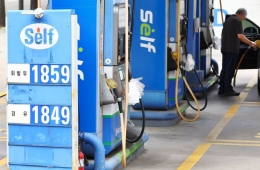
View original imageAfter receiving a report at the State Council meeting that day on the government's emergency management and response to the Middle East conflict, President Lee remarked, "According to our original plan, we would have lowered the price ceiling further or even abolished the system by now. However, it seems we may have to strengthen it instead," and added, "We need to make a decision while observing the international oil price situation."
Previously, Deputy Prime Minister and Minister of Economy and Finance Koo Yoon-cheol had reported that the government is maintaining the current oil price ceiling system, which was further reduced by 150 won. He said, "As international oil prices are once again rising, we will decide on future measures based on oil price trends."
According to government reports, as armed conflict resumed between the United States and Iran and concerns over a blockade of the Strait of Hormuz increased, Brent crude oil, which had fallen to $71 per barrel on the 1st of this month, rose to $90 the previous day and stood in the $89 range on this day. Over the same period, West Texas Intermediate (WTI) crude, which had been in the $60 range, also climbed to the $80 range.
Domestic oil product prices are still lower than at the end of last month, thanks to the impact of the price ceiling system and oil cost stabilization measures. The price of gasoline, which exceeded 2,000 won per liter on June 26, has now dropped to around 1,872 won. Diesel prices also fell by more than 130 won, dropping from 1,996 won to 1,857 won.
Additionally, President Lee pointed out that if the situation in the Middle East becomes prolonged, rising international oil prices could again put pressure on domestic prices. He said, "This time, there is no clear possibility of an early end to the conflict or a ceasefire," stressing, "We must closely monitor the impact on domestic prices."
He also instructed that measures such as quota tariffs or importing lower-priced goods for price stabilization must be carefully managed to ensure they actually lead to lower consumer prices. President Lee said, "If goods are imported cheaply but sold at high prices, it is useless and only benefits the companies. We must ensure that the benefits provided at the import stage do not end up as profits only for middle distributors and strictly oversee enforcement."
Hot Picks Today
!["Spend 200,000 Won, Get 100,000 Won Back?"... Government's Bold Move Unveiled [Essential Tips for Benefits]](https://cwcontent.asiae.co.kr/asiaresize/93/2022101316351067863_1665646511.jpg) "Spend 200,000 Won, Get 100,000 Won Back?"... Government's Bold Move Unveiled [Essential Tips for Benefits]
"Spend 200,000 Won, Get 100,000 Won Back?"... Government's Bold Move Unveiled [Essential Tips for Benefits]
- "Why Did Snacks Fly Off the Shelves Near the Pork Belly Display?... Sold Out in a Month at Five Times the Expected Pace [The Way We Shop Now]"
- Starbucks' Sales Slump Reverses: Surprise Comeback Against Twosome Place as Card Payments Rebound
- "Surviving on One Meal a Day to Invest 3.5 Million Won Monthly... 'FIRE' Craze Sparks 'NISA Poverty' in Japan"
- "I'm Getting Married, But Please Don't Come"... Gen Z's Changing Wedding Trends [World is Z-gold]
He called for a firm response to possible hoarding and price gouging taking advantage of rising international oil prices. President Lee remarked, "If prices rise again and the situation worsens, hoarding and price manipulation could become rampant," urging related agencies to intensify crackdowns from the outset. He also directed that authorities preemptively confiscate hoarded goods and, if needed, sell them quickly, and to revise relevant laws such as the Price Stabilization Act accordingly.
© The Asia Business Daily. All rights reserved. Unauthorized AI training and use prohibited.


![[Report] "From AI Homes to Premium Lineups"… Chinese Electronics Dominate IFA 2026](https://cwcontent.asiae.co.kr/asiaresize/307/2026090505514216935_1788555102.jpg)