President Lee: "Normalizing Real Estate Is Key to Easing Polarization"... Pursuing Both Supply Expansion and Tax Reform
President Lee Presides Over Cabinet Meeting: "We Must Move Beyond a Nation Ruled by Real Estate Speculation"
"Social Capital Is Tied Up in Unproductive Real Estate, Hindering Economic Growth"
National Real Estate Grand Debate on the 23rd: Di
On July 21, President Lee Jae-myung identified real estate as a key driver of polarization, pledging to expand housing supply and support genuine homebuyers. He emphasized that real estate issues are exacerbating hardships for young people, and promised to seek diverse solutions at a forthcoming real estate forum.

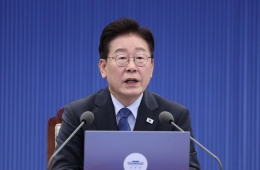
President Lee Jae-myung is speaking at the Cabinet meeting held at the Blue House on the 21st. July 21, 2026. Photo by Yonhap News.
View original imageIn his opening remarks at the Cabinet meeting that day, President Lee stated, "Stabilizing the real estate market is one of the most important preconditions for alleviating polarization," adding, "Currently, our real estate sector is a major cause of asset inequality, household debt, and increasing pain and alienation for young people."
He went on to say, "Extreme speculative demand and anxiety have become intertwined, tying up significant amounts of social capital in unproductive real estate, which is hampering economic development. Above all, illicit and expedient gains from real estate speculation are the chief culprits that undermine fairness and common sense in our society and hinder national unity."
President Lee positioned bringing order to the real estate market as an issue that goes beyond housing policy and is fundamentally a matter of growth strategy. He stressed, "Normalizing real estate policies will enable the productive reinvestment of resources, restore social dynamism, and offer solutions to conflicts driven by polarization."
He further announced plans to pursue not only demand-side measures, such as loan regulations, but also supply-side strategies and tax reforms. President Lee said, "Alongside swift supply-side actions, we will draw up targeted support measures for genuine homebuyers that are closely tailored to real-life needs," and added, "The tax system will also be overhauled fairly and rationally based on the standards and expectations of the public."
President Lee's remarks are linked to the evolving situation in the real estate market. In June and October of last year, he implemented strong regulations such as capping mortgage loan limits and expanding land transaction permit zones. However, as sales, lease, and rental prices began rising—especially in outlying areas of the Seoul metropolitan region—and as demands for support among genuine homebuyers including young people and newlyweds grew louder, President Lee himself committed to presenting countermeasures.
President Lee also said he would personally attend the National Real Estate Forum on July 23 to listen directly to citizens. He stated, "I will humbly listen to the voices of the people to help guide us away from the disastrous trajectory of becoming a ‘real estate republic’ and toward stable housing and productive economic growth," adding, "Through this, we will craft realistic alternatives and policies."
"'K-Shaped Polarization' Requires Unprecedented Speed in Policy Execution"

President Lee Jae-myung is speaking at the Cabinet meeting held at the Blue House on the 21st. July 21, 2026. Photo by Yonhap News Agency
View original imagePresident Lee also addressed the rapidly widening 'K-shaped polarization' during the artificial intelligence (AI) transition. He noted that while key economic indicators are improving rapidly—driven by the AI industry—young people, small and mid-sized businesses, and small merchants are being excluded from the benefits of growth.
He noted, "Although the AI revolution is injecting new vitality into our economy, its immense impact is causing the shadows of K-shaped polarization to spread at a very rapid pace. Economic figures are improving remarkably, but countless small and medium-sized enterprises, small merchants, and young people are being left out of the progress."
He warned, "As polarization deepens, economic vitality weakens and the growth potential of the nation as a whole is undermined. Even social cohesion and stability are being shaken, so the new possibilities and hopes we are starting to see could easily turn out to be nothing more than fleeting mirages."
President Lee thus defined narrowing the gap as a core condition for sustainable growth. He called for comprehensive government-wide initiatives for youth employment, asset-building, and housing security, as well as multi-layered support for small businesses and regionally customized growth engines.
Hot Picks Today
!["Don't Use Chinese-Made Products": One U.S. Warning Triggers a 5 Trillion Won Jackpot for Korean Batteries [Weekend Money]](https://cwcontent.asiae.co.kr/asiaresize/93/2025121709393659037_1765931975.jpg) "Don't Use Chinese-Made Products": One U.S. Warning Triggers a 5 Trillion Won Jackpot for Korean Batteries [Weekend Money]
"Don't Use Chinese-Made Products": One U.S. Warning Triggers a 5 Trillion Won Jackpot for Korean Batteries [Weekend Money]
- "Dividend Payouts of 40 Million Won Before Their First Birthday"...'Baby Shareholders' Put Ordinary Workers at a Disadvantage
- "I'll Take the Perfect Travel Shot for You"... Thailand's 'Paid Friend' Service Gains Popularity at 40,000 Won per Hour
- "Planning a Trip to Japan?"... Accelerating Yen Strength [Weekend Money]
- '12 Billion Bottles of Surplus' – Enough for the World to Drink for 3 Years... Wasn't MZ Just Trending Recently?
"As our new society is unfolding faster than anyone could have imagined, our policy responses also need to be implemented with a speed and intensity previously unthinkable," he urged. "Concentrate the full force of all available policy tools—fiscal, tax, financial—on alleviating polarization."
© The Asia Business Daily. All rights reserved. Unauthorized AI training and use prohibited.