ETF Mania Cools Amid KOSPI Rollercoaster... Is it Time to Consider a '10% Safe Savings Account'? [Practical Finance]
Signs of a 'Reverse Money Move' Amid Rising Interest Rates
ETF Sales Plummet at Major Banks as Stock Market Volatility Surges
Flight to Safe-Haven Assets Accelerates with Central Bank Rate Hikes
Principal-Protected Deposits and Savings Becoming More Attractive
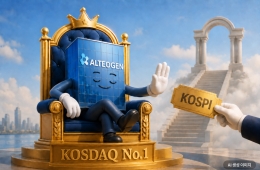
As volatility in the Korean stock market intensifies, the enthusiasm for investing in exchange-traded funds (ETFs)—which saw a rapid surge in sales at bank branches during the first half of this year—is quickly fading. This shift in sentiment is largely attributed to a sharp decline in the KOSPI, triggered by weaker semiconductor stocks and geopolitical instability in the Middle East, which has chilled investor confidence. In addition, with the Bank of Korea raising its base interest rate, there are growing expectations of a full-fledged 'reverse money move', with funds previously flowing into the stock market now moving back into principal-protected savings and time deposits.
![ETF Mania Cools Amid KOSPI Rollercoaster... Is it Time to Consider a '10% Safe Savings Account'? [Practical Finance]](http://www.asiae.co.kr/news/img_view.htm?img=2026072115573752990_1784617056.jpg)
According to Korea's four major commercial banks—KB Kookmin Bank, Shinhan Bank, Hana Bank, and Woori Bank—ETF sales between July 1 and July 16 totaled 1.8589 trillion won. Even taking into account that July is only halfway through, this is a significant drop from the total ETF sales of 13.5943 trillion won in June.
Since the beginning of this year, bank ETF sales have shown a steep upward trend. Monthly sales rose from 7.3541 trillion won in January to 8.2921 trillion won in February. Although sales dipped to 6.796 trillion won in March, they rebounded to 9.5362 trillion won in April and soared to 14.7136 trillion won in May. In June, sales remained strong at 13.5943 trillion won, sustaining the investment boom.
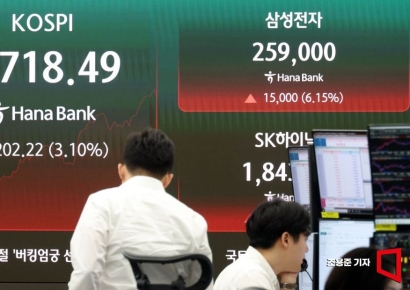
This mood shifted as the stock market became increasingly volatile in recent weeks. The KOSPI had climbed to 9,114.55 at the close on June 22, but fell to 6,516.27 on July 20, plummeting 40% in just one month. Market experts attribute this sharp contraction in investor sentiment to a combination of factors: exhaustion after a rapid run-up, concerns that the semiconductor sector has already peaked, debate over artificial intelligence (AI) stock overvaluation, and heightened geopolitical tensions between the United States and Iran.
Some analysts point out that, with Samsung Electronics and SK hynix accounting for more than half of the KOSPI's total market capitalization, the launch of leveraged ETFs focused on single stocks has further amplified market volatility.
As uncertainty in the stock market grows, interest in safe-haven assets is once again on the rise. On July 16, the Bank of Korea raised the base interest rate by 0.25 percentage points, from 2.5% to 2.75%, and it is widely expected that there will be one or two additional increases within the year. This has caused not only traditional safe assets such as the dollar and gold but also principal-protected savings and time deposits to become even more attractive to investors.
Currently, most bank deposit products have interest rates in the 3% range. According to the Korea Federation of Banks, the top rates for 37 one-year time deposit products at 19 banks nationwide range between 2.4% and 3.85%. Among these, around 60%—23 products—offer top rates in excess of 3% per year.
![ETF Mania Cools Amid KOSPI Rollercoaster... Is it Time to Consider a '10% Safe Savings Account'? [Practical Finance]](http://www.asiae.co.kr/news/img_view.htm?img=2026072115592852992_1784617168.jpg)
Banks are rapidly launching special promotional products. KB Kookmin Bank, for instance, is offering 'KB I-Love Savings Account' that provides a maximum annual rate of 10% for families with young children (such as those receiving childcare allowances), and 'KB Running Savings Account' which offers up to 7.2% per annum based on the distance run each month.
Shinhan Bank is selling the 'Shinhan My Plus Time Deposit', offering a maximum annual rate of 3.3% with a one-year maturity, until the end of the month, with a total sales cap of 1 trillion won. The 'Shinhan SOLmate Time Deposit', which offers a maximum annual rate of 3.4% to individuals aged 50 and over as well as sole proprietors, is available until July 23 with a sales limit of 300 billion won.
Woori Bank has also raised the annual rate for its one-year 'WON Plus' time deposit from the previous 2.9% to 3.2%.
The financial sector anticipates that, with market volatility likely to persist for the time being and the possibility of further increases in the base interest rate, the upper limit for deposit rates could rise further, supporting a continued preference for savings and time deposits.
However, experts advise that while special promotional deposits can be advantageous for short-term funds, long-term investors should consider employing a dollar-cost averaging strategy with ETFs—even during market downturns—instead of selling off ETF holdings indiscriminately.
Hot Picks Today
 Retail Investors Regain Hope: "Leverage Unwinding Nears End, KOSPI 12,500 Target Intact," Says J.P. Morgan
- "$300 Gone in One Date"...U.S. Gen Z Ditches Restaurants for Parks
- Ha Jungwoo: "AI Should Be Designed to Alleviate Human Suffering Like Compassion"
- "There Are Rules About Fines!" Even Presidential Rebuke as Turkey's Anti-Smoking Crackdown Imposes 21.8 Billion Won in Penalties
- Zara 'Death Pants' Too Stylish to Give Up: "I Almost Died Just 30 Minutes After Putting Them On"
A financial industry official stated, "There are aspects where expectations for additional base rate hikes have already been factored into market interest rates, but deposit rates may still rise further in line with the future interest rate trend. Special promotional deposits may be favorable for short-term funds, but for long-term investors, it is worth considering a strategy that combines ETF and time deposit investments according to one's investment period and risk appetite."
© The Asia Business Daily. All rights reserved. Unauthorized AI training and use prohibited.