'15-Year' Ultra-Long-Term Fund Launched... Venture and VC Industries "Welcome but See Need for Improvements"
Ultra-Long-Term Fund Public Hearing Held at KDB Head Office on July 20
Lee Eogwon of Financial Services Commission: "We Will Align the Timelines of Technology and Finance"
Industry: "Evaluation Method Needs Reform and Personnel Regulation Sh
At a public hearing held ahead of the introduction of super-long-term technology investment funds—hereafter referred to as "super-long-term funds"—that will extend their duration to 15 years, the venture and venture capital (VC) industries expressed their support for the initiative. However, they also suggested that additional measures are needed, including the relaxation of operational workforce regulations and preferential incentives for investments in manufacturing, from a practical standpoint.

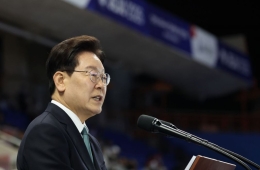
On July 20, at the KDB IR Center in Yeongdeungpo-gu, Seoul, at the public hearing for the "National Growth Fund Super-Long-Term Technology Investment Sub-Fund Project," Financial Services Commission Vice Chairman Lee O-geun stated, "The super-long-term fund has been established to align the timeline required for technology development with that of financial support," adding, "We intend to create a fund that grows together with companies over the long term, not a fund that invests once and then exits." The hearing was also attended by KDB CEO Park Sang-jin and Son Young-chae, head of the National Growth Fund Promotion Group.
The super-long-term fund, expected to be formed at an annual scale of 880 billion won, will be divided into large, medium, and small types, with plans to select six sub-fund management firms. The fund's duration is set at 15 years, with 680 billion won of the total resources coming from policy funding.
To encourage general partner (GP) participation, the fund's internal rate of return (IRR) target has been set at 5%, lower than the 7% for existing policy funds. In addition, by relaxing non-compete provisions, if more than 50% of the committed capital (previously set at a minimum of 60%) has been invested, managers will now be permitted to establish new funds that could potentially compete. Incentives have also been expanded.
Measures to encourage participation by limited partners (LPs) include allocating a portion of the excess returns of the advanced fund to LPs if the fund outperforms its benchmark return, as well as providing secondary support of up to 40% of LPs’ committed capital with public funds. After 10 years from the completion of investments, or upon the maturity of the fund—whichever comes first—mechanisms will also be provided to enable the replacement of LPs.
Venture company and VC representatives attending the panel discussion expressed their support for the super-long-term fund. Participants included Hong Won-ho, CEO of SV Investment; Kim Hyun-chul, CEO of S Ventures; An Sin-young, CEO of Acestone Ventures; Park Se-geun, Executive Director of AJU IB Investment; Ha Gun-hyung, Team Leader at Shinhan Investment & Securities; Min Kyu-sik, CEO of Todac; and Park Jae-hong, CEO of Unastella. CEO Hong stated, "There are potential opportunities for companies to become global leaders in their field, but we have constantly wondered if our existing funds would let us stay with them for the full journey. Since funds typically have an 8-year maturity, it has often forced us to push for an initial public offering (IPO) or sell the company before it was fully mature. The introduction of the super-long-term fund is very timely in this regard."

However, they also recommended that further improvements be made. CEO Hong pointed out the need to change assessment methods. He said, "From the GP's point of view, with a 15-year super-long-term fund, there must be an institutional framework that assesses more than just exit timing—one that also evaluates the growth in technology."
The need to ease restrictions on fund management personnel was also raised. CEO Kim Hyun-chul of S Ventures commented, "Some limited partners require that members of a fund’s management team cannot launch new funds until 60% of the current committed capital has been invested. I hope such constraints will not apply to the super-long-term fund."
Concerns were also raised about limiting the main investment targets of the super-long-term fund to common stock and non-redeemable preferred stock. Executive Director Park explained, "In practice, it is common to make co-investments, and for tech companies, splitting up classes of preferred stock when attracting investments can be procedurally burdensome due to issues of fairness. If there are plans to exclude short-term exits from primary investment targets, requiring investments only in common stock or non-redeemable preferred stock seems to unnecessarily complicate procedures."
There were also calls for granting additional points for investments in manufacturing, as it takes longer to reach an IPO in that field. CEO An said, "While it typically takes a general company 13 years to go from founding to listing, it takes 15 to 17 years for manufacturing businesses. Additional incentive points for investing in manufacturing could greatly assist companies facing growth challenges."
The venture industry also emphasized the need for institutional support. CEO Min noted, "There needs to be research project support for the regulatory, compliance, and legal challenges faced by investee companies."
Hot Picks Today
 "King crab is 3,000 won per 500 grams; just eating it makes the trip worthwhile"... Chinese flock to North Korea on 'fake business trips'
- "It's Only October, and They're Already Buying?" Sales Soar 18-Fold... Flying Off Shelves at Convenience Stores [How We Shop Today]
- "If You Don't Apply, My KRW 1.7 Million Will Be Gone"... Unclaimed National Pension Refunds Vanish After 'This Deadline'
- "Even If It Looks Bold to Others, I Like How Happy It Makes Me"... Hooked on 'Dopamine Core' [Segyeneun Zgeum]
- "Why on earth come to Korea and do this?" ... Chinese Man in Hanfu Says He'll Promote Chinese Culture at Gyeongbokgung
Shortly after the panel discussion, Vice Chairman Lee commented, "We will continue to gather feedback and work toward a more complete system." The selection notice for the super-long-term fund will be issued at the end of July or early August, after reflecting on the feedback collected at the public hearing.
© The Asia Business Daily. All rights reserved. Unauthorized AI training and use prohibited.

!["Please Take Them Off!" They Made It All the Way to the Bed... Then "80% of Fecal Bacteria" Struck [Deep Scroll]](https://cwcontent.asiae.co.kr/asiaresize/307/2026101610053063338_1792112730.png)